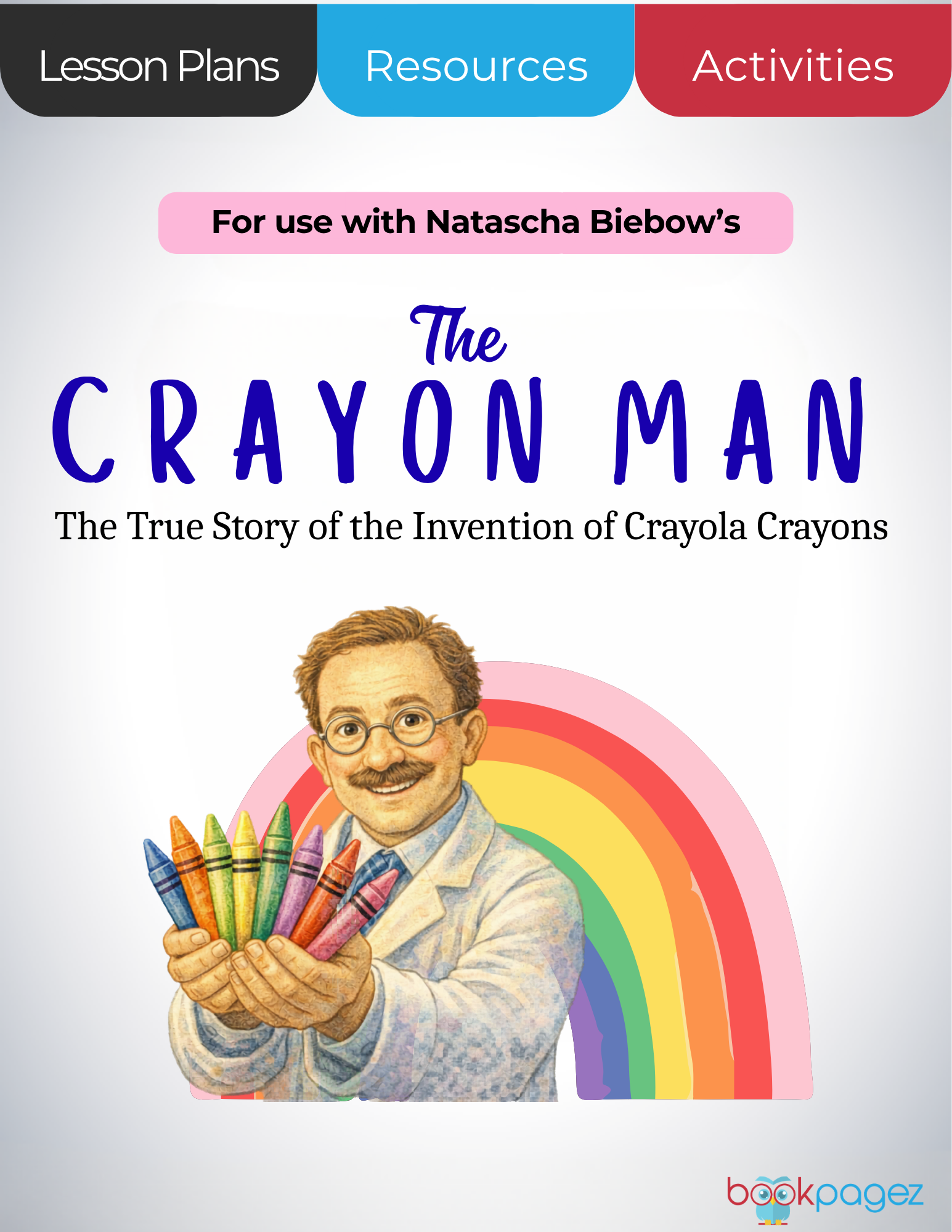
Lesson Plans and Teaching Resources for The Crayon Man: The True Story of the Invention of Crayola Crayons

Use The Crayon Man: The True Story of the Invention of Crayola Crayons by Natascha Biebow to strengthen your students' comprehension skills, build their vocabulary, and help them understand how words work.
Edwin Binney's passion for color and innovation comes alive in this inspiring biography that shows how one inventor changed the world of children's art.

Students will practice key comprehension strategies including asking questions about the invention process, determining important facts about crayon manufacturing, identifying the author's purpose in sharing this true story, making connections to their own creative experiences, and understanding the chronological text structure that traces Edwin's journey from problem to solution. Also included in this resource set is a lesson on compound words and vocabulary development activities.

Explore lesson plans and activities to help you teach with The Crayon Man: The True Story of the Invention of Crayola Crayons in the drop down below.

The first page of Asking Questions with A Bad Case of Stripes

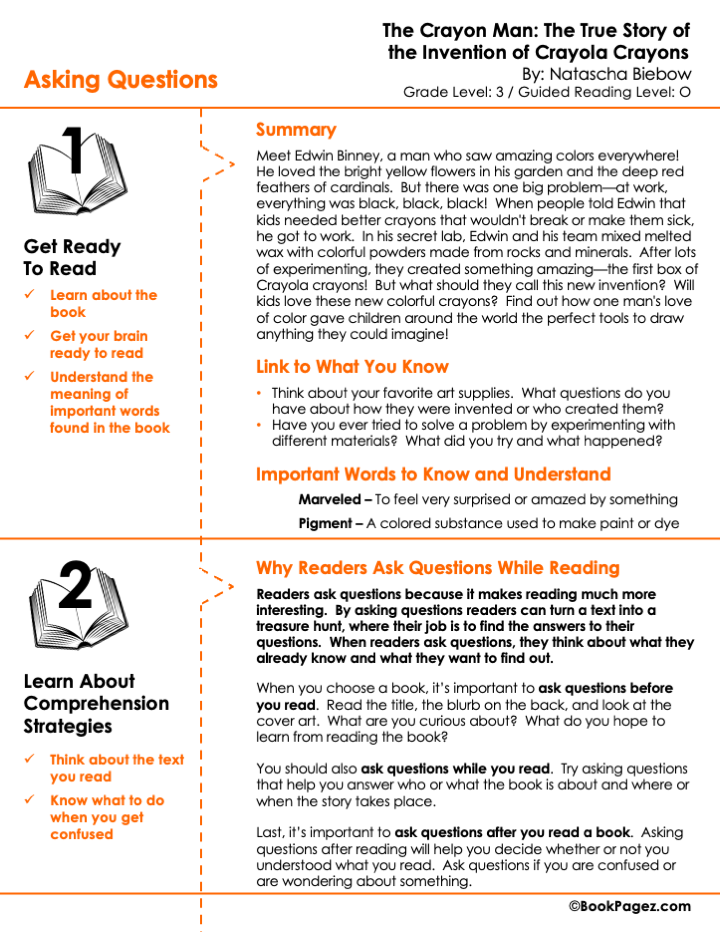
Asking Questions with The Crayon Man: The True Story of the Invention of Crayola Crayons

Edwin Binney's invention process naturally sparks curiosity about how everyday objects are created and what motivates inventors to solve problems. Students will practice generating questions about the scientific experiments, the historical context of the early 1900s, and the step-by-step process of turning an idea into a product that children worldwide still use today.
Common Core State Standards Alignment
RI.3.1,RI.3.4,RI.3.10,RF.3.3,RF.3.4,SL.3.1c,SL.3.1d,SL.3.2,SL.3.3,W.3.8,L.3.6
TEKS Alignment
3.7E,3.13H,3.13E,3.13C,3.13A,3.9D(iii),3.9D(ii),3.9D(i),3.7G,3.7F,3.1A,3.7D,3.7C,3.7B,3.6I,3.6B,3.6A,3.1E,3.1D,3.1C
The first page of Asking Questions with A Bad Case of Stripes

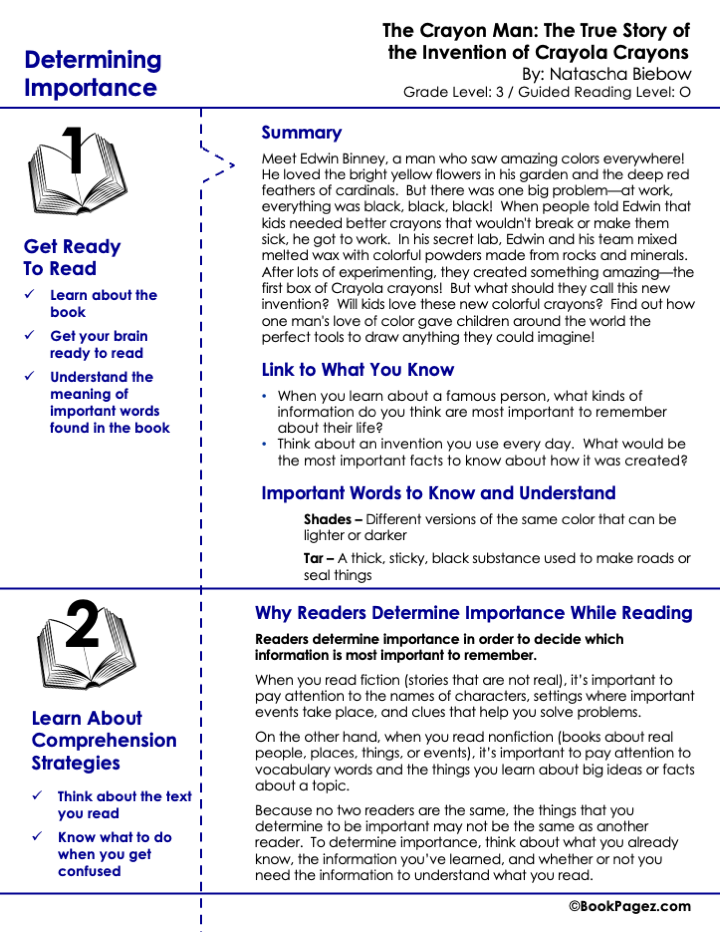
Determining Importance with The Crayon Man: The True Story of the Invention of Crayola Crayons

This biography presents numerous facts about Edwin Binney's life, the invention process, and the history of Crayola crayons. Students will learn to distinguish between key details that are essential to understanding the main story and interesting but less critical information, helping them focus on the most important elements of this inventor's journey.
Common Core State Standards Alignment
RI.3.2,RI.3.5,RI.3.6,RI.3.7,RI.3.10,RF.3.3,RF.3.4,SL.3.1d,SL.3.2,SL.3.3,W.3.8,L.3.6
TEKS Alignment
3.7D,3.13H,3.13E,3.13C,3.13A,3.10A,3.9D(iii),3.9D(ii),3.9D(i),3.7G,3.7F,3.7E,3.1A,3.7C,3.7B,3.7A,3.6I,3.6G,3.6E,3.6B,3.6A,3.1E,3.1D,3.1C
The first page of Asking Questions with A Bad Case of Stripes

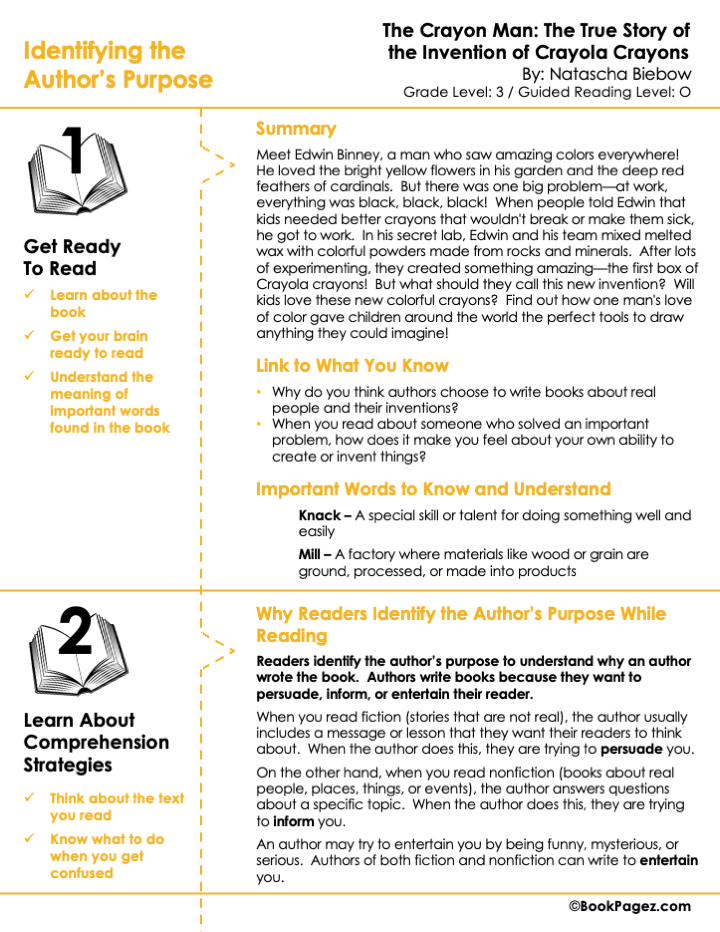
Identifying the Author's Purpose with The Crayon Man: The True Story of the Invention of Crayola Crayons

Natascha Biebow chose to tell Edwin Binney's story to inform readers about an important inventor while inspiring them to pursue their own creative interests. Students will examine how the author uses specific details, quotes from family members, and historical context to both educate and motivate young readers to value innovation and problem-solving.
Common Core State Standards Alignment
RI.3.2,RI.3.4,RI.3.7,RI.3.10,RF.3.3,RF.3.4,SL.3.1d,SL.3.2,SL.3.3,W.3.8,L.3.6
TEKS Alignment
3.7G,3.13H,3.13E,3.13C,3.10F,3.10D,3.10C,3.10B,3.10A,3.9D(iii),3.9D(ii),3.9D(i),3.8C,3.1A,3.7F,3.7E,3.7D,3.7C,3.7B,3.7A,3.6I,3.6B,3.6A,3.1E,3.1D,3.1C
The first page of Asking Questions with A Bad Case of Stripes

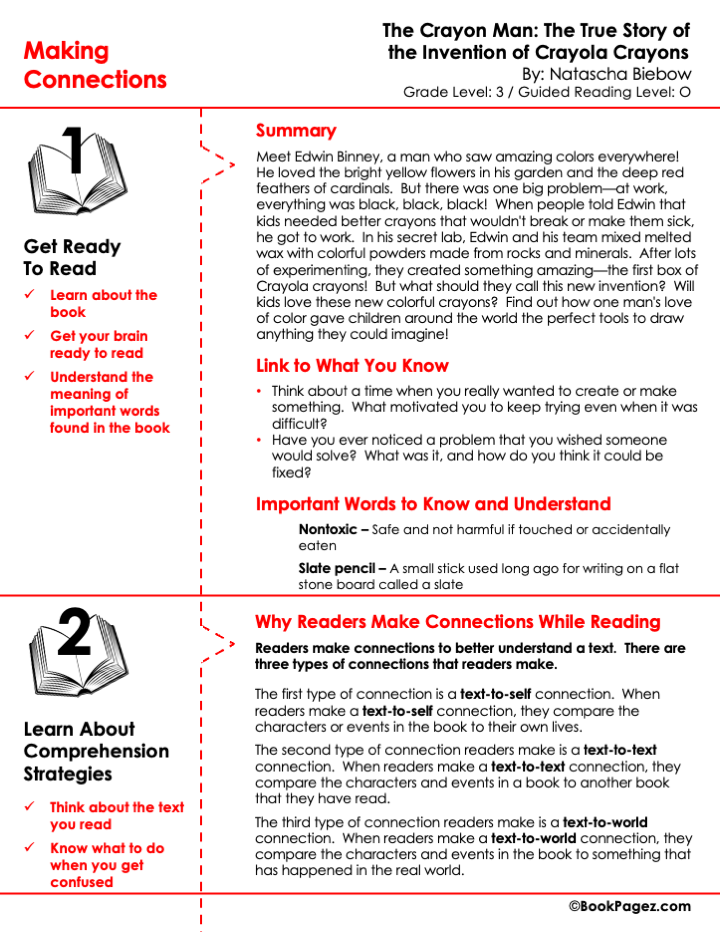
Making Connections with The Crayon Man: The True Story of the Invention of Crayola Crayons

Edwin Binney's story offers rich opportunities for students to connect his experiences with their own creative processes, problem-solving efforts, and use of art materials. The universal themes of following your passion, listening to others' needs, and persevering through challenges allow students to make meaningful text-to-self and text-to-world connections.
Common Core State Standards Alignment
RI.3.1,RI.3.3,RI.3.4,RI.3.7,RI.3.10,RF.3.3,RF.3.4,SL.3.1d,SL.3.2,SL.3.3,W.3.8,L.3.6
TEKS Alignment
3.7D,3.13H,3.13E,3.13C,3.9E(iii),3.9E(ii),3.9E(i),3.7G,3.7F,3.7E,3.1A,3.7C,3.7B,3.7A,3.6I,3.6E,3.6A,3.1E,3.1D,3.1C
The first page of Asking Questions with A Bad Case of Stripes

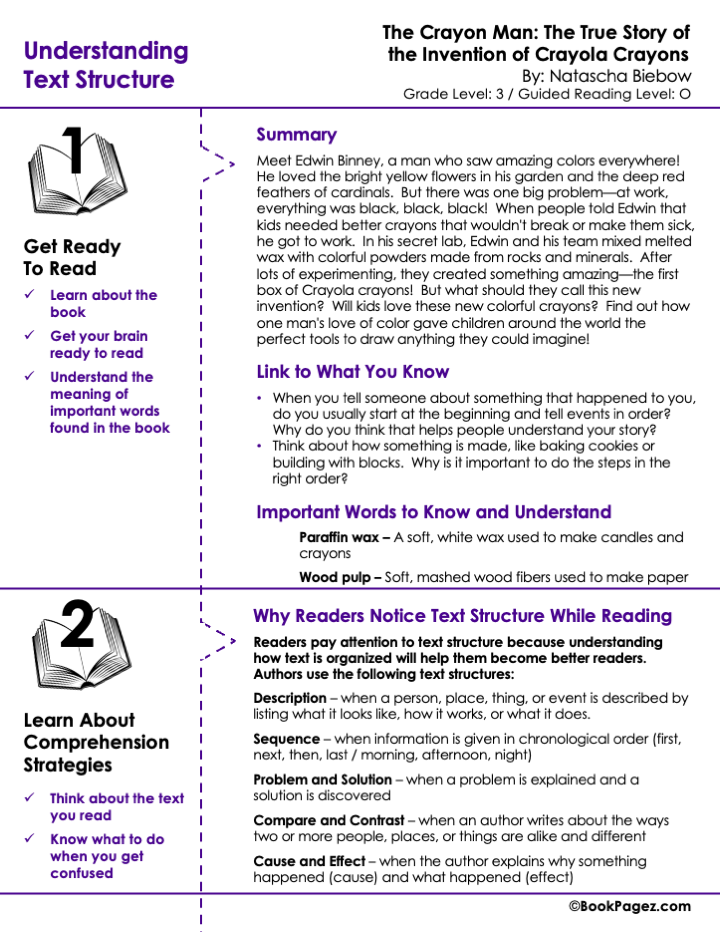
Understanding Text Structure with The Crayon Man: The True Story of the Invention of Crayola Crayons

This biography follows a clear chronological structure, tracing Edwin Binney's journey from his love of color through the invention process to the lasting impact of Crayola crayons. Students will identify sequence words and time markers while recognizing how the author organizes information to show cause-and-effect relationships throughout the invention process.
Common Core State Standards Alignment
RI.3.5,RI.3.7,RI.3.8,RI.3.10,RF.3.3,RF.3.4,SL.3.1d,SL.3.2,SL.3.3,W.3.8,L.3.6
TEKS Alignment
3.7F,3.13H,3.13E,3.13C,3.10C,3.10B,3.9E(iii),3.9D(iii),3.9D(ii),3.9D(i),3.1A,3.7E,3.7C,3.7B,3.6I,3.6H,3.6A,3.1E,3.1D,3.1C
The first page of Asking Questions with A Bad Case of Stripes

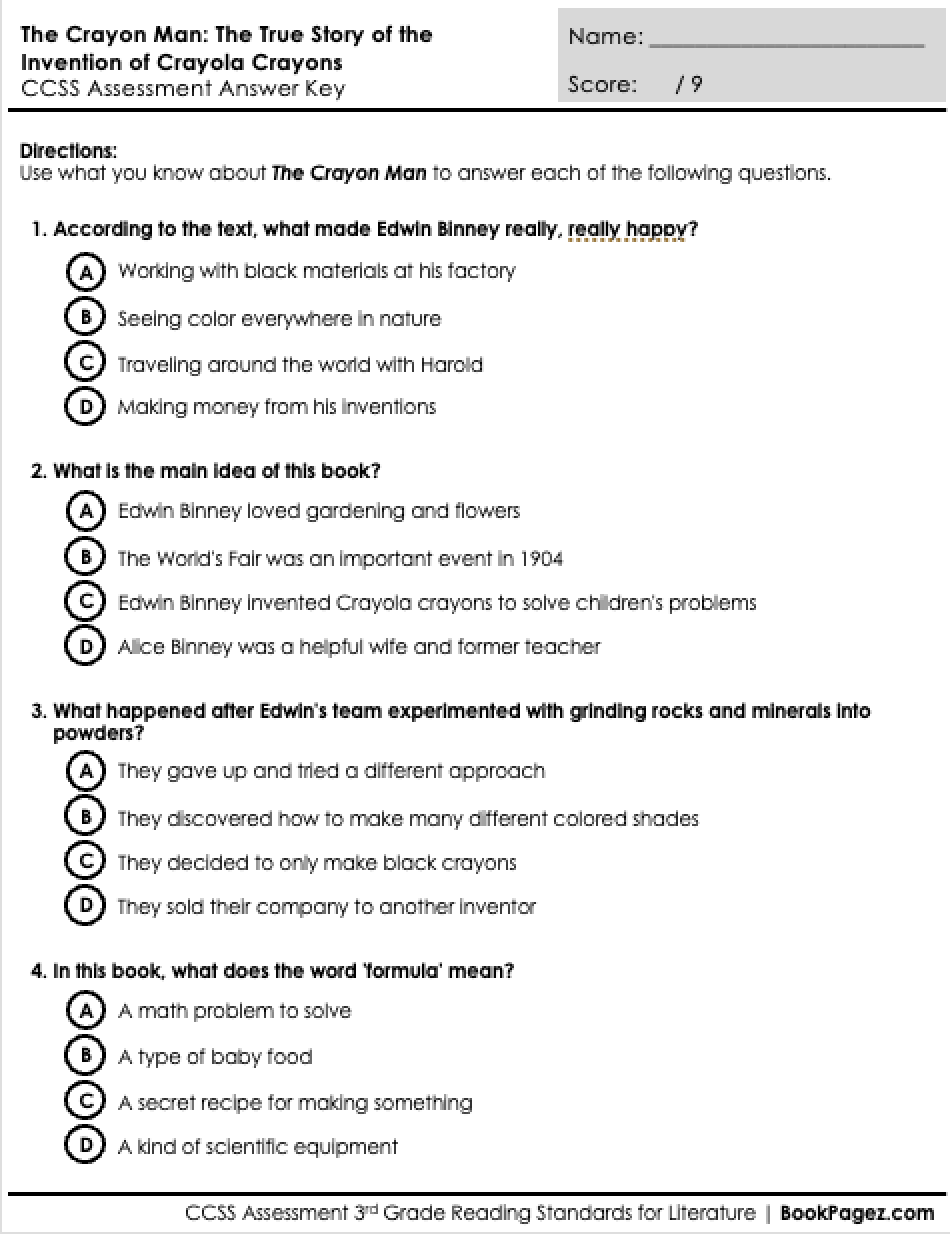
Comprehension Assessment with The Crayon Man: The True Story of the Invention of Crayola Crayons

Use this Common Core aligned comprehension assessment to evaluate students' comprehension of The Crayon Man.
Common Core State Standards Alignment
TEKS Alignment
The first page of Asking Questions with A Bad Case of Stripes

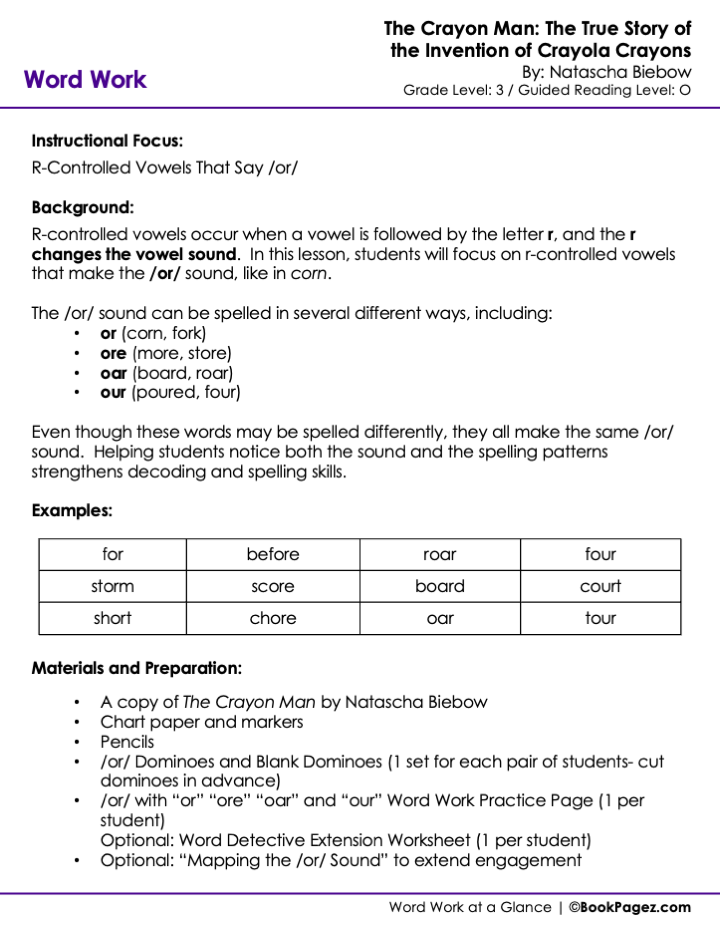
Vowels with The Crayon Man: The True Story of the Invention of Crayola Crayons

Help students unlock tricky vowel patterns with this focused word work activity on r-controlled vowels that say /or/.

Students explore common spelling patterns—or, ore, oar, and our—and learn how each one produces the same /or/ sound. By sorting, reading, and working with these words in context, students begin to notice patterns that support both decoding and spelling.

This activity builds confidence with multisyllabic words and gives students a clear framework for tackling unfamiliar words that include r-controlled vowels. It's a practical, high-impact way to strengthen foundational phonics skills while keeping students actively engaged.

Common Core State Standards Alignment
RF.3.3,RF.3.4
TEKS Alignment
3.2A (ii),3.2B (i)
The first page of Asking Questions with A Bad Case of Stripes

Vocabulary Connections with The Crayon Man: The True Story of the Invention of Crayola Crayons

This set of vocabulary development resources for The Crayon Man: The True Story of the Invention of Crayola Crayons highlights key words that are essential for students to understand while reading the story. Through engaging activities such as word games, word-to-definition and picture matching, and word categorization practice, students will build the vocabulary they need to comprehend this story—and many others—with confidence.

Common Core State Standards Alignment
L.3.4a,L.3.5b,L.3.6
TEKS Alignment
3.7E,3.7F,3.3A,3.3B
The first page of Asking Questions with A Bad Case of Stripes

How Factories Make Everyday Things

This Knowledge and Fluency Passage explains how factories work, showing how people and machines create products like crayons. By learning about the steps involved in making crayons, students can better picture the manufacturing process described in The Crayon Man. This passage supports vocabulary and fluency while deepening understanding of the story’s setting. Use this passage before reading the book to build background knowledge and prepare students to better comprehend the text.
Common Core State Standards Alignment
|replace-resource-ccss|
TEKS Alignment
|replace-resource-teks|
The first page of Asking Questions with A Bad Case of Stripes

Cause and Effect Sentence Stems with The Crayon Man: The True Story of the Invention of Crayola Crayons

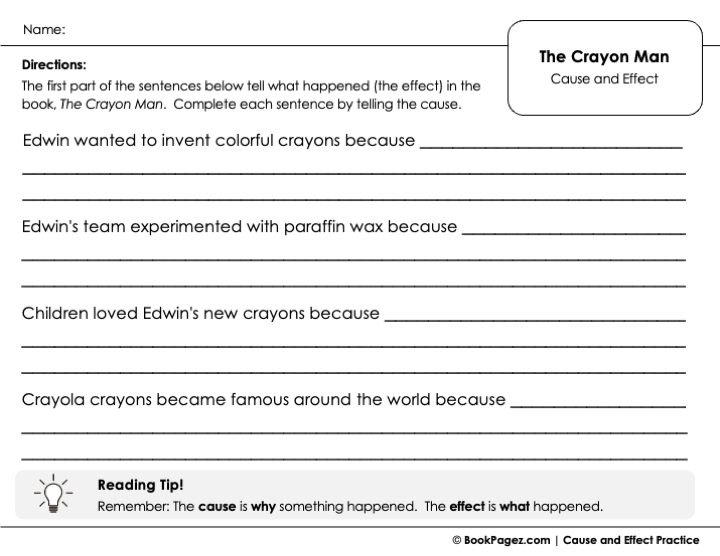
Understanding cause and effect is a key comprehension and language skill. The text structure of The Crayon Man includes several examples of cause and effect relationships, making it easy to use as a springboard for modeling or independent practice.

This simple resource includes four sentence stems. Each sentence stem presents an effect. Students will use what they know about the book to fill in the cause of the effect.
Common Core State Standards Alignment
TEKS Alignment
The first page of Asking Questions with A Bad Case of Stripes

Sequencing the Story with The Crayon Man: The True Story of the Invention of Crayola Crayons

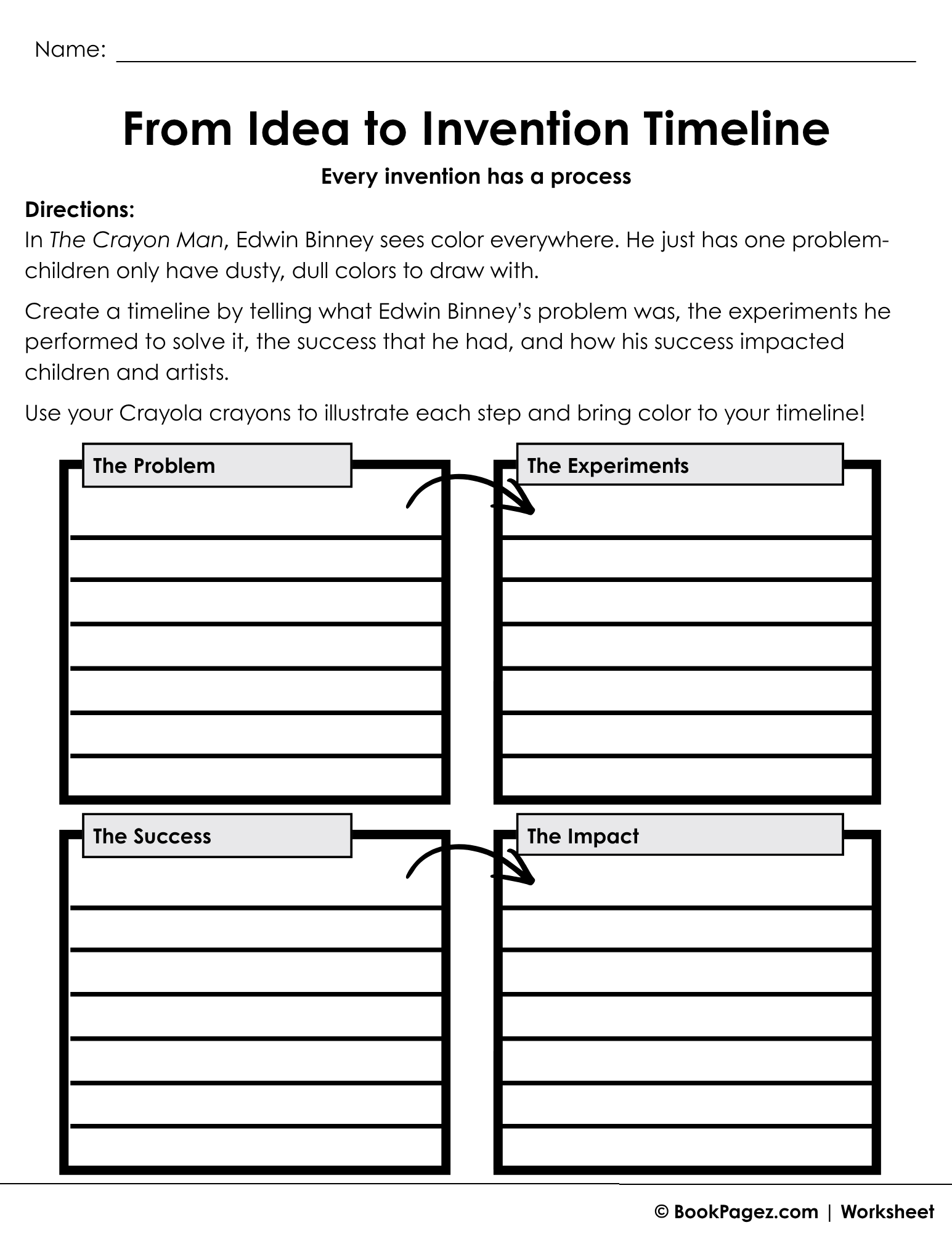
Students sequence Edwin Binney's journey—from problem to experiments to success—and show how his invention changed the way children create. As they illustrate each step with crayons, they deepen their understanding of sequence and see how one idea can make a lasting impact.
Common Core State Standards Alignment
TEKS Alignment
The first page of Asking Questions with A Bad Case of Stripes

Cause and Effect Matching with The Crayon Man: The True Story of the Invention of Crayola Crayons

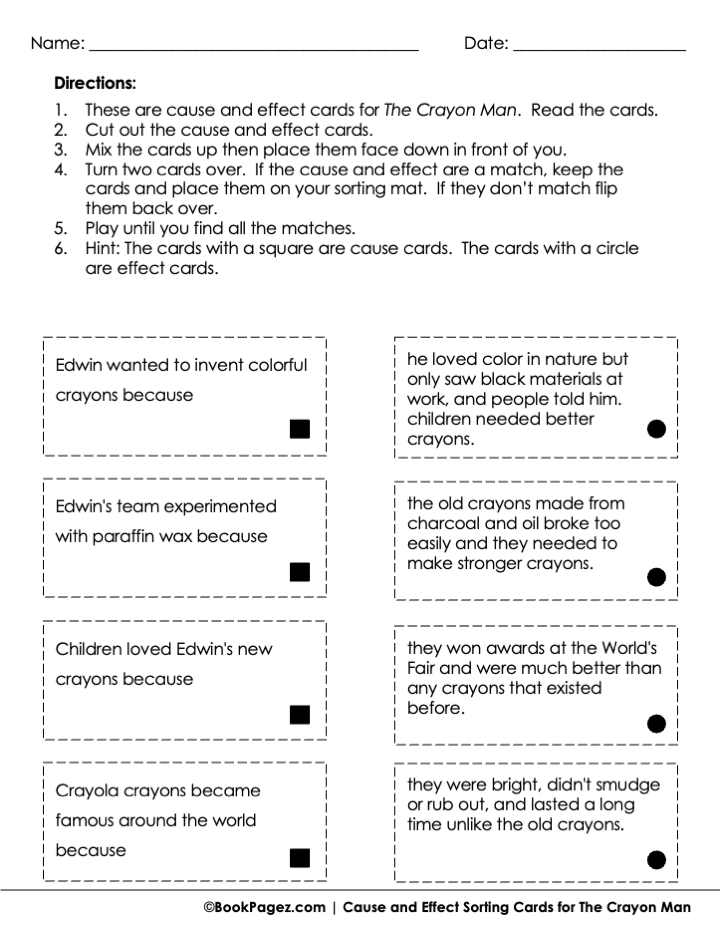
Read The Crayon Man then have some fun matching cause and effect sentences from the book. By using these cause and effect cards, students will demonstrate both their comprehension of the text and their understanding of cause and effect relationships in a hands-on and interactive way.

This resource includes matching/sorting cards and a sorting mat for four cause and effect sentences in The Crayon Man. Each cause card is marked with a square, and each effect card is marked with a circle, making it easy to support students who struggle with matching cause and effect relationships.

Common Core State Standards Alignment
TEKS Alignment

Asking Questions with The Crayon Man: The True Story of the Invention of Crayola Crayons (Spanish)

  • Student Practice Page and Answer Key
  • Reader's Notebook Prompt
  • Graphic Organizer

Determining Importance with The Crayon Man: The True Story of the Invention of Crayola Crayons (Spanish)

  • Student Practice Page and Answer Key
  • Reader's Notebook Prompt
  • Graphic Organizer

Identifying the Author's Purpose with The Crayon Man: The True Story of the Invention of Crayola Crayons (Spanish)

  • Student Practice Page and Answer Key
  • Reader's Notebook Prompt
  • Graphic Organizer

Making Connections with The Crayon Man: The True Story of the Invention of Crayola Crayons (Spanish)

  • Student Practice Page and Answer Key
  • Reader's Notebook Prompt
  • Graphic Organizer

Understanding Text Structure with The Crayon Man: The True Story of the Invention of Crayola Crayons (Spanish)

  • Student Practice Page and Answer Key
  • Reader's Notebook Prompt
  • Graphic Organizer

Sequencing the Story with The Crayon Man: The True Story of the Invention of Crayola Crayons (Spanish)

Worksheet

Get Full Access to the Entire Library of Resources when You Join Today!

You don’t need another curriculum—you need smart, supportive tools that build on the stories already in your classroom. BookPagez delivers research-aligned lessons, assessments, and digital tools to make your read-alouds, centers, and guided work more meaningful, more efficient, and more fun.
  • Teach with the favorite children’s books already on your shelf
  • Receive new, research-based materials every week
  • Tap into Digital Classroom for centers, assignments, and monitoring
  • Reclaim your evenings—planning is streamlined & ready to go
  • Stay organized with your personal file cabinet + dashboard
30 Day Risk-Free Guarantee, Cancel Anytime

About the Book

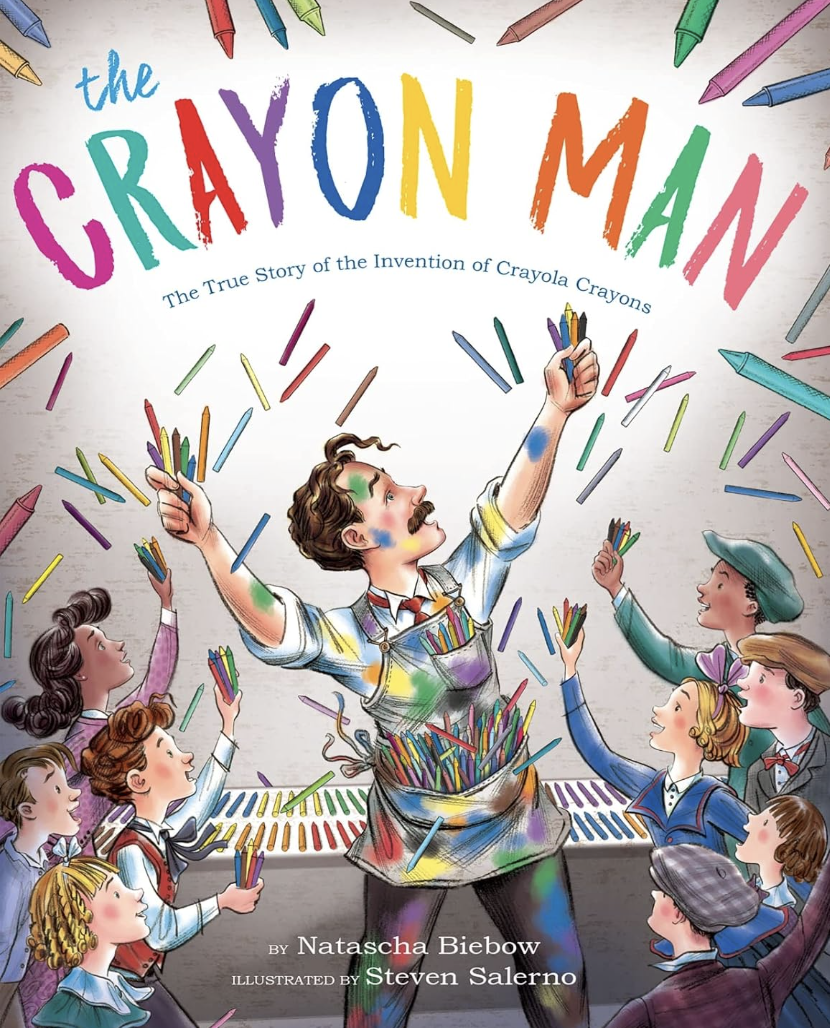
The cover for the book The Crayon Man: The True Story of the Invention of Crayola Crayons
Title: The Crayon Man: The True Story of the Invention of Crayola Crayons
Author: Natascha Biebow
Genre: Biography
Themes: Perseverance, Creativity, Problem-Solving, Innovation, Following your passion
ISBN: 9781328866844
Publisher's Summary:
This engaging biography tells the true story of Edwin Binney, the man who invented Crayola crayons. Edwin loved color everywhere he looked—in his garden, in nature, and in the world around him. But at work, all he saw was black dust, black tar, and black smoke from his company's carbon black business. When people told him that children needed better, safer, and more colorful crayons, Edwin listened. Through careful experimentation with paraffin wax and ground minerals, he and his team created the first box of eight Crayola crayons in 1903. His wife Alice even helped name the new invention by combining the French word for chalk with a word meaning oily. The book follows Edwin's journey from problem to solution, showing how one man's love of color changed the way children create art forever.
Content and Downloadable content Copyright ©2010-2025 Thinking Tree Enterprises, LLC. All other trademarks, service marks and trade names referenced on this site are the property of their respective owners. Please see our Terms of Use.

We are a participant in the Amazon Services LLC Associates Program, an affiliate advertising program designed to provide a means for us to earn fees by linking to Amazon.com and affiliated sites.
©BookPagez.com 2010 - 2023
Fluency / Book Filter
Search by Grade Level
Search by Reading Level
Search by Theme

Reset

Resource Downloading disabled

Your ability to download resources is currently disabled. Please contact us at support@bookpagez.com

Oops!  It looks Like You're Getting Carried Away. 

When you joined BookPagez, you agreed to follow our Terms of Use. Based on your download activty, it looks like you've gotten carried away.

You are allowed to download resources to use in your classroom for the duration of your subscription. You are not allowed to bulk download resources. In other words, it's against the rules to download all (or most) of the resources. That's stealing, and it's not nice.

Please check your email for a message from us. Reply to the email and let us know what's going on so we can reactivate your account.
In order to continue, please indicate that you agree with the terms above

Get instant access to this resource plus thousands more when you join today.

  • Teach with the best books
  • Always have access to new resources (published every month!)
  • Get full access to Digital Classroom
  • Finally have time to "fit it all in" with super efficient lesson plans
  • Enjoy fast planning tools and stay organized with your personal file cabinet and dashboard
Save 50% for a Limited Time