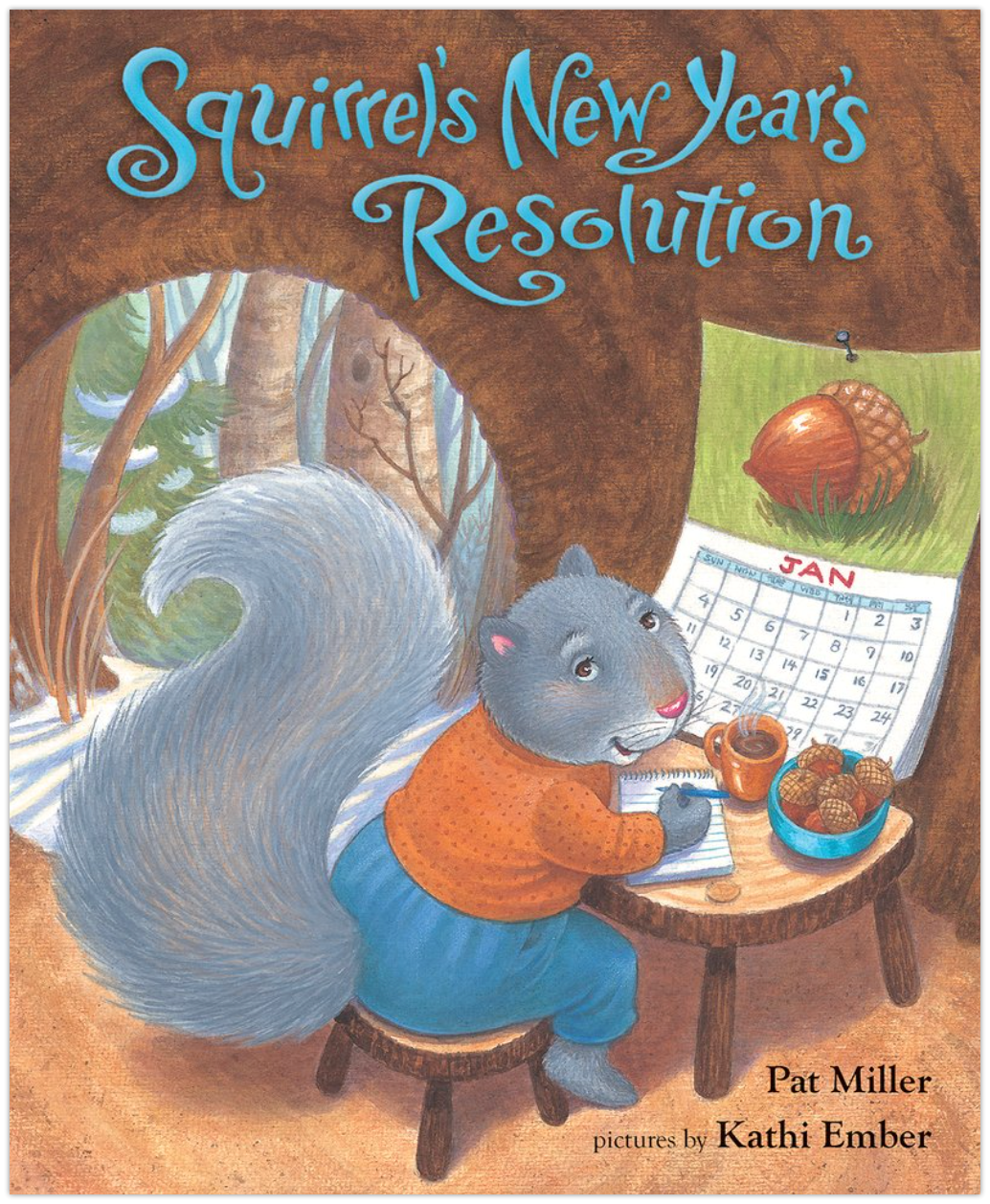
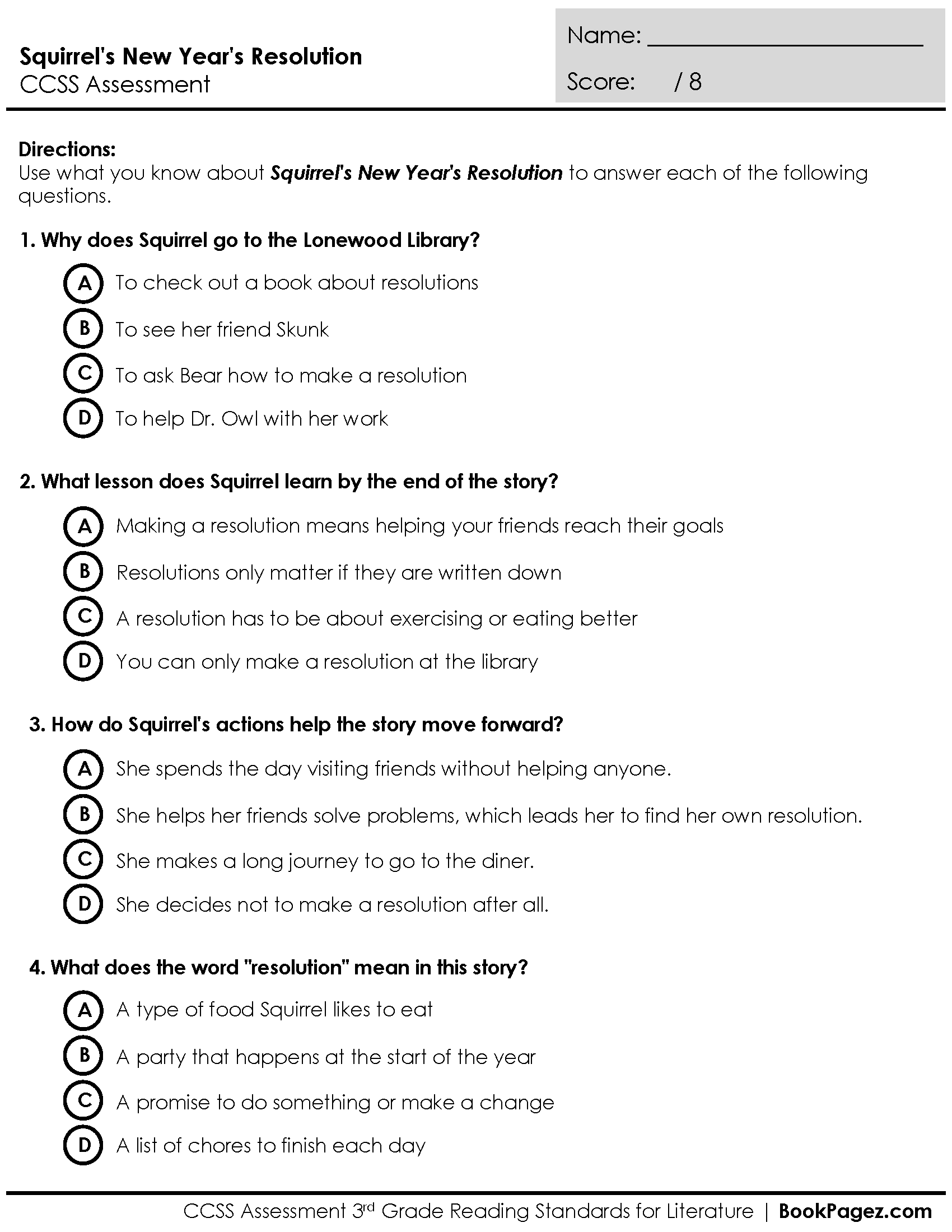
Use Squirrel’s New Year’s Resolution by Pat Miller to strengthen your students' comprehension skills, build their vocabulary, and help them understand how words work.
This is a charming story of kindness, friendship, and discovering what it means to make and keep a resolution. As Squirrel travels through the forest helping her friends, students will find many opportunities to practice Making Predictions, Identifying the Author's Purpose, and Understanding Text Structure. Each strategy is supported by clear examples in both the text and illustrations, helping readers build confidence and comprehension as they follow Squirrel's journey.
This resource set also includes a focused word work lesson on the suffix -y, helping students understand how adding -y to a base word changes its meaning into a describing word (like cloudy, messy, or noisy).
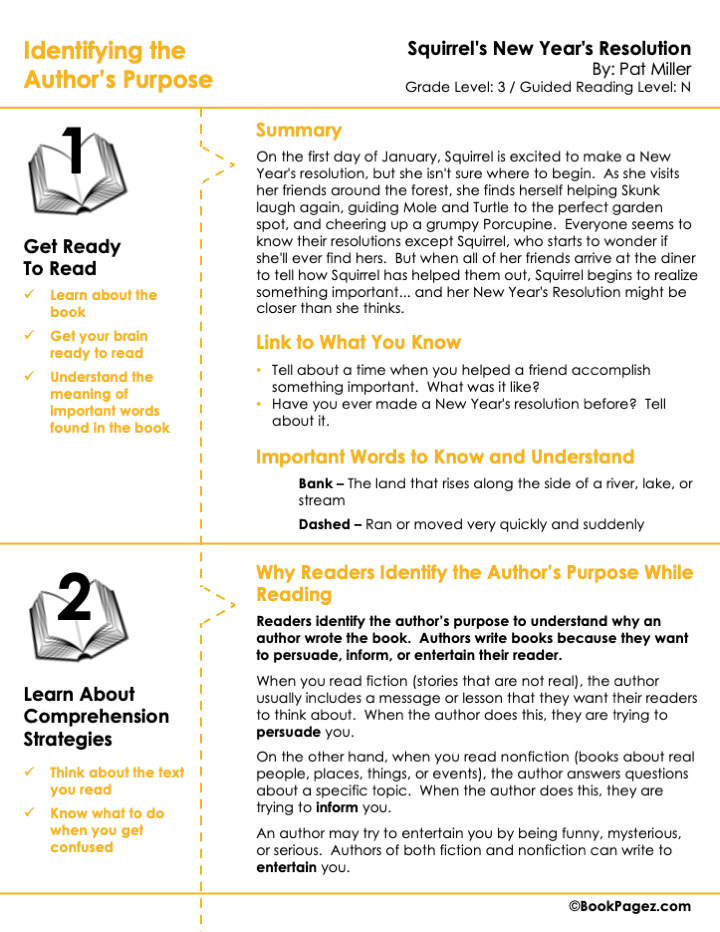
Students will enjoy exploring why the author chose to tell this gentle tale of resolutions and helping others. Each scene shows Squirrel offering support without expecting anything in return, giving readers meaningful clues about the message tucked inside the story. By identifying the author's purpose, students connect key details—like Squirrel cheering up Skunk or helping to plant the garden—to the bigger idea that small acts of kindness make a big difference. This strategy leads students to see how the author uses character actions to teach a thoughtful, uplifting lesson.
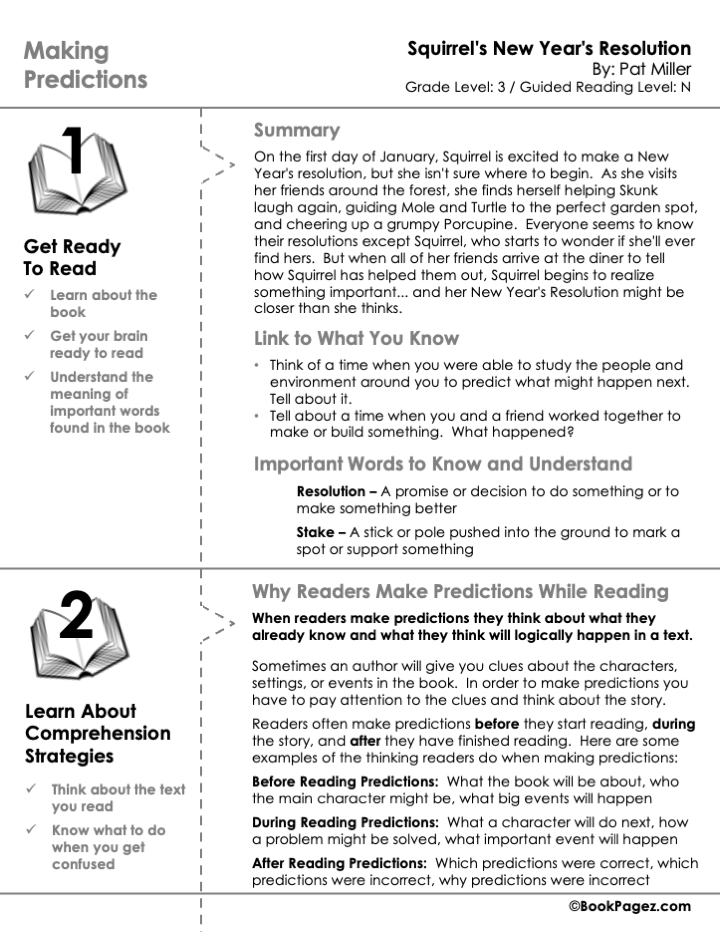
This story gives students regular chances to make thoughtful predictions based on Squirrel's actions, conversations with friends, and the warm, detailed illustrations. As Squirrel meets Skunk, Mole, Turtle, and others, readers must use both clues and character patterns to anticipate what she will do next. This helps students deepen their understanding of how characters drive a story forward and encourages them to read actively—thinking ahead, checking their predictions, and refining their understanding as the story unfolds.
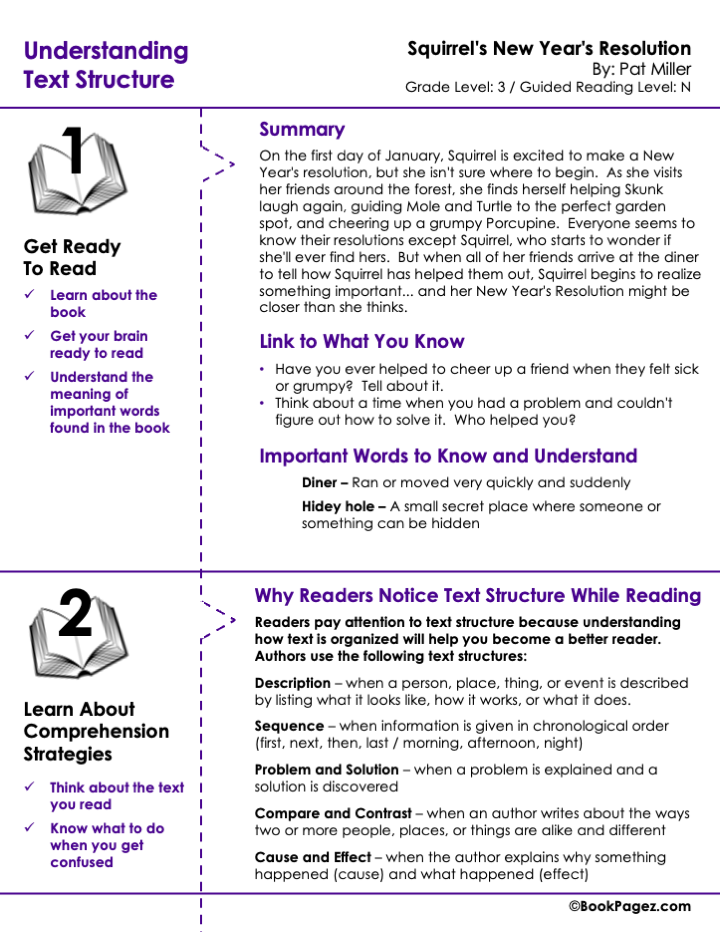
The book is rich with examples of different text structures, including description, cause and effect, compare and contrast, and problem and solution. Students examine how each section builds on the one before it: Squirrel's visits follow a predictable pattern, her actions lead to clear outcomes, and the ending ties the entire storyline together. Studying these structures helps students better understand how authors organize stories and how each part contributes to the final message. It also supports students in retelling, summarizing, and thinking like writers themselves.
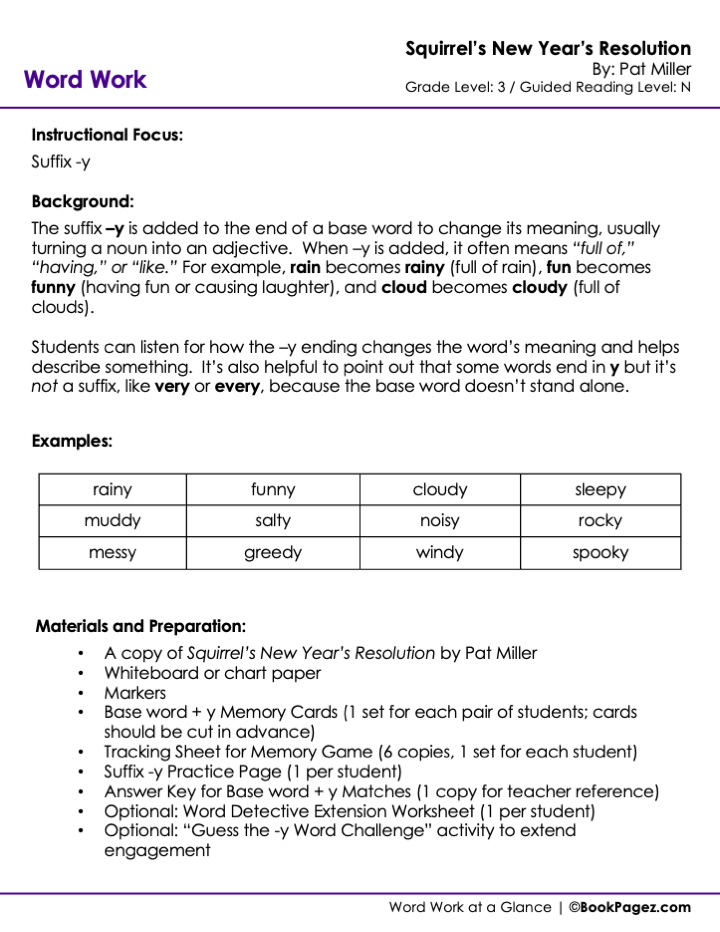
This word work lesson plan and set of teaching resources use Squirrel's New Year's Resolution by Pat Miller as a springboard for instruction focused on the suffix -y.
By anchoring word study to the text, students explore how adding -y to a base word changes its meaning, often to describe something as "full of," "having," or "like." Students listen for and identify -y words in the story, discuss how the suffix helps describe characters and events, and then apply their understanding through guided and independent practice.
The lesson also helps students distinguish between words that use -y as a suffix and words that simply end in y, strengthening both vocabulary and word analysis skills while supporting comprehension.

This set of vocabulary development resources for Squirrel's New Year's Resolution highlights key words that are essential for students to understand while reading the story. Through engaging activities such as word games, word-to-definition and picture matching, and word categorization practice, students will build the vocabulary they need to comprehend this story—and many others—with confidence.

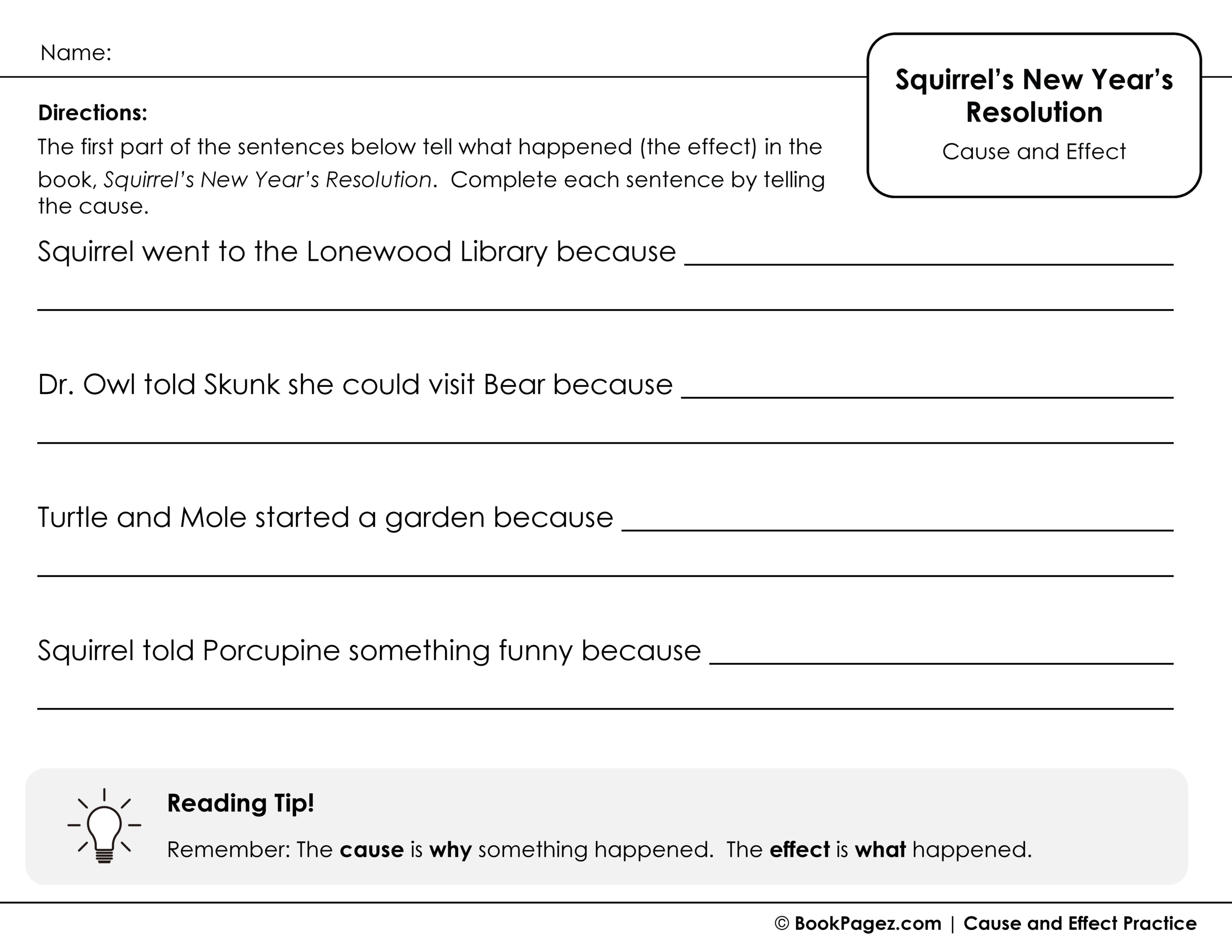
Understanding cause and effect is a key comprehension and language skill. The text structure of Squirrel's New Year's Resolution includes several examples of cause and effect relationships, making it easy to use as a springboard for modeling or independent practice.
This simple resource includes four sentence stems. Each sentence stem presents an effect. Students will use what they know about the book to fill in the cause of the effect.

Read Squirrel's New Year's Resolution then have some fun matching cause and effect sentences from the book. By using these cause and effect cards, students will demonstrate both their comprehension of the text and their understanding of cause and effect relationships in a hands-on and interactive way.
This resource includes matching/sorting cards and a sorting mat for four cause and effect sentences in Squirrel's New Year's Resolution. Each cause card is marked with a square, and each effect card is marked with a circle, making it easy to support students who struggle with matching cause and effect relationships.
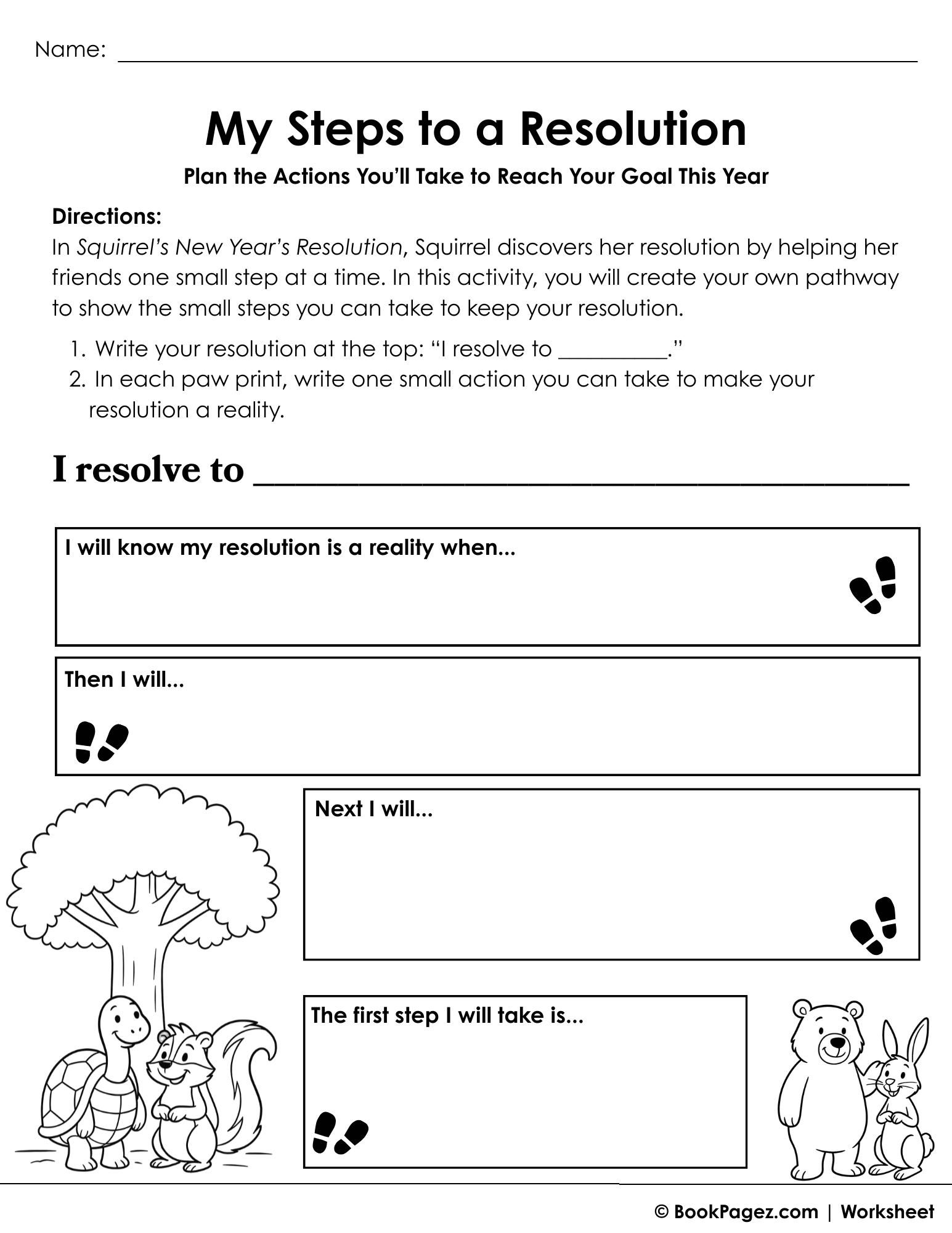
This activity invites students to reflect on Squirrel's New Year's Resolution and make personal connections to the text.
Just like Squirrel discovers her goal by helping others one small step at a time, students will break down their own resolution into manageable, meaningful actions.
After writing their resolution at the top of the page, students will use each paw print to record a small step they can take to make their goal a reality. This process supports goal-setting, builds self-awareness, and encourages a growth mindset—one step at a time.