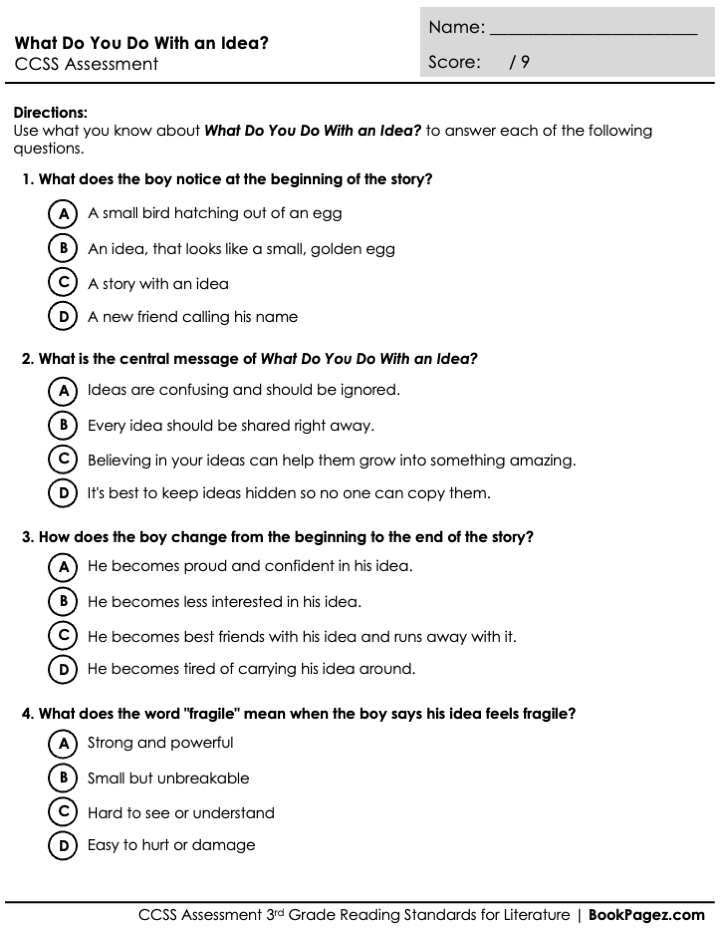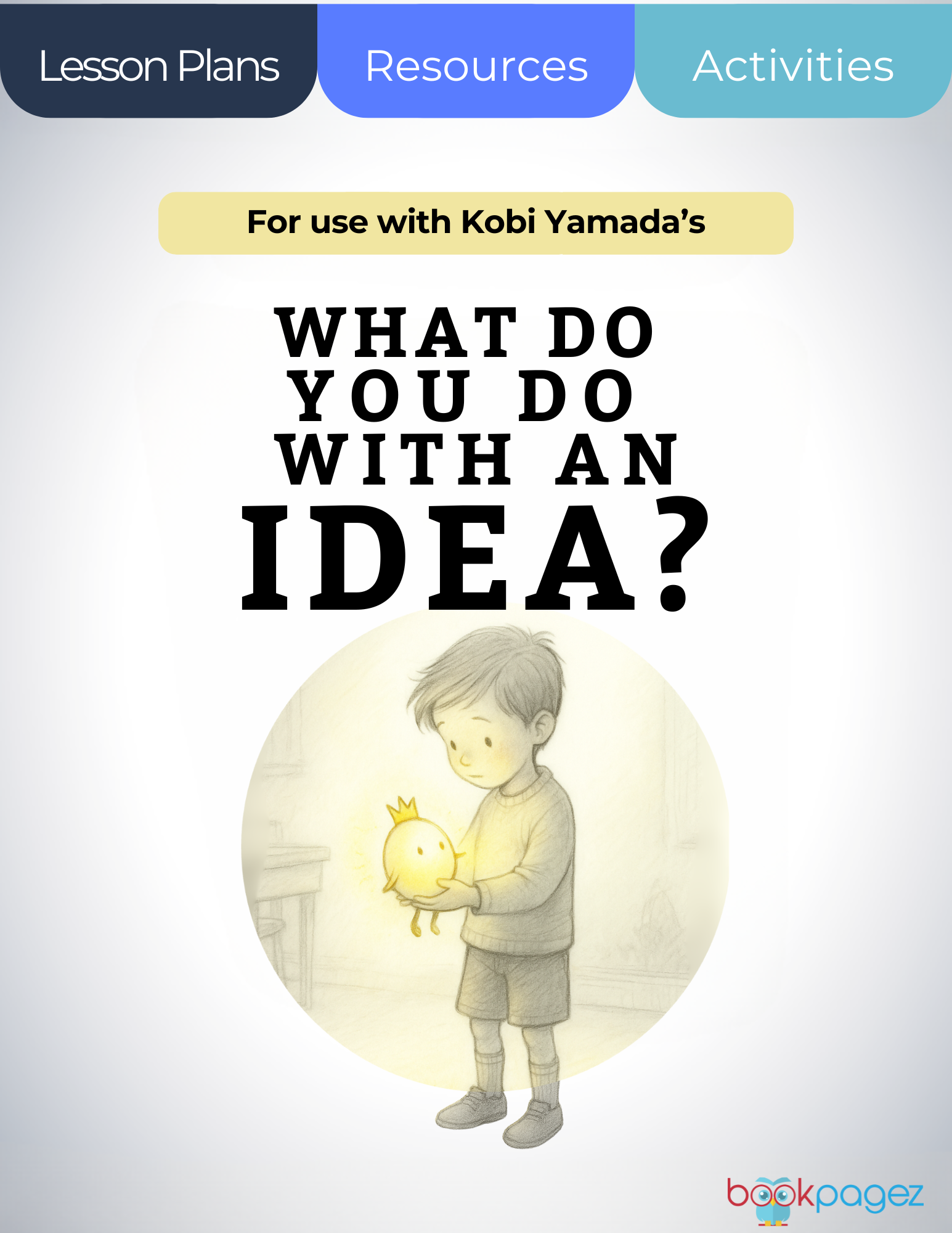
Use What Do You Do With an Idea? by Kobi Yamada to strengthen your students' comprehension skills, build their vocabulary, and help them understand how words work.
Step into the imaginative world where one small idea grows into something powerful enough to change the world. This resource set invites students to explore the story through three key comprehension strategies: Making Inferences, Synthesizing, and Identifying Author's Purpose. Each activity helps students look closely at how the boy's thoughts and feelings change as he learns to believe in his idea—and in himself.
Students will also strengthen their word knowledge through a word work activity on multisyllabic words, using examples from the text to break long words into syllables and practice pronunciation and meaning. To extend learning, a creative art and writing activity invites students to dive deeper into the themes and messages of Yamada's writing. Together, these activities deepen comprehension, build vocabulary, and inspire confidence in creative thinking.
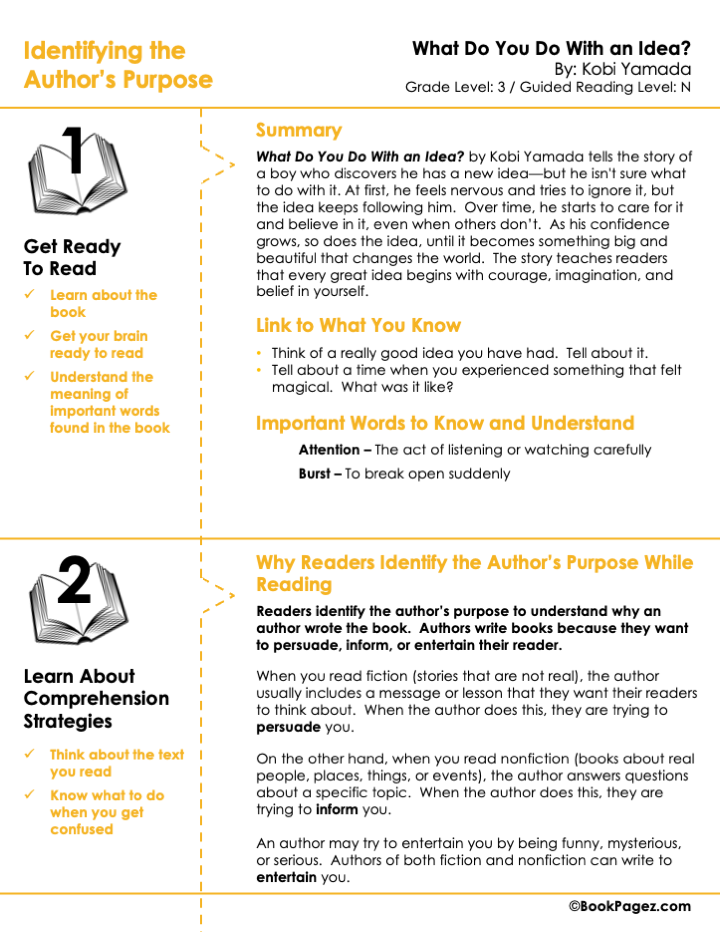
Through words and glowing illustrations, What Do You Do With an Idea? makes it clear that Kobi Yamada's purpose is to inspire readers to trust their imagination and take pride in their unique ideas. Students examine how the author and illustrator work together to share this message—through the boy's growing confidence and the bright colors that fill the pages. By identifying the author's purpose, students discover that the story is both a celebration of creativity and a reminder that every big change begins with a single small idea.
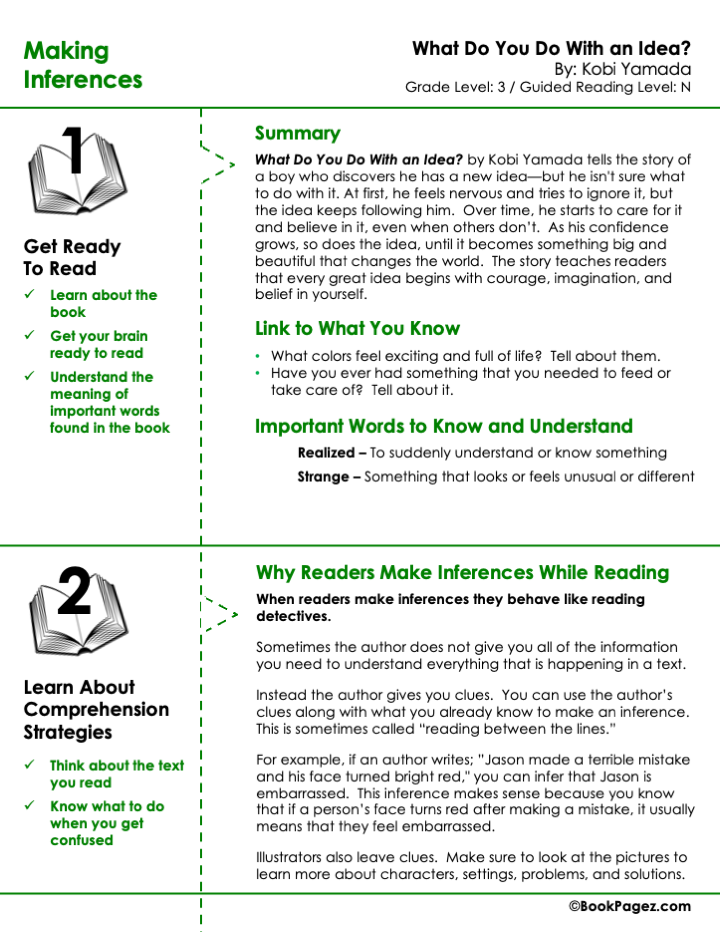
What Do You Do With an Idea? gives students the chance to analyze the text and illustrations to infer what the boy and his idea are feeling. As the boy moves from doubt to confidence, readers use evidence from the text and pictures to infer how his emotions change and why. Illustrator Mae Besom's use of color gives students an opportunity to think more deeply about author Kobi Yamada's message. By practicing this strategy, students learn how to use context clues and illustrations to uncover deeper meaning—helping them see that ideas, like people, grow stronger when they are believed in.
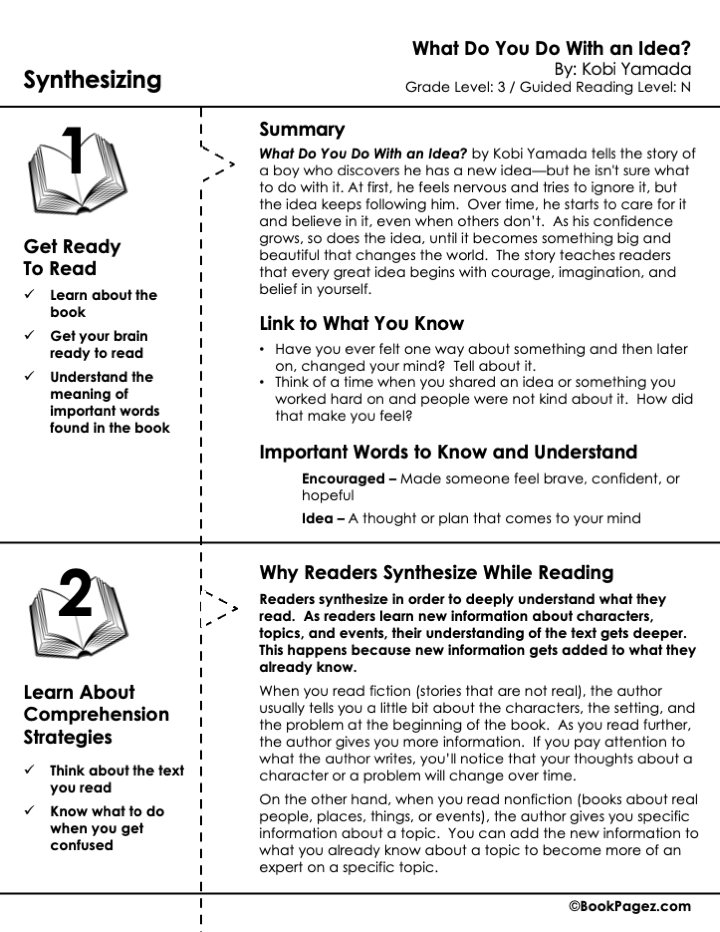
This resource helps students synthesize information from the beginning, middle, and end of the story to understand how the boy's relationship with his idea evolves. Guided prompts encourage readers to connect how each event—ignoring, protecting, believing—leads to the idea's growth and transformation. By pulling together these details, students form a complete picture of the story's message: great things happen when we nurture our ideas and let them take flight.
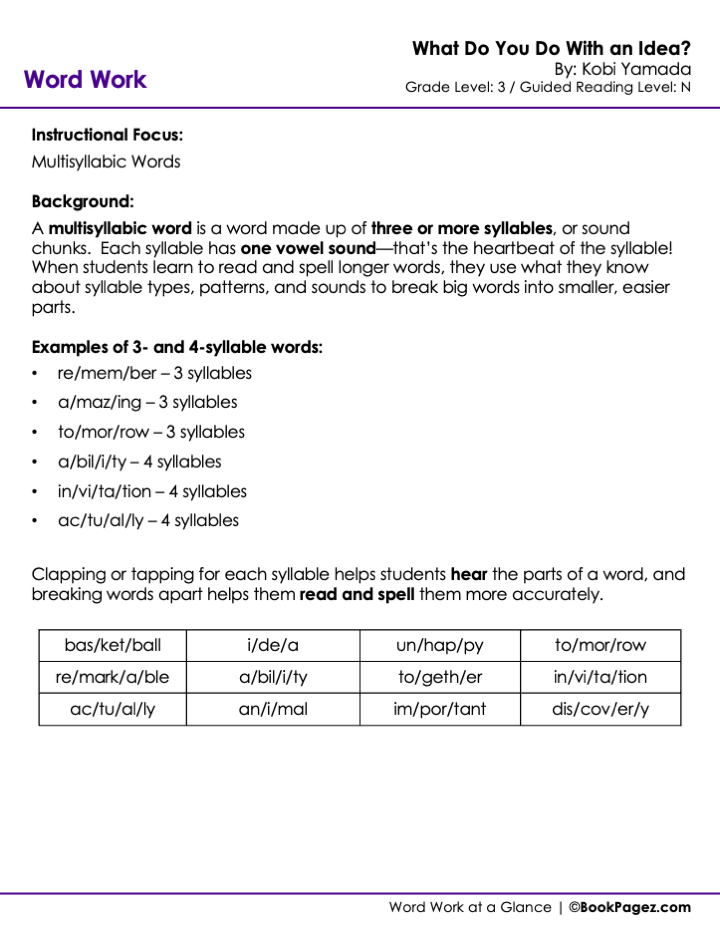
This word work lesson plan and set of teaching resources use What Do You Do With an Idea? by Kobi Yamada as a springboard for instruction focused on multisyllabic words.
By connecting word study to the text, students explore how longer words appear in the story before practicing how to break them into syllables. With support, they clap, tap, and segment multisyllabic words such as amazing, remember, ability, and invitation, helping them hear the vowel sounds that form each syllable.
Grounding instruction in meaningful text helps students apply decoding strategies to real reading. As they learn to divide longer words into parts, they strengthen accuracy, fluency, and confidence when reading and spelling multisyllabic words.
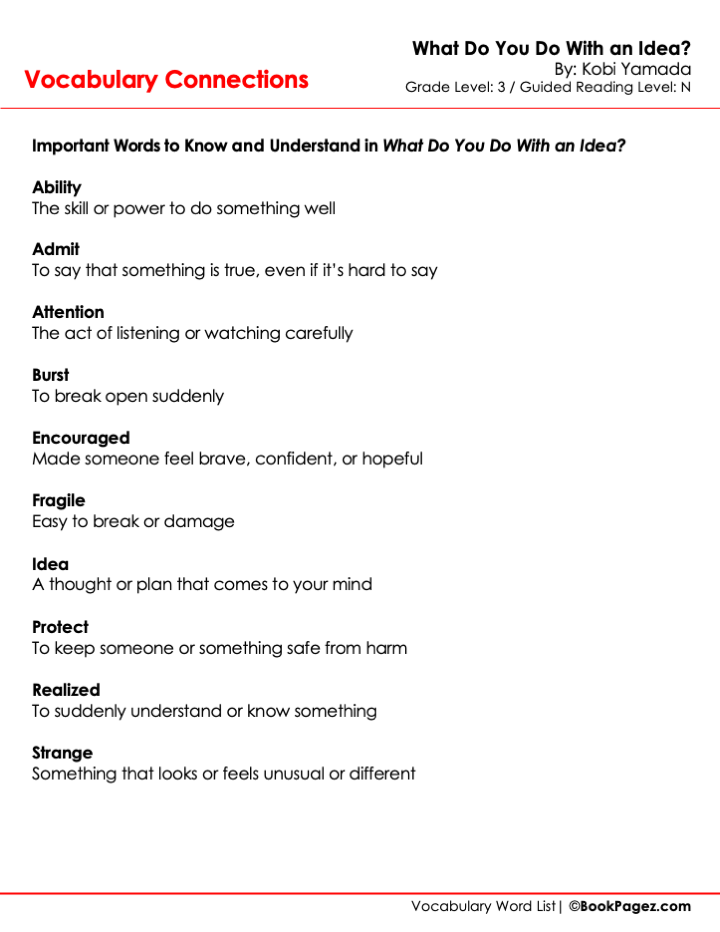
This set of vocabulary development resources for What Do You Do With an Idea? highlights key words that are essential for students to understand while reading the story. Through engaging activities such as word games, word-to-definition and picture matching, and word categorization practice, students will build the vocabulary they need to comprehend this story—and many others—with confidence.


Read What Do You Do With an Idea? then have some fun matching cause and effect sentences from the book. By using these cause and effect cards, students will demonstrate both their comprehension of the text and their understanding of cause and effect relationships in a hands-on and interactive way.
This resource includes matching/sorting cards and a sorting mat for four cause and effect sentences in What Do You Do With an Idea? Each cause card is marked with a square, and each effect card is marked with a circle, making it easy to support students who struggle with matching cause and effect relationships.
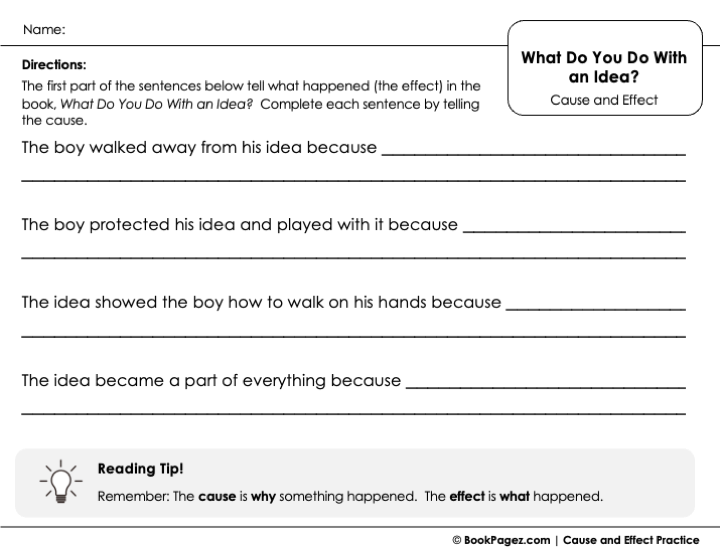
Understanding cause and effect is a key comprehension and language skill. The text structure of What Do You Do With an Idea? includes several examples of cause and effect relationships, making it easy to use as a springboard for modeling or independent practice.
This simple resource includes four sentence stems. Each sentence stem presents an effect. Students will use what they know about the book to fill in the cause of the effect.
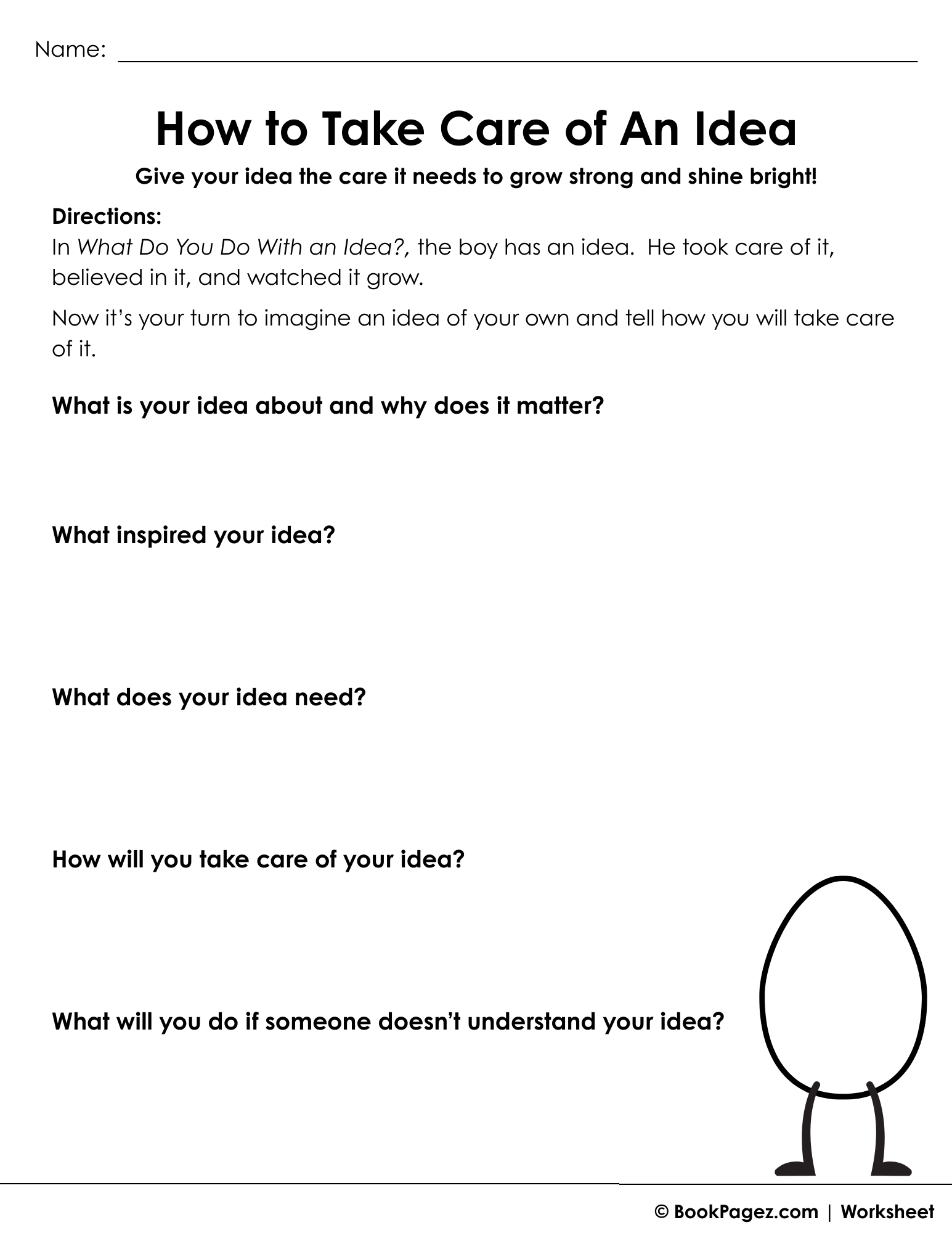
This activity encourages students to reflect on how the boy in What Do You Do With an Idea? cared for his idea and helped it grow. Students will imagine an idea of their own and explain the steps they would take to support, develop, and bring that idea to life. This writing task promotes creativity, critical thinking, and deeper connection to the text's message.

In this activity, students think about the boy in What Do You Do With an Idea? and how he cared for his idea. Students then imagine their own idea and tell how they will take care of it. This activity helps young learners practice thinking, imagining, and sharing their ideas in writing.


What Do You Do With an Idea? introduces children to the transformative power of nurturing creative thoughts. This beautifully illustrated picture book follows a young boy who discovers an idea one day and must decide what to do with it. The story begins with uncertainty as the boy wonders where his idea came from and feels hesitant about sharing something so unusual with the world around him. As the narrative unfolds, readers witness the boy's growing confidence and attachment to his idea, watching it evolve from a small, peculiar thing into something magnificent and world-changing.