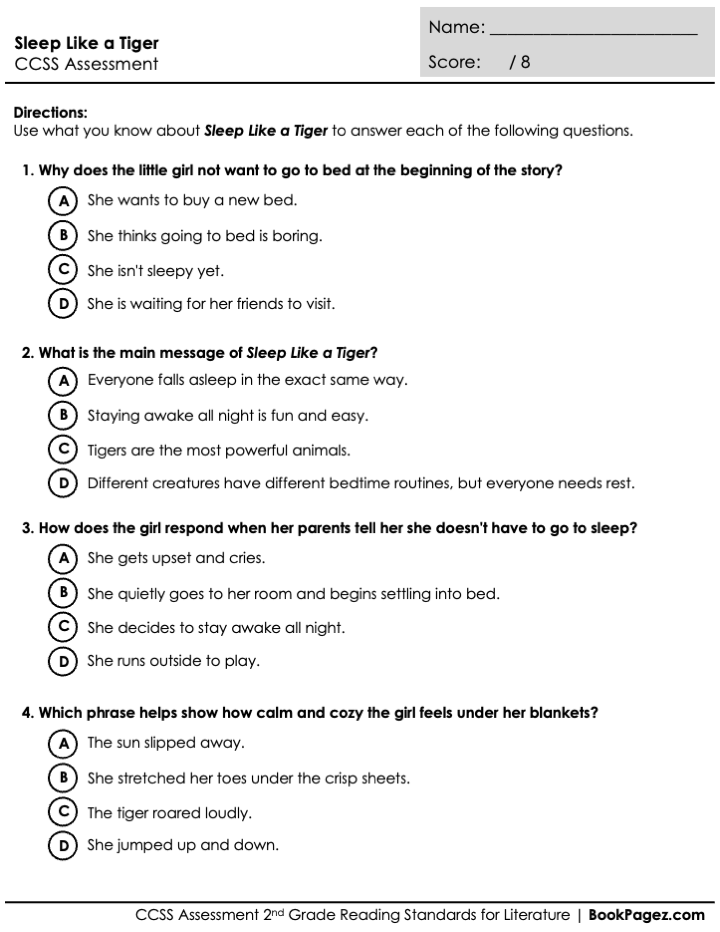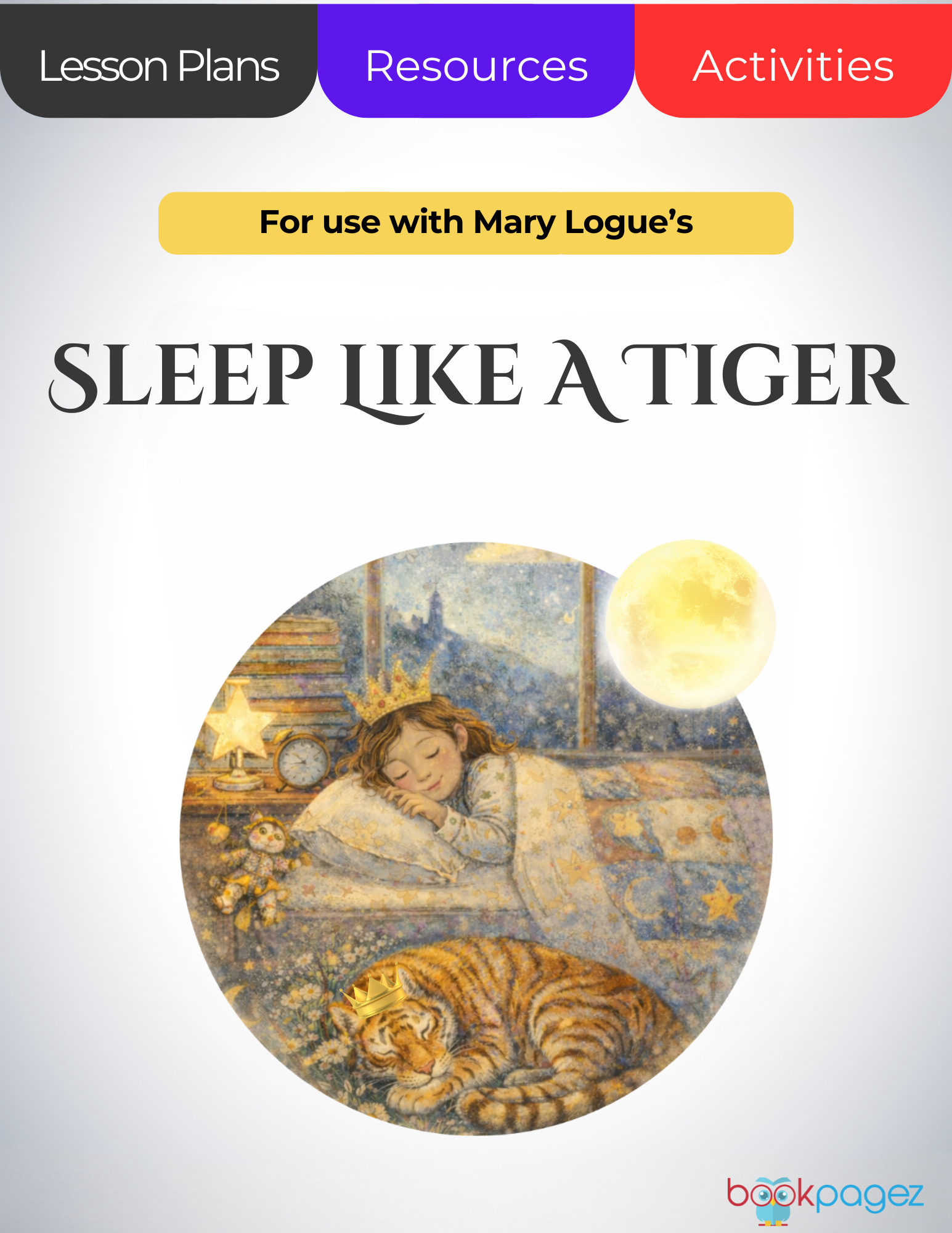
Use Sleep Like a Tiger by Mary Logue to strengthen your students' comprehension skills, build their vocabulary, and help them understand how words work.
This Caldecott Honor book captures something every teacher knows well: the child who insists they're not tired, even as their eyes grow heavy.
As a little girl moves through her bedtime routine, her patient parents ask how different animals fall asleep. Tigers stretch out. Bats hang upside down. Snails curl up like cinnamon rolls. With each imagined scene, students visualize, connect, and notice how language shapes mood.
This resource set includes lesson plans for three comprehension strategies: Author's Purpose, Visualizing, and Making Connections. Students will analyze the author's word choices, create mental images from descriptive language, and relate the girl's bedtime resistance to their own experiences.
A word work lesson on long E spelling patterns rounds out the set, with practice drawn directly from the text.
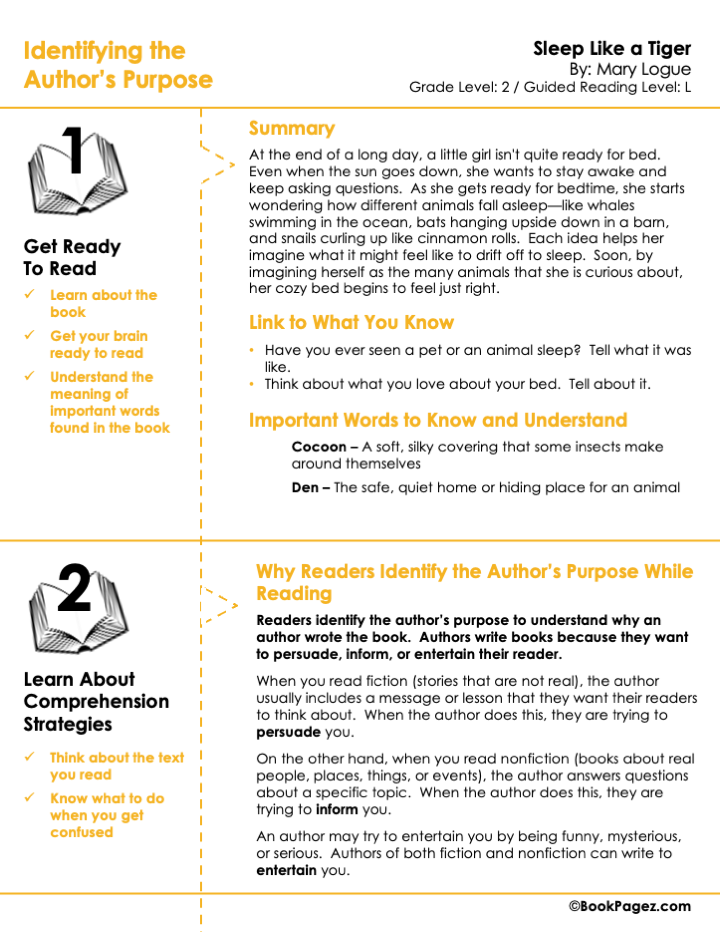
This story provides rich opportunities for students to explore why the author chose certain words, comparisons, and images to describe bedtime, as well as why the illustrator includes various details throughout the story. As the little girl imagines how animals fall asleep, students will analyze how these choices create a cozy, peaceful mood and help readers understand the girl's thoughts and feelings.
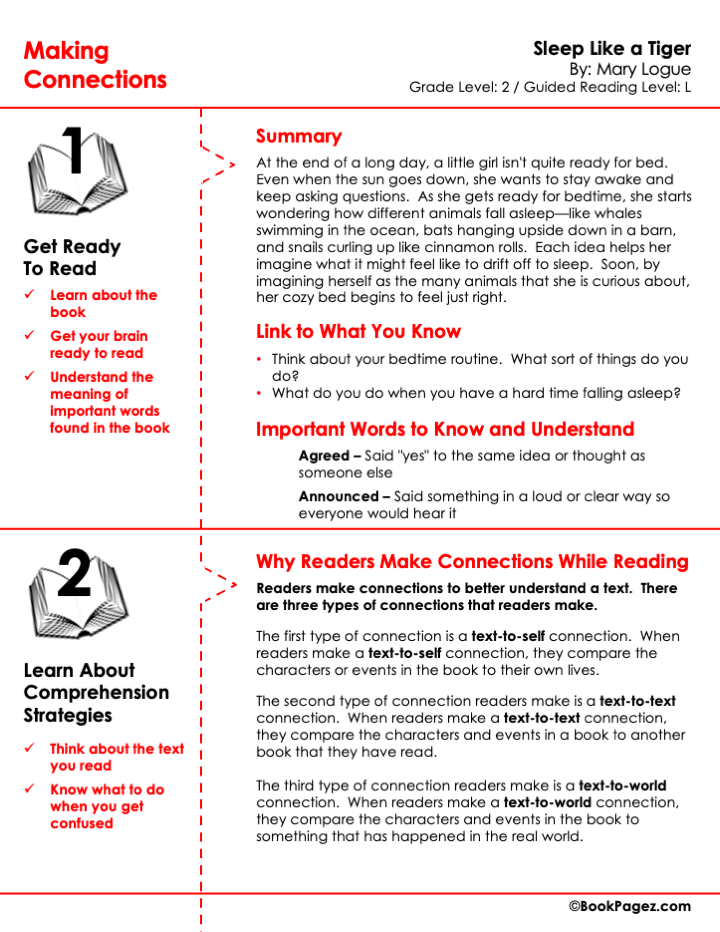
As the story follows the little girl through her cozy nighttime routine, students will make text-to-self, text-to-text, and text-to-world connections. They'll relate their own bedtime habits to the girl's, compare the story to other bedtime books, and think about what they know about different animals. Making connections helps students understand why the girl feels curious, imaginative, and finally ready to rest.
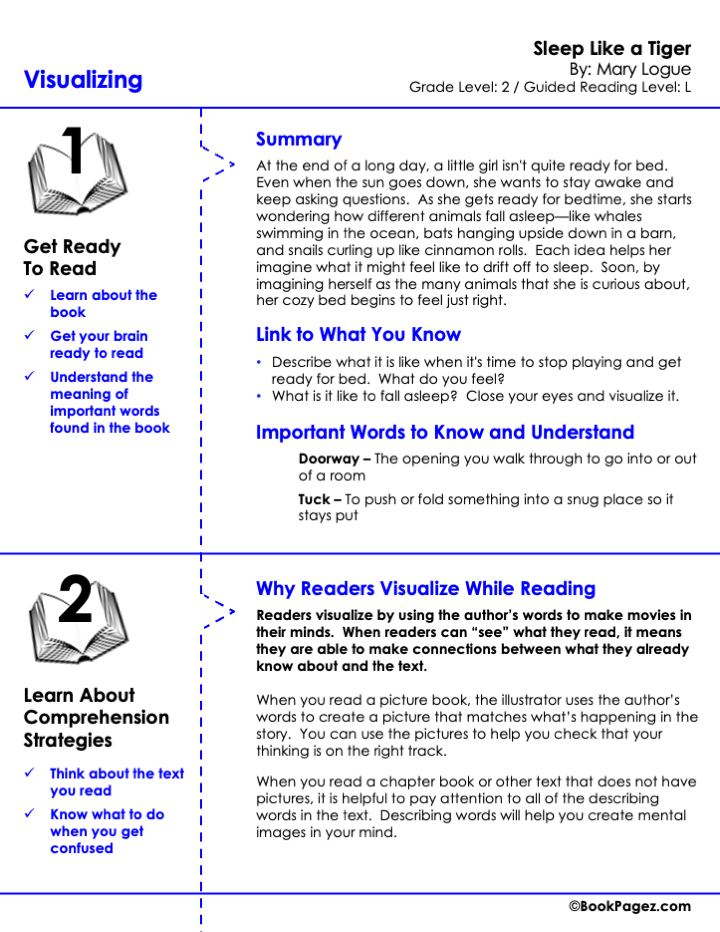
With warm imagery and descriptive language, Sleep Like A Tiger invites students to create clear mental pictures of the girl stretching under her sheets, imagining otters floating, bats hanging, and snails curling up like cinnamon rolls. Students will practice using both the illustrations and the text to visualize what is happening, deepening their understanding of the girl's bedtime routine. This strategy encourages readers to turn words into pictures that help the story come alive.
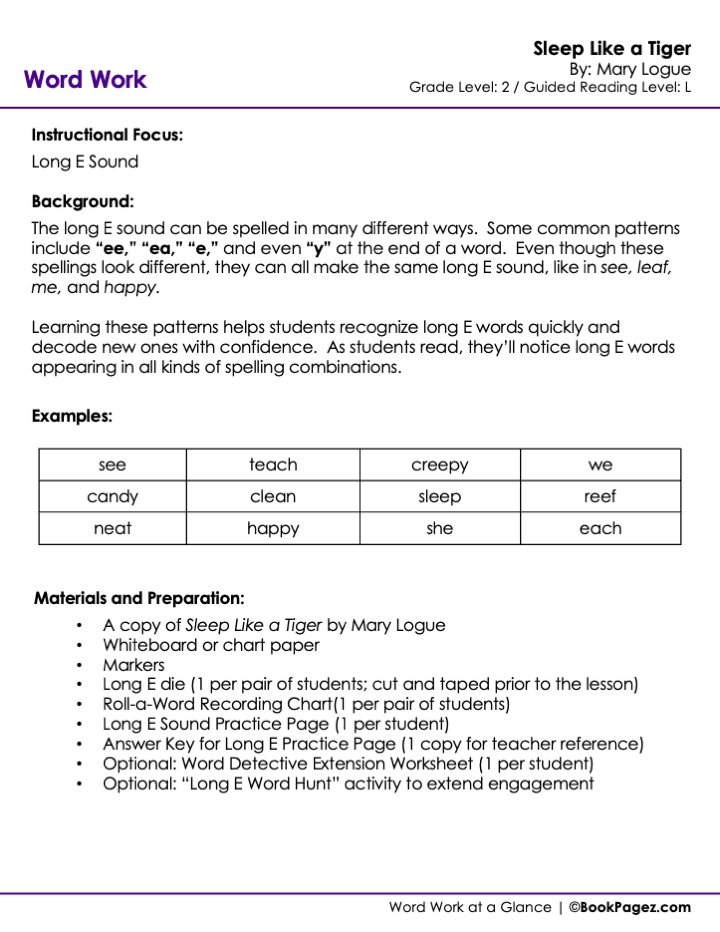
This word work lesson plan and set of teaching resources focuses on the long E vowel sound and its common spelling patterns, including ee, ea, e, and y. By anchoring instruction to explicit vowel patterns, students learn how the same sound can be spelled in different ways and practice identifying long E words in context. The lesson supports decoding, word recognition, and flexible word-solving strategies while building confidence with vowel sounds across reading and writing.
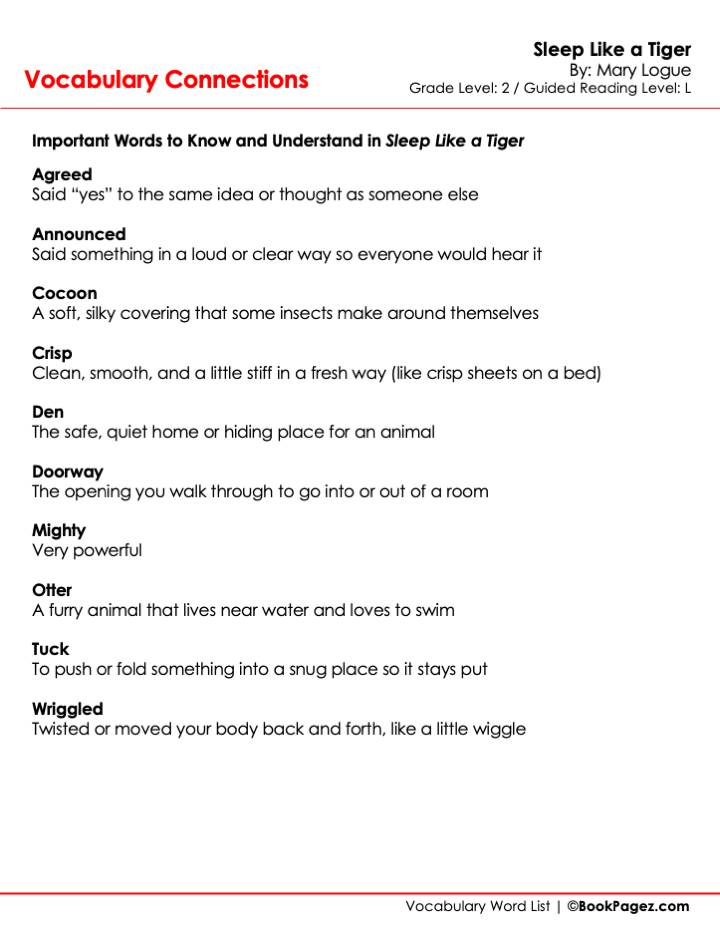
This set of vocabulary development resources for Sleep Like a Tiger highlights key words that are essential for students to understand while reading the story. Through engaging activities such as word games, word-to-definition and picture matching, and word categorization practice, students will build the vocabulary they need to comprehend this story—and many others—with confidence.
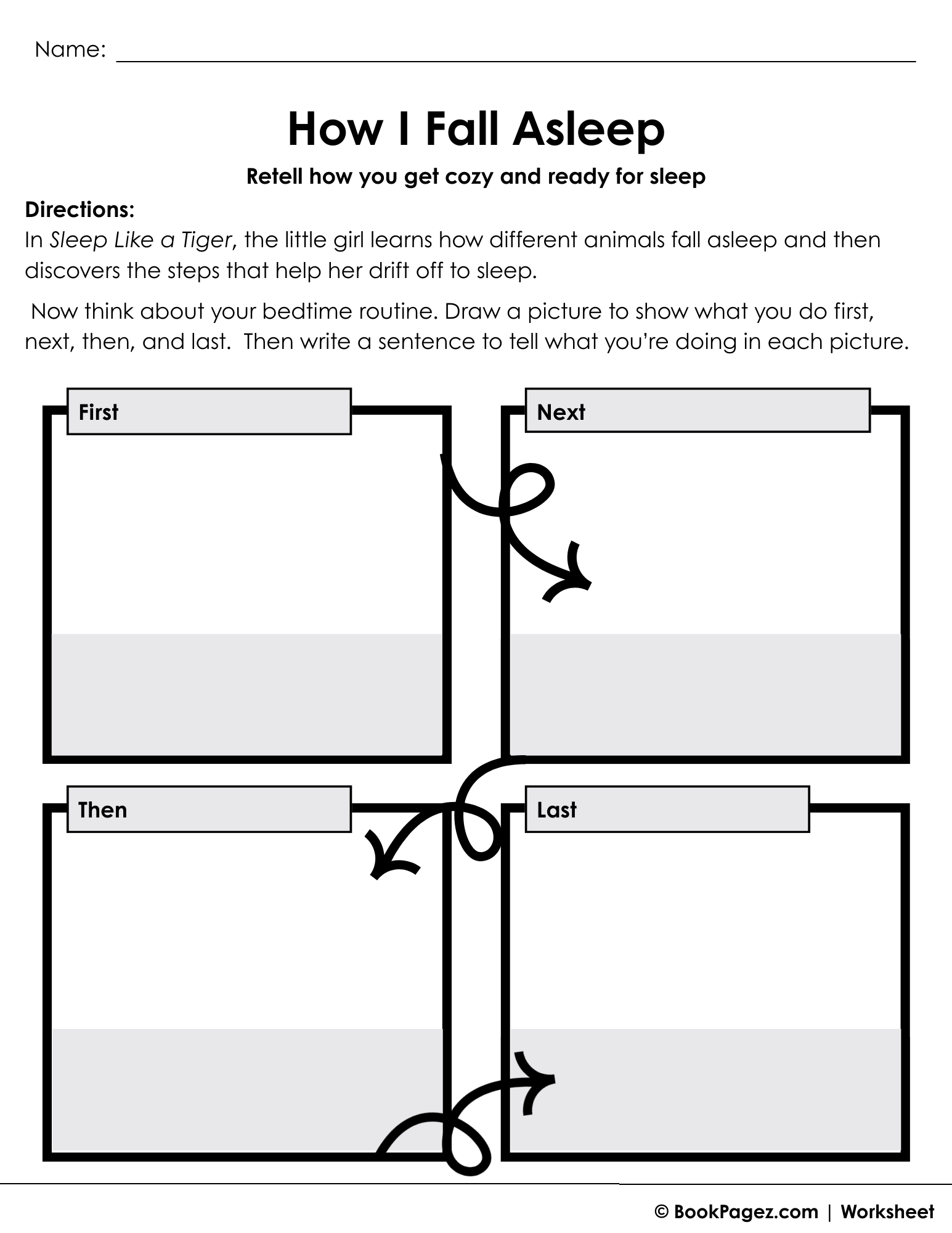
This sequencing and writing activity connects to Sleep Like a Tiger as students reflect on how the story's bedtime routine compares to their own. Students draw and write about what they do first, next, then, and last as they get ready for bed. The activity supports sequencing skills, personal connections to text, and clear sentence writing, making it a meaningful extension of the read-aloud and an easy way to reinforce comprehension through routine-based storytelling.
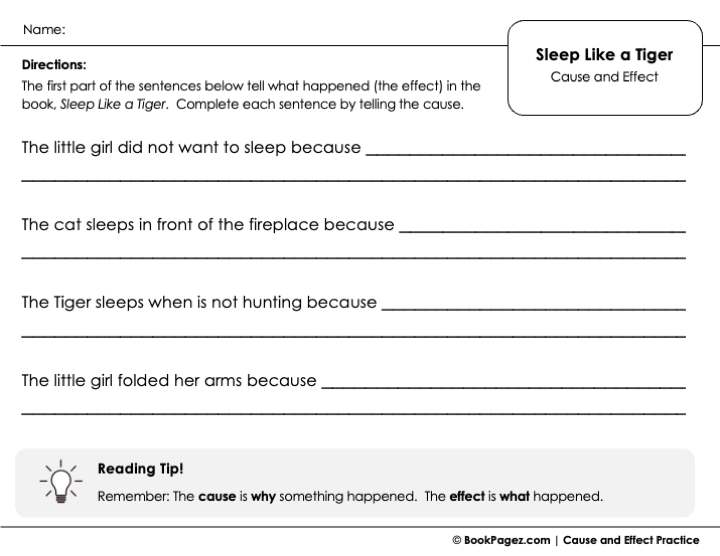
Understanding cause and effect is a key comprehension and language skill. The text structure of Sleep Like a Tiger includes several examples of cause and effect relationships, making it easy to use as a springboard for modeling or independent practice.
This simple resource includes four sentence stems. Each sentence stem presents an effect. Students will use what they know about the book to fill in the cause of the effect.
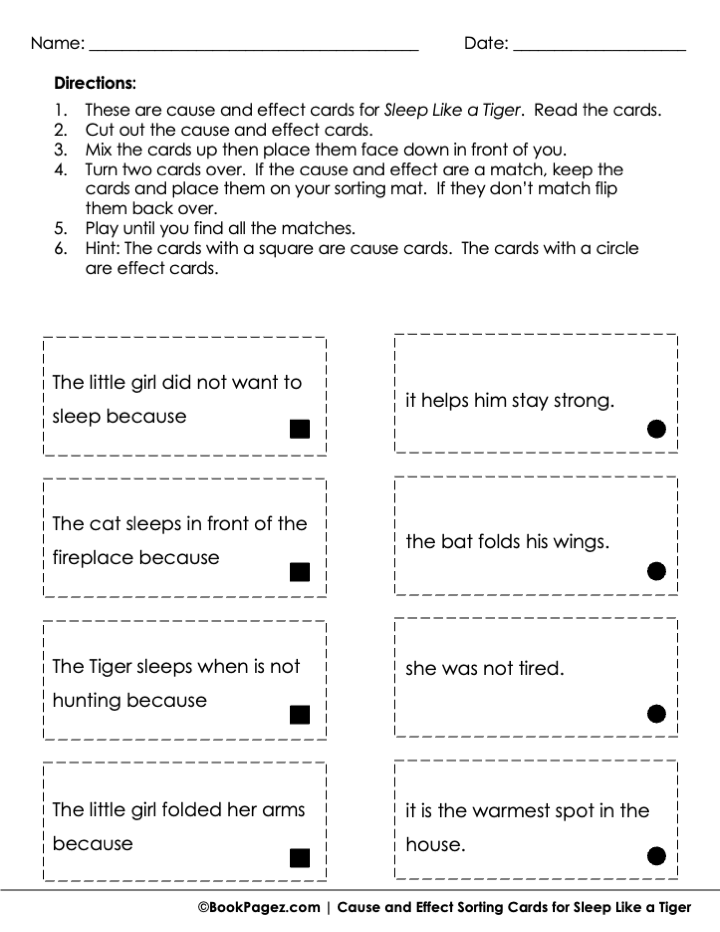
Read Sleep Like a Tiger then have some fun matching cause and effect sentences from the book. By using these cause and effect cards, students will demonstrate both their comprehension of the text and their understanding of cause and effect relationships in a hands-on and interactive way.
This resource includes matching/sorting cards and a sorting mat for four cause and effect sentences in Sleep Like a Tiger. Each cause card is marked with a square, and each effect card is marked with a circle, making it easy to support students who struggle with matching cause and effect relationships.

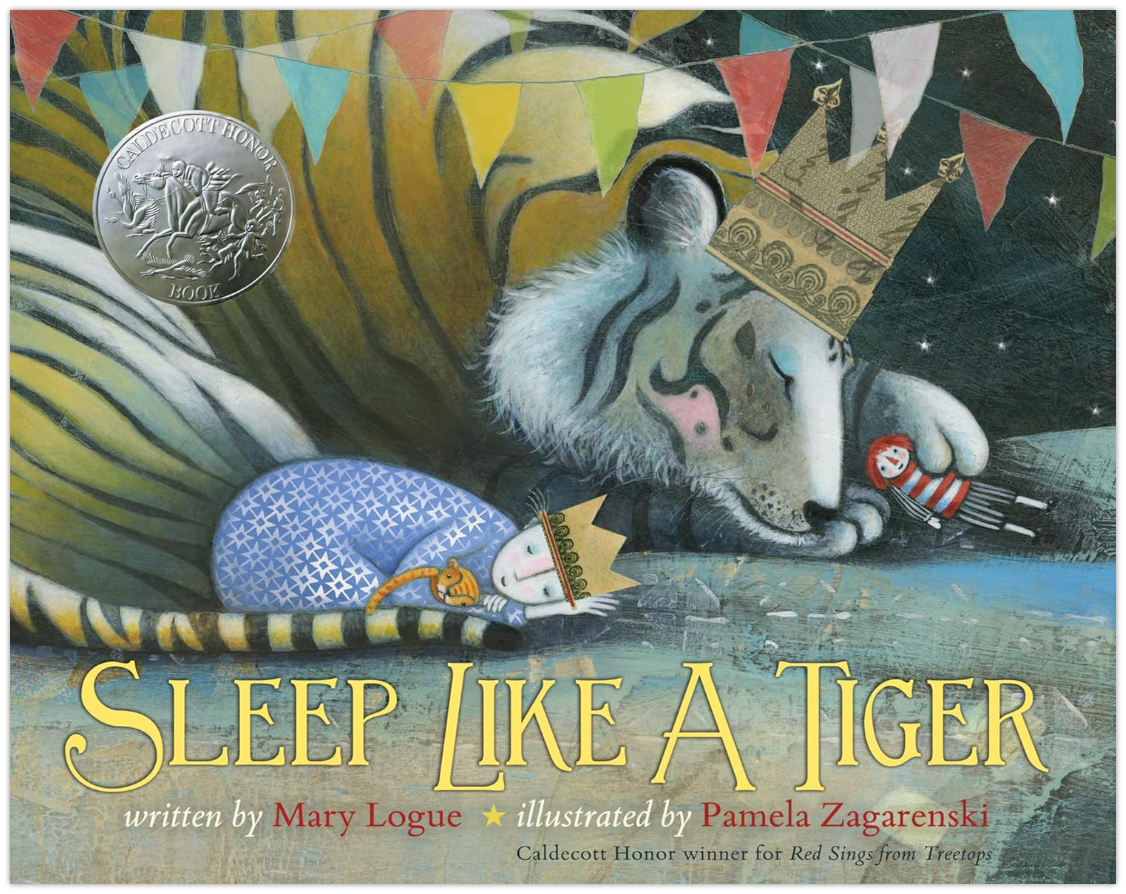
Sleep Like a Tiger by Mary Logue, illustrated by Pamela Zagarenski, is a gentle bedtime story that captures the familiar challenge of a young child resisting sleep. The narrative centers on a spirited little girl who insists she is not sleepy, even as evening settles in, and her patient parents who guide her through the bedtime routine with kindness and understanding. Set in a cozy home filled with warmth and affection, the story unfolds through sincere conversations that highlight themes of family bonding, the natural rhythm of rest, and the wonder of the world at night.