Use Hello Lighthouse by Sophie Blackall to strengthen your students' comprehension skills, build their vocabulary, and help them understand how words work.
Use this beautifully illustrated picture book to strengthen students' comprehension skills, deepen their understanding of author's choices, and explore how stories change over time. The story follows a lighthouse and its keeper as seasons pass, families grow, and technology transforms life at sea. Through simple text and rich visuals, students explore themes of responsibility, change, and continuity.
This resource set includes targeted comprehension lessons focused on Synthesizing, Author's Purpose, and Making Inferences, helping students think across the beginning, middle, and end of the story, notice why the author made certain choices, and read between the lines using both text and illustrations. The collection also features a word work lesson on three-syllable words drawn from nautical and story-based vocabulary, along with a creative extension activity inspired by the author's note on real lighthouse keepers.
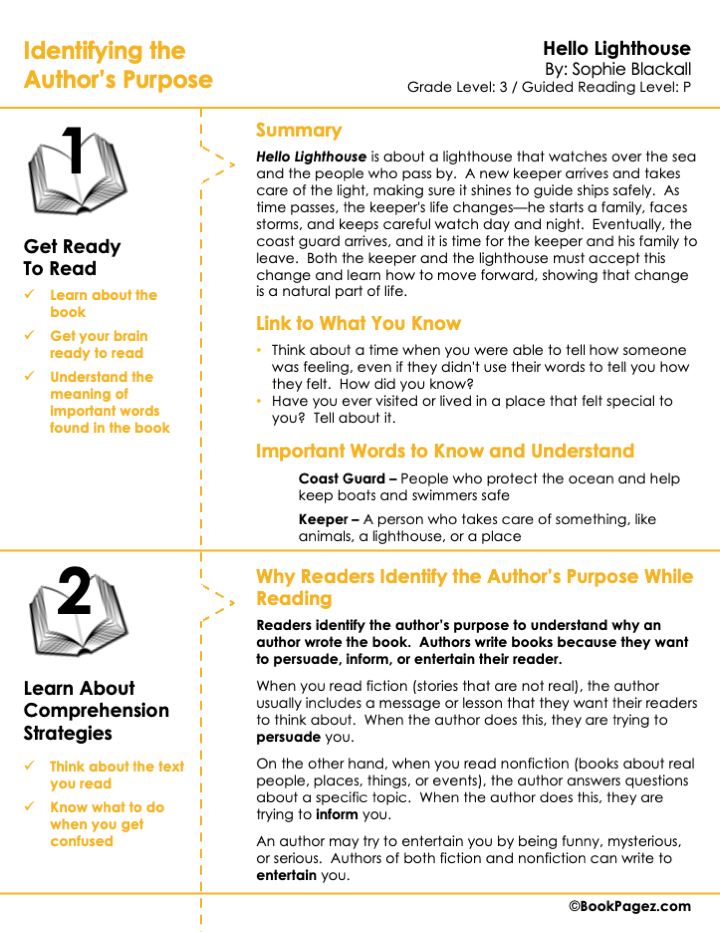
Sophie Blackall makes intentional choices in both her words and illustrations to tell this quiet, reflective story. Students explore why the author repeats certain phrases, uses simple language, and ends the story the way she begins it. By focusing on the author's purpose, readers learn to think about why the story is told this way and how those choices help communicate ideas about responsibility, transition, and time.
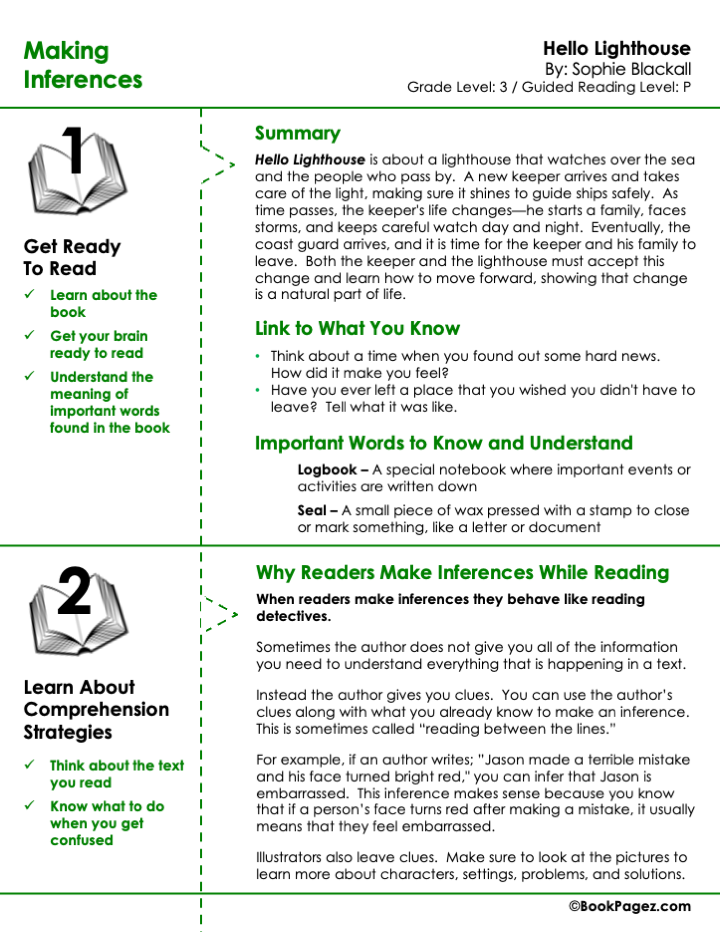
The text and illustrations in Hello Lighthouse invite students to make inferences about characters, emotions, and events that are not stated directly. Readers infer who the letters are written to, how the keeper feels as his life changes, and what the lighthouse represents as people come and go. This strategy encourages students to use clues from both words and pictures to understand the meaning beneath the surface of the story.
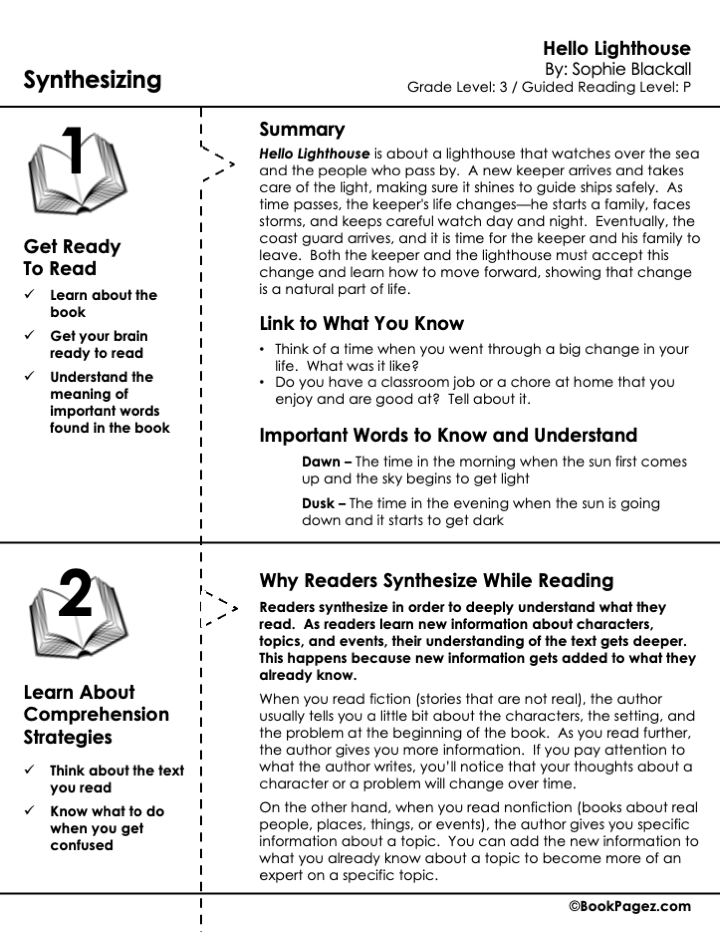
Hello Lighthouse offers rich opportunities for students to practice synthesizing as they track how the lighthouse and the keeper change throughout the story. Readers combine information from the beginning, middle, and end to understand how daily routines, family life, and the keeper's role evolve over time. By pulling together ideas across multiple pages, students build a deeper understanding of the story's message about growth, change, and steady care.
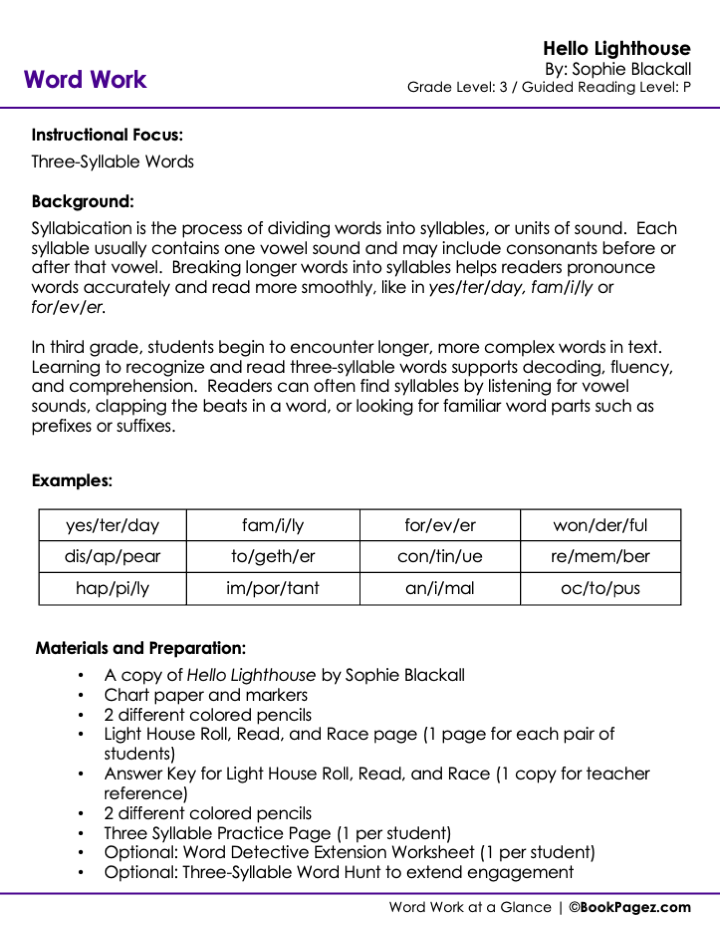
This word work lesson plan and set of teaching resources use Hello Lighthouse as a springboard for instruction focused on reading and decoding three-syllable words. Students practice breaking longer words into syllables to support accurate pronunciation and smoother reading. By connecting syllabication to the text, this lesson strengthens decoding strategies, fluency, and comprehension as students encounter more complex vocabulary in third grade.
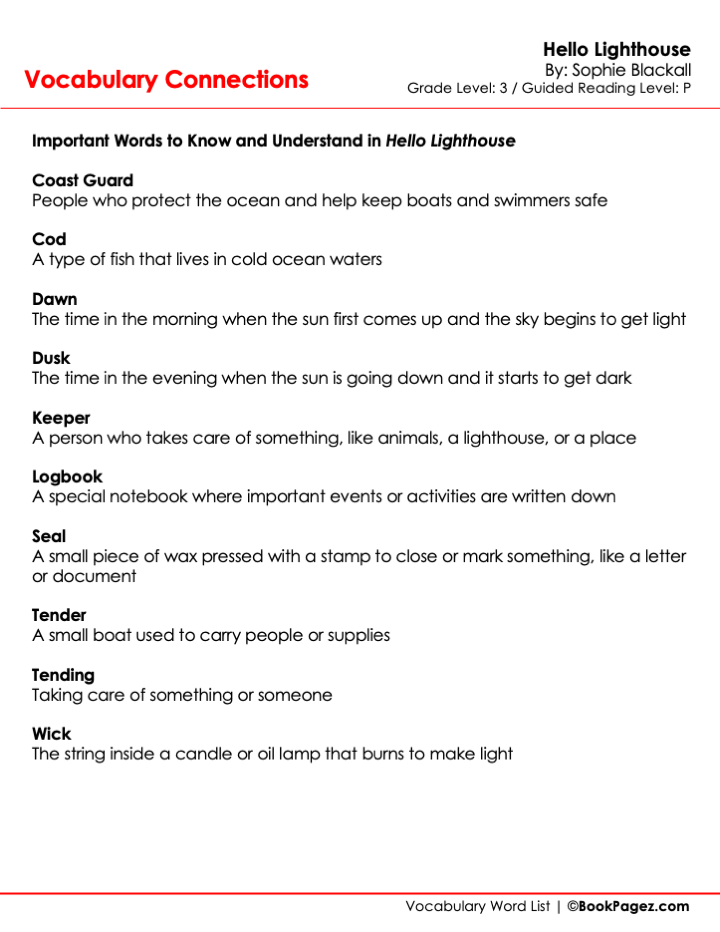
This set of vocabulary development resources for Hello Lighthouse highlights key words that are essential for students to understand while reading the story. Through engaging activities such as word games, word-to-definition and picture matching, and word categorization practice, students will build the vocabulary they need to comprehend this story—and many others—with confidence.

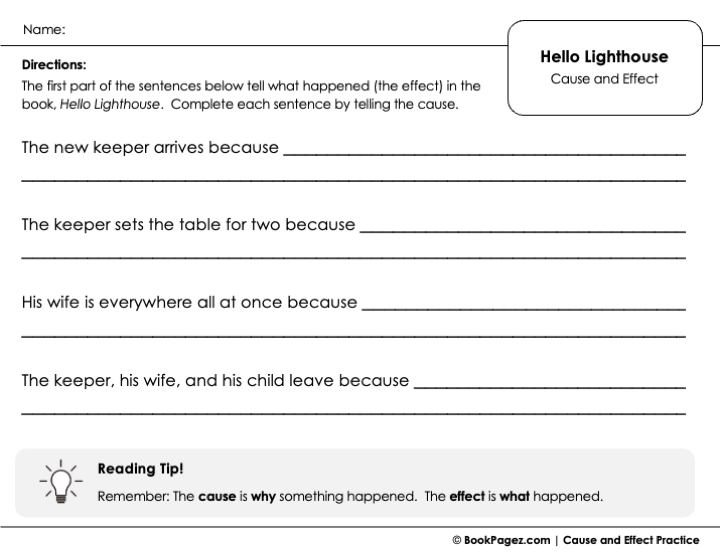
Understanding cause and effect is a key comprehension and language skill. The text structure of Hello Lighthouse includes several examples of cause and effect relationships, making it easy to use as a springboard for modeling or independent practice.
This simple resource includes four sentence stems. Each sentence stem presents an effect. Students will use what they know about the book to fill in the cause of the effect.
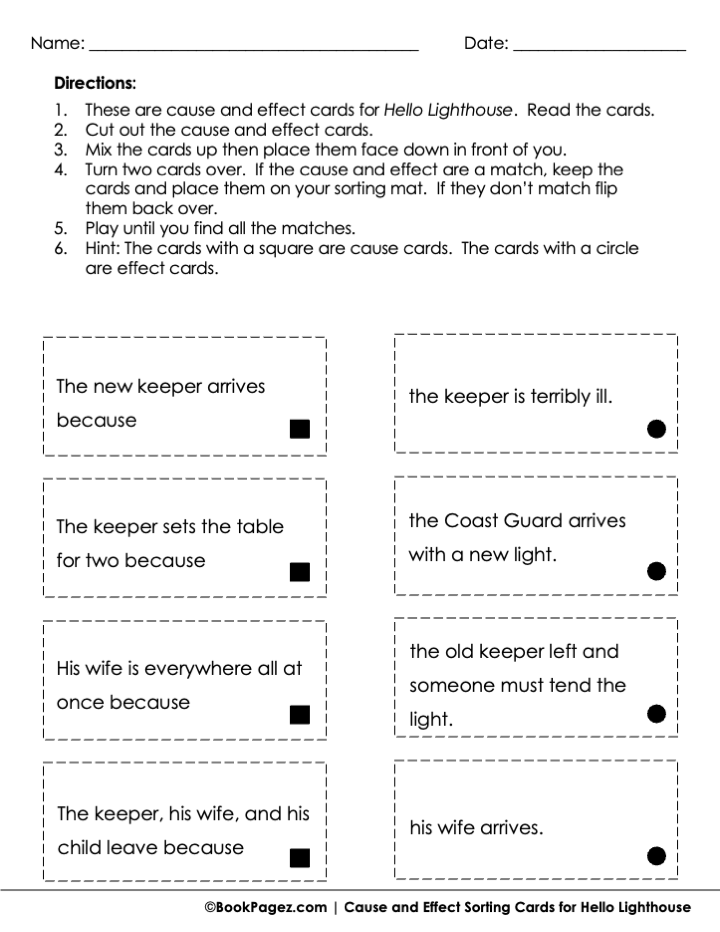
Read Hello Lighthouse then have some fun matching cause and effect sentences from the book. By using these cause and effect cards, students will demonstrate both their comprehension of the text and their understanding of cause and effect relationships in a hands-on and interactive way.
This resource includes matching/sorting cards and a sorting mat for four cause and effect sentences in Hello Lighthouse. Each cause card is marked with a square, and each effect card is marked with a circle, making it easy to support students who struggle with matching cause and effect relationships.
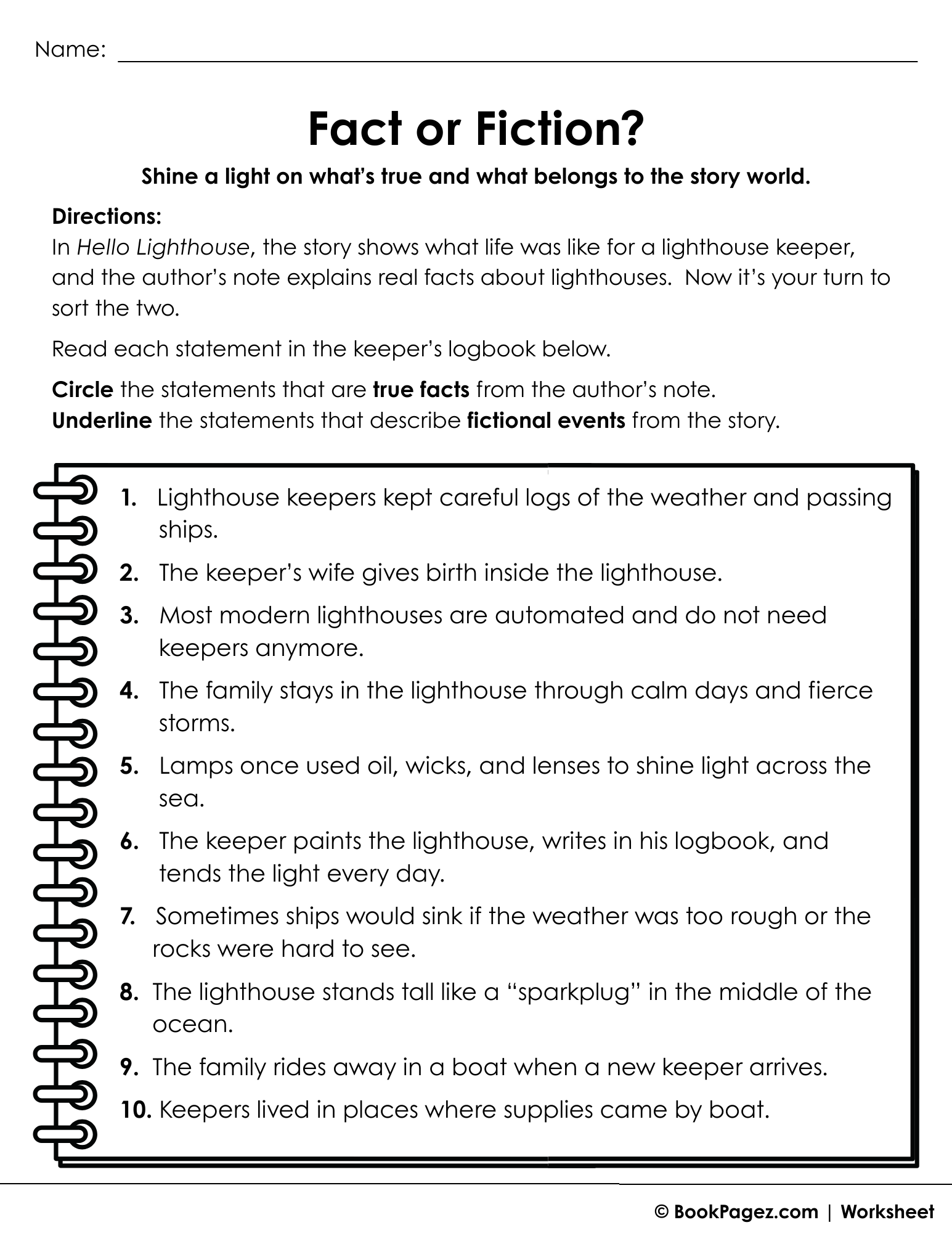
This comprehension activity connects to Hello Lighthouse as students learn to distinguish between factual information and fictional events. Using the keeper's logbook, students read each statement and decide whether it comes from the author's note or the story itself. By sorting facts and fiction, students strengthen informational reading skills, close reading, and their understanding of how authors blend real information with narrative text.

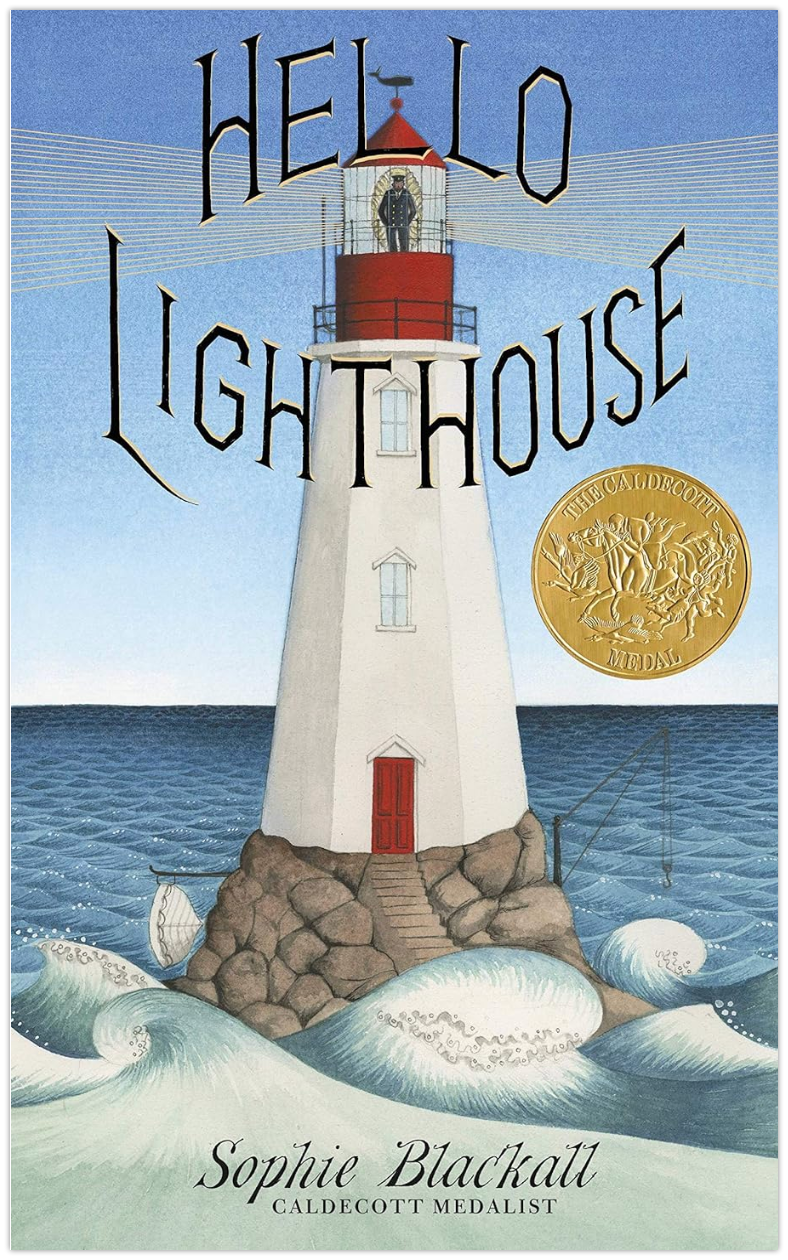
On the highest rock of a tiny island at the edge of the world stands a lighthouse, and this Caldecott Medal-winning picture book invites readers into the warm, purposeful life of its keeper. Sophie Blackall's stunning illustrations and carefully researched narrative celebrate the daily routines, seasonal changes, and profound human moments that unfold within this iconic structure. The story follows a dedicated lighthouse keeper as he tends to his duties with meticulous care, maintaining the lamp's lens, trimming the wick, and faithfully recording every detail in his logbook. When his wife joins him on the island, their solitary posting transforms into a home filled with companionship and love. Together they navigate the challenges and joys of lighthouse life: rescuing shipwrecked sailors, caring for each other through illness, and welcoming the birth of their daughter. Throughout it all, the lighthouse stands constant, its beam sending out repeated hellos to the ships at sea, even as the seasons shift and storms rage around the island. The book gently explores themes of constancy and change, duty and devotion, and the quiet romance of a life dedicated to protecting others. Blackall's research into the inner workings of lighthouses and the experiences of their keepers shines through in every carefully crafted detail, creating a story that educates while it enchants. The distinctive circular architecture of the lighthouse, shown in beautiful cutaway views, becomes almost a character itself, sheltering the family within its walls.
This is a perfect read-aloud for children ages four through ten, offering rich material for discussions about history, family, responsibility, and the passage of time. Teachers will appreciate both the historical accuracy and the emotional depth that make this book a treasure for any classroom library.