Use The Girl Who Never Made Mistakes by Mark Pett and Gary Rubinstein to strengthen your students' comprehension skills, build their vocabulary, and help them understand how words work.
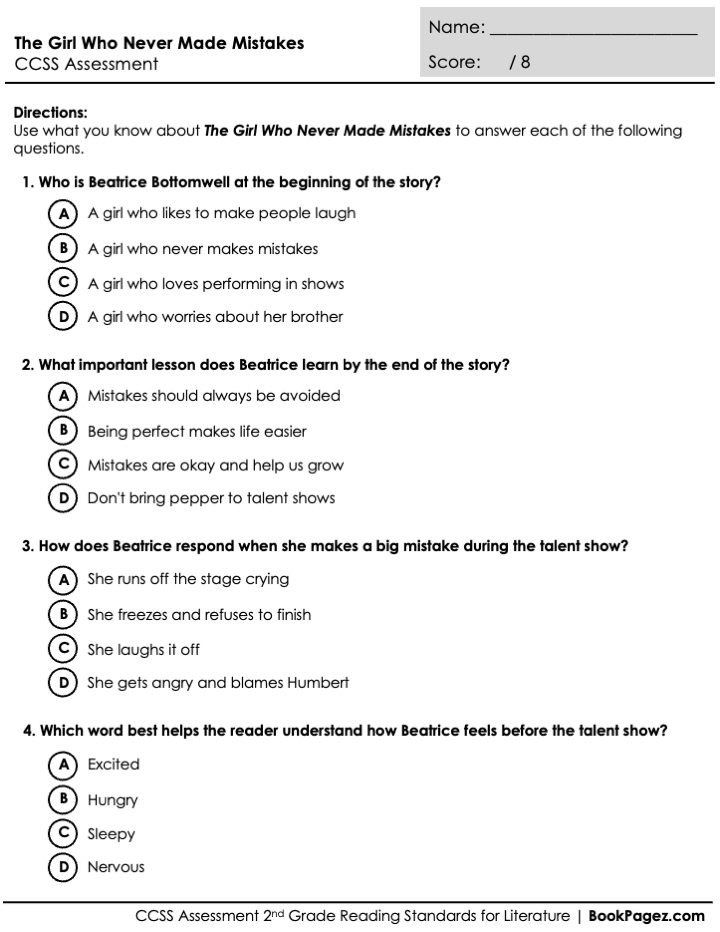
Perfection, pressure, and the freedom to make mistakes come together in this relatable story about Beatrice Bottomwell, a girl known for doing everything just right. From her carefully planned routines to the moment everything goes wrong on stage, students follow Beatrice as she learns that mistakes don't have to be scary.
This resource set supports students as they practice three key comprehension strategies: identifying the author's purpose, synthesizing, and understanding text structure. Through close reading and discussion, students examine why the author includes specific moments, how Beatrice changes throughout the story, and how the story's organization helps convey its message.
The set also includes a word work lesson on one-syllable words with the long E sound, focusing on common spelling patterns ee, ea, and e.
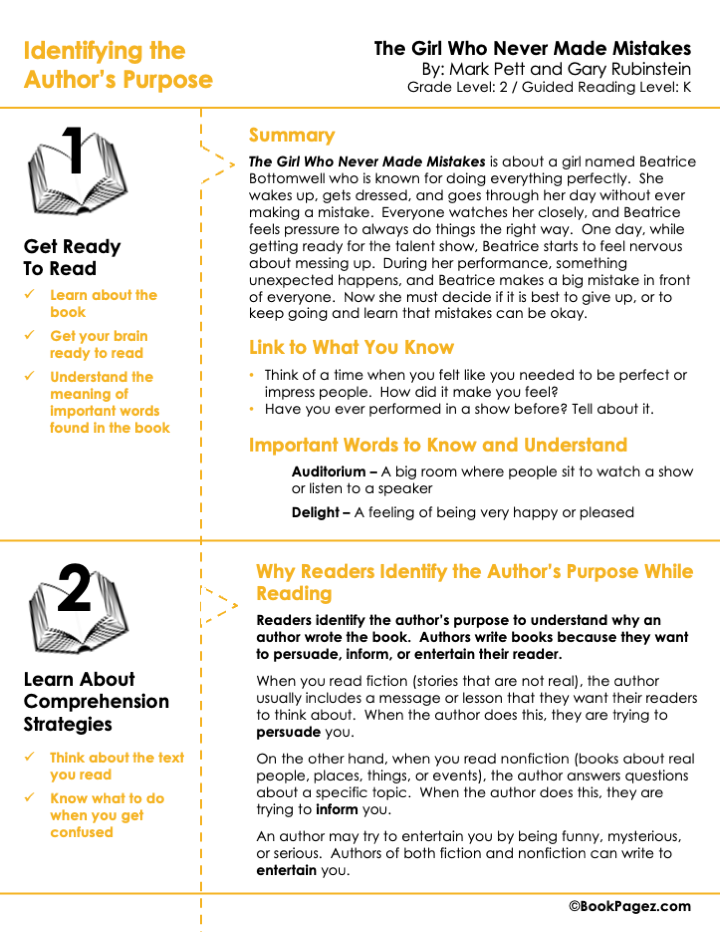
In The Girl Who Never Made Mistakes, the author carefully chooses moments that highlight Beatrice's fear of failure and her eventual growth. From the way Beatrice greets her "fans" to the unforgettable talent show scene, students are encouraged to think about why these moments matter. By identifying the author's purpose, readers gain a deeper understanding of how the story teaches an important lesson about mistakes, pressure, and self-acceptance.
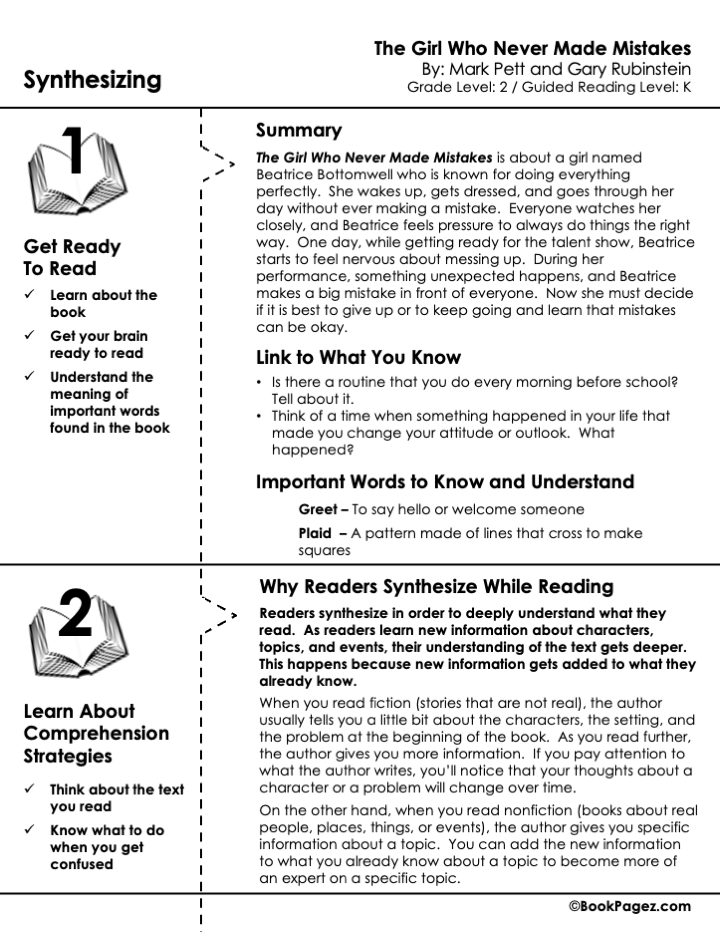
This story is an excellent choice for helping students synthesize information as they read. As events unfold, students combine details from the beginning, middle, and end of the story to track how Beatrice changes over time. By thinking about how new events shape their understanding of Beatrice, readers learn to adjust their thinking and recognize the story's broader message about learning from mistakes.
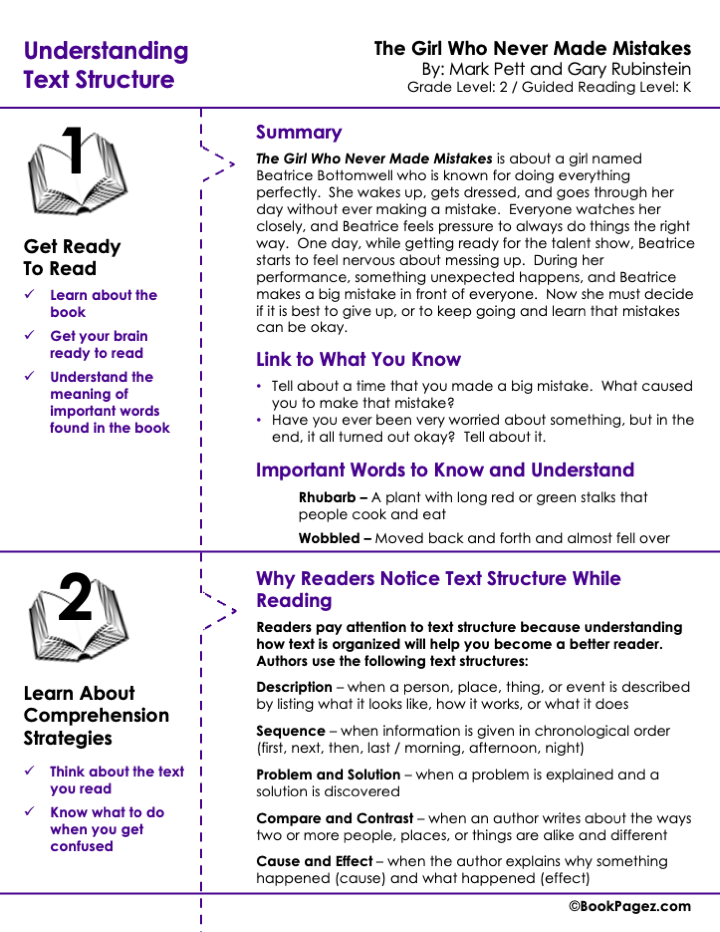
The author uses clear text structures—such as sequencing, compare and contrast, cause and effect, and problem and solution—to move the story forward. Students examine Beatrice's predictable routines, her contrast with her brother Carl, and the cause-and-effect chain that leads to her big mistake on stage. Understanding how the story is organized helps readers see how each part connects and how the ending brings the lesson full circle.
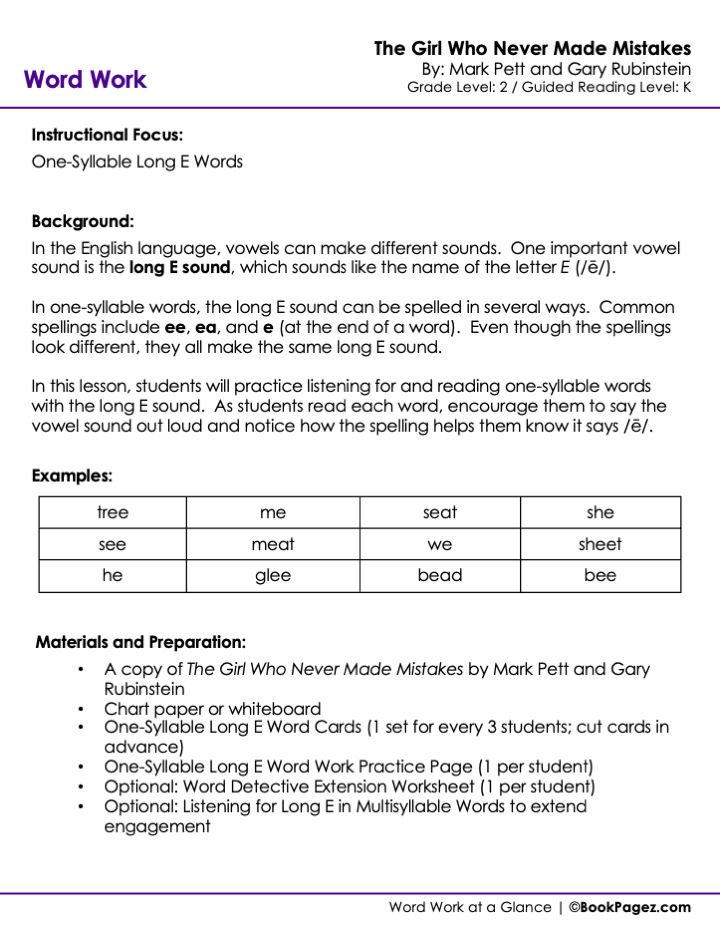
This word work lesson plan and set of teaching resources use The Girl Who Never Made Mistakes as a springboard for instruction focused on the long E vowel sound in one-syllable words. Students explore common spelling patterns such as ee, ea, and e at the end of a word, learning that different spellings can make the same /ē/ sound. By connecting phonics to the text, students practice listening for, reading, and recognizing long E words, building stronger decoding skills and reading confidence.
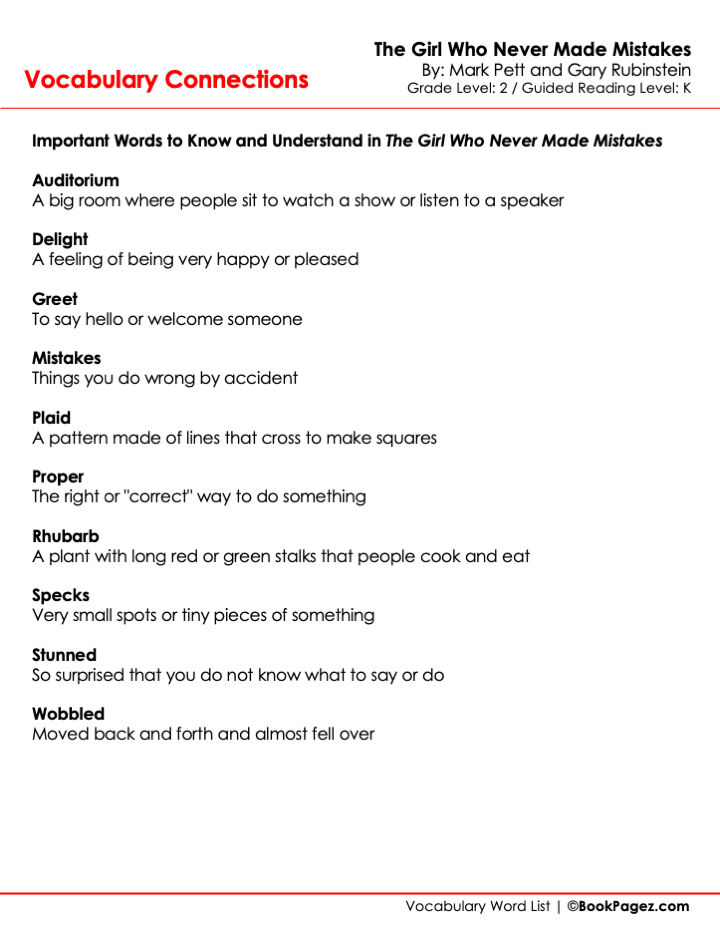
This set of vocabulary development resources for The Girl Who Never Made Mistakes highlights key words that are essential for students to understand while reading the story. Through engaging activities such as word games, word-to-definition and picture matching, and word categorization practice, students will build the vocabulary they need to comprehend this story—and many others—with confidence.

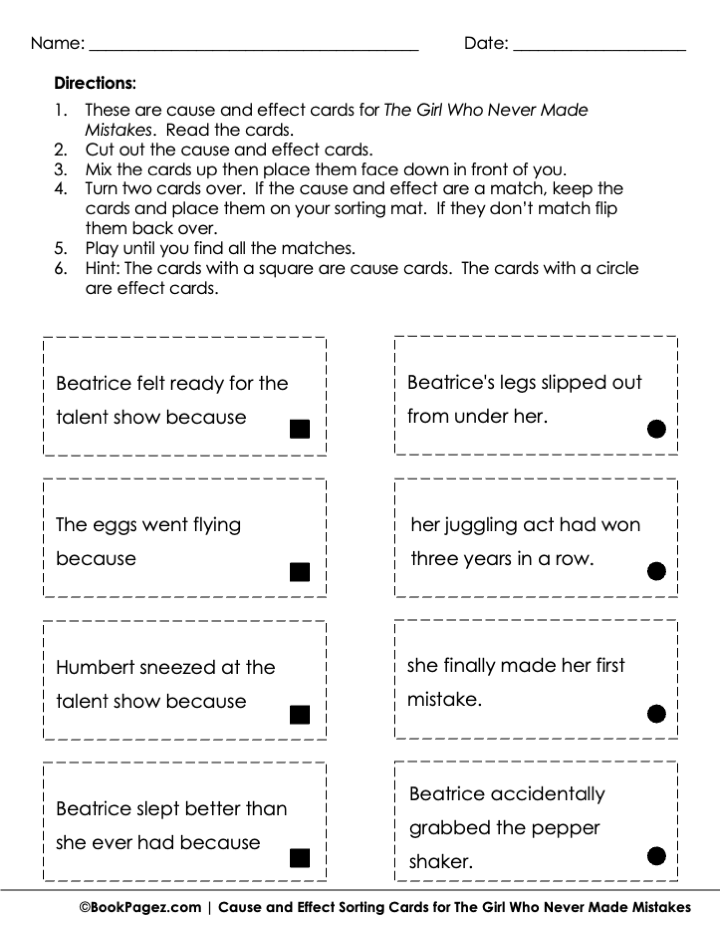
Read The Girl Who Never Made Mistakes then have some fun matching cause and effect sentences from the book. By using these cause and effect cards, students will demonstrate both their comprehension of the text and their understanding of cause and effect relationships in a hands-on and interactive way.
This resource includes matching/sorting cards and a sorting mat for four cause and effect sentences in The Girl Who Never Made Mistakes. Each cause card is marked with a square, and each effect card is marked with a circle, making it easy to support students who struggle with matching cause and effect relationships.
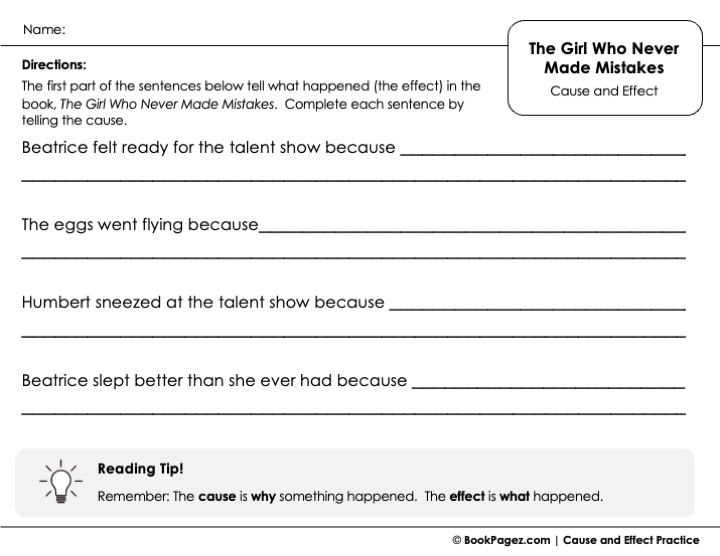
Understanding cause and effect is a key comprehension and language skill. The text structure of The Girl Who Never Made Mistakes includes several examples of cause and effect relationships, making it easy to use as a springboard for modeling or independent practice.
This simple resource includes four sentence stems. Each sentence stem presents an effect. Students will use what they know about the book to fill in the cause of the effect.
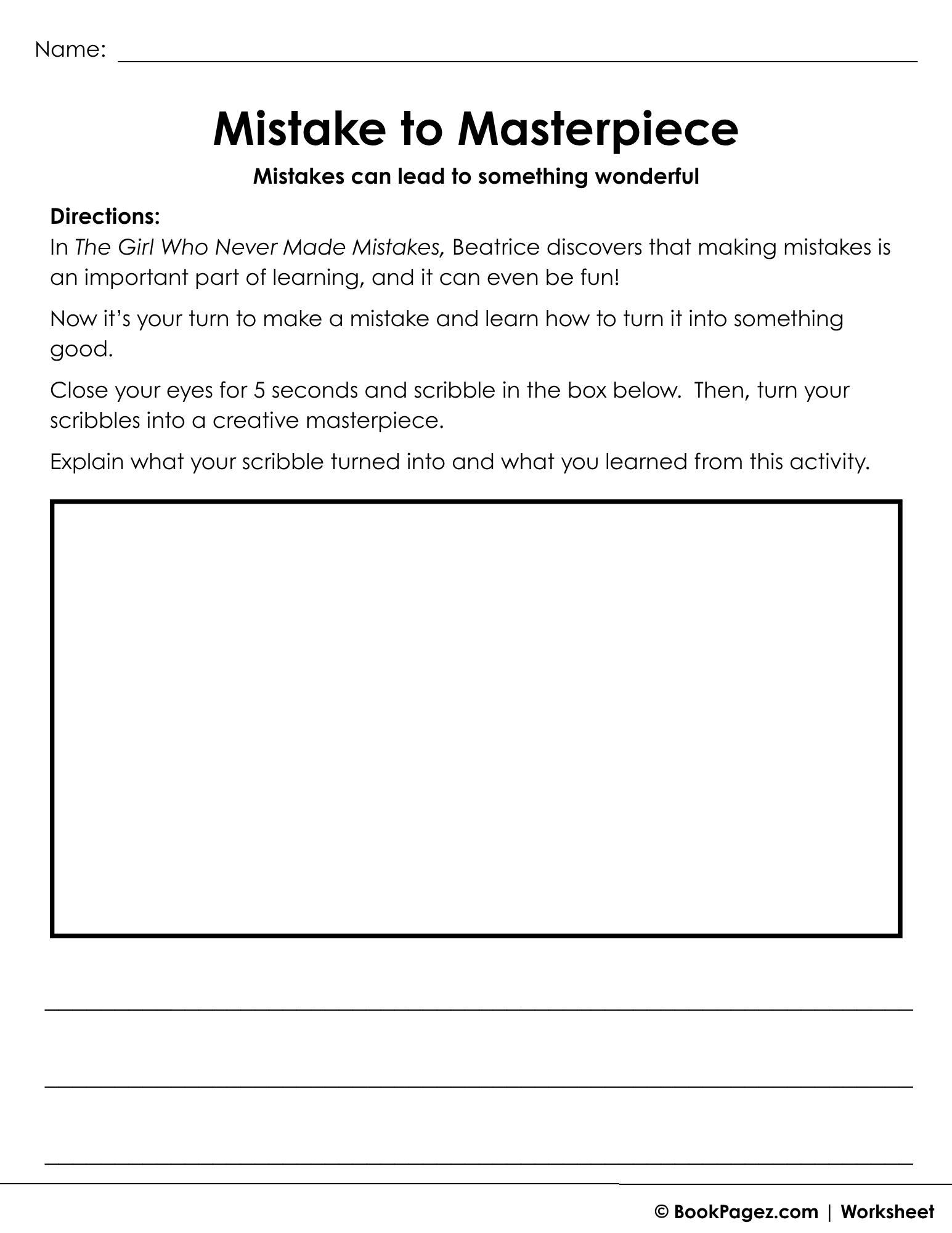
This creative response activity connects to The Girl Who Never Made Mistakes as students explore the idea that mistakes can lead to learning and creativity. Students begin by making a simple scribble and then transform it into a unique piece of art. They reflect on what their scribble became and what they learned from the experience. This activity encourages a growth mindset, creativity, and self-reflection while reinforcing the story's message about embracing mistakes.

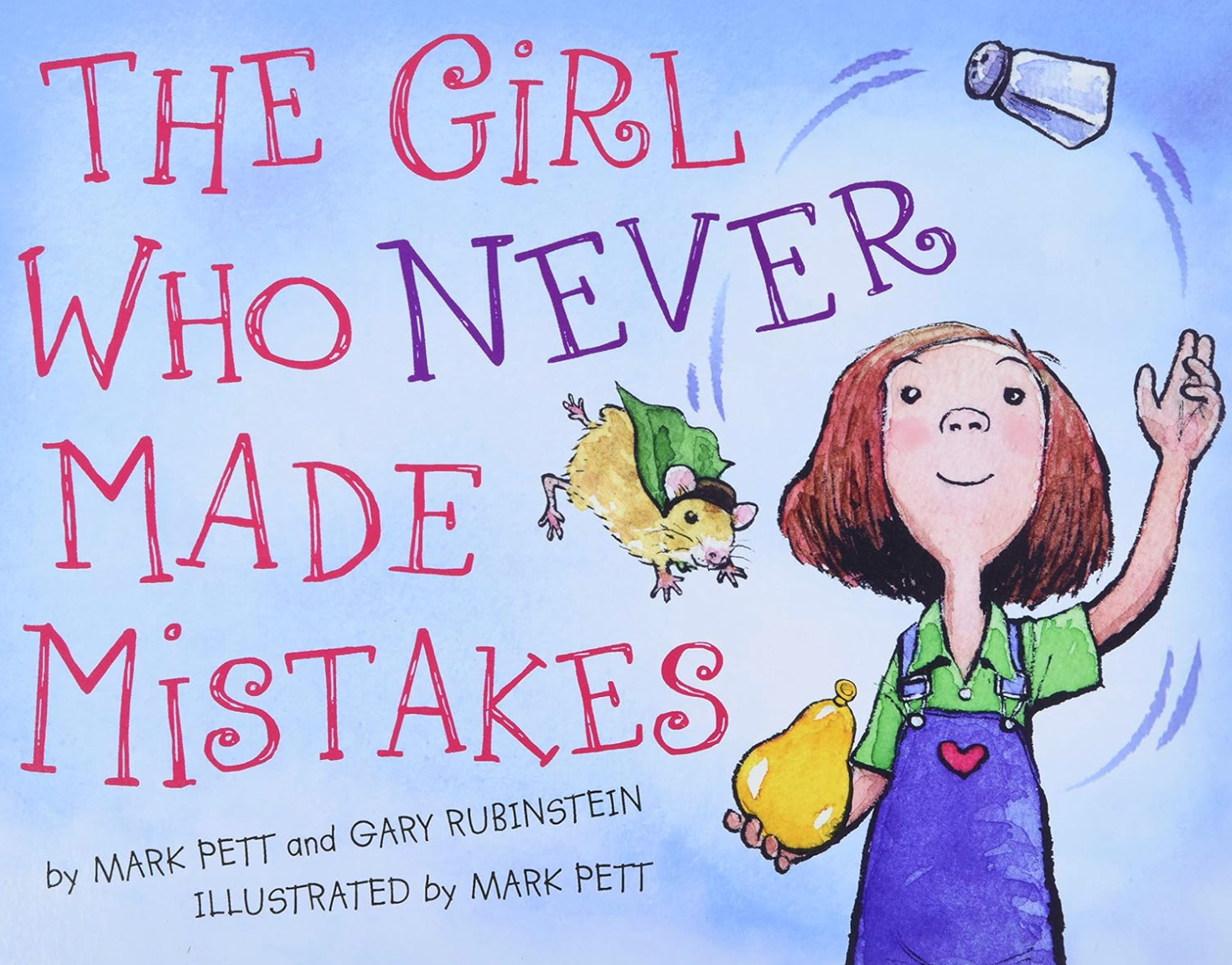
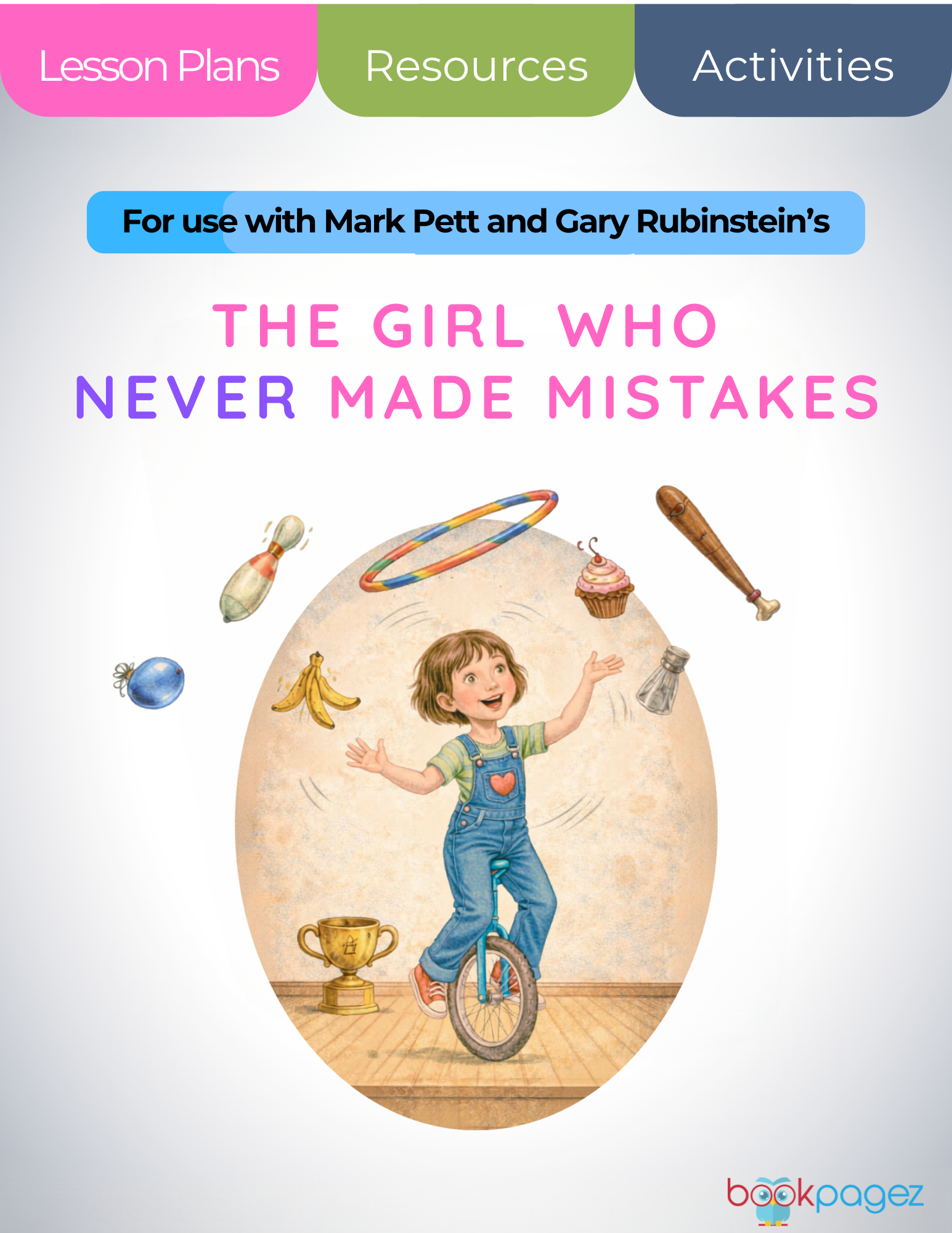
In The Girl Who Never Made Mistakes, young readers meet Beatrice Bottomwell, a nine-year-old known throughout town for being perfect. She always finishes her homework, matches her socks, feeds her hamster, and wins the school talent show with her famous juggling act. But being known as “The Girl Who Never Makes Mistakes” puts a lot of pressure on Beatrice and shapes the choices she makes each day.
Her younger brother Carl offers a funny contrast, happily making messes and trying new things without worry. Through Beatrice’s story, the book explores perfectionism, fear of failure, and the freedom that comes from taking risks. Teachers can use this lighthearted picture book to spark meaningful conversations about growth mindset, resilience, self-acceptance, and the value of making mistakes. With humor and heart, the story reminds children that mistakes are not failures—they can lead to learning, laughter, and new possibilities.