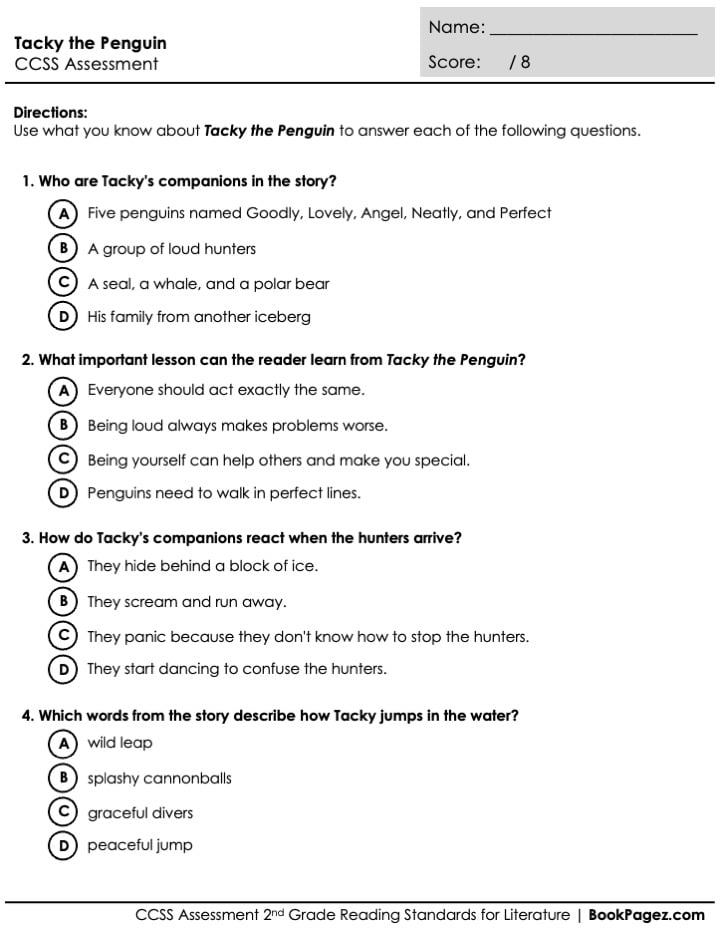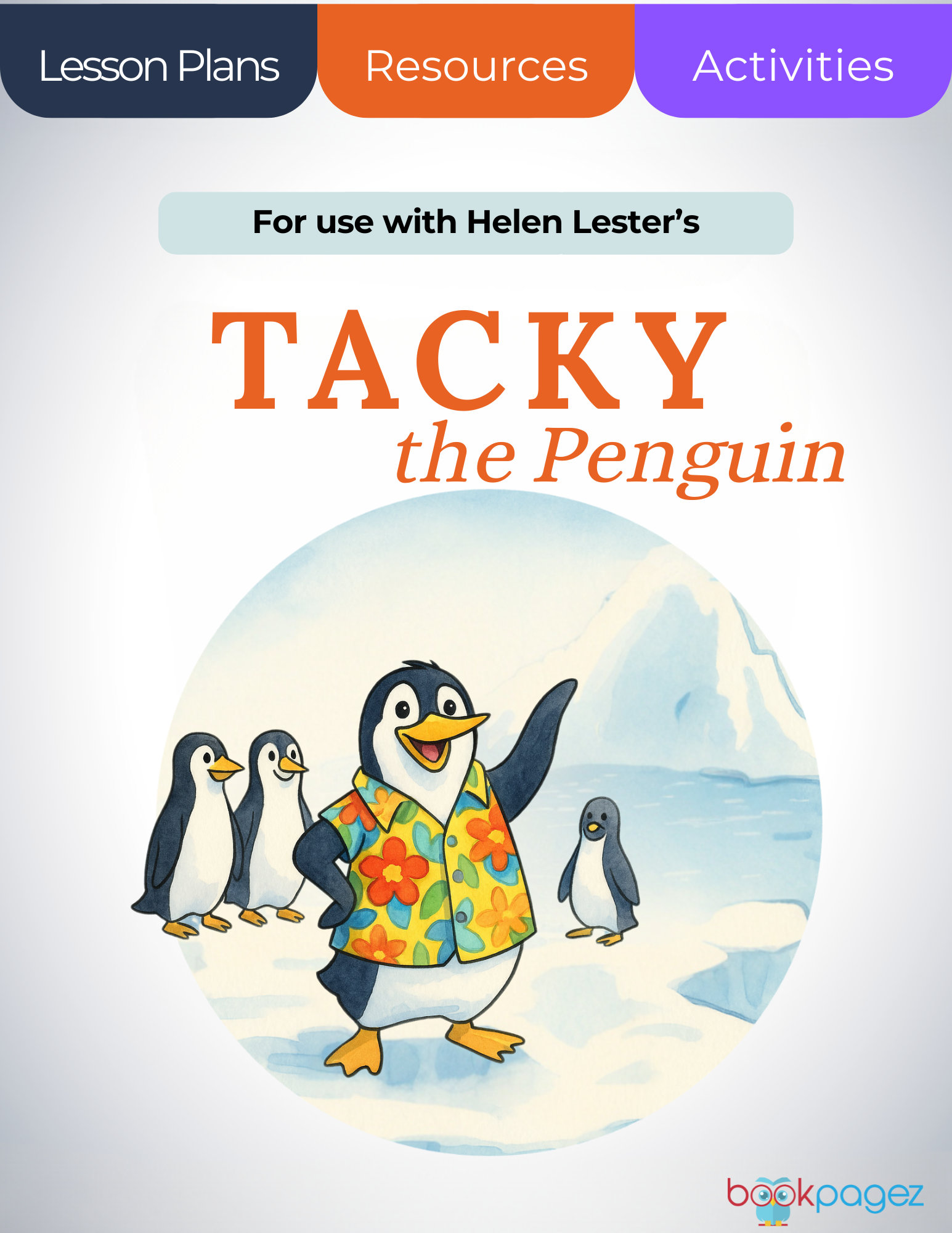
Use Tacky the Penguin by Helen Lester to strengthen your students' comprehension skills, build their vocabulary, and help them understand how words work.
This resource set guides students through key comprehension strategies, including Identifying Author's Purpose, Understanding Text Structure, and Making Inferences. Each activity invites readers to think deeply about Tacky's unique personality and how it shapes the events of the story.
Students will also enjoy a word work activity focused on the suffix -ly, helping them explore how this ending changes the meaning of base words. A rich vocabulary list, featuring words like companions, graceful, hearty, puzzled, and dreadfully,supports language development and comprehension. This collection encourages critical thinking and joyful engagement with a memorable character who proves that being different can make all the difference.
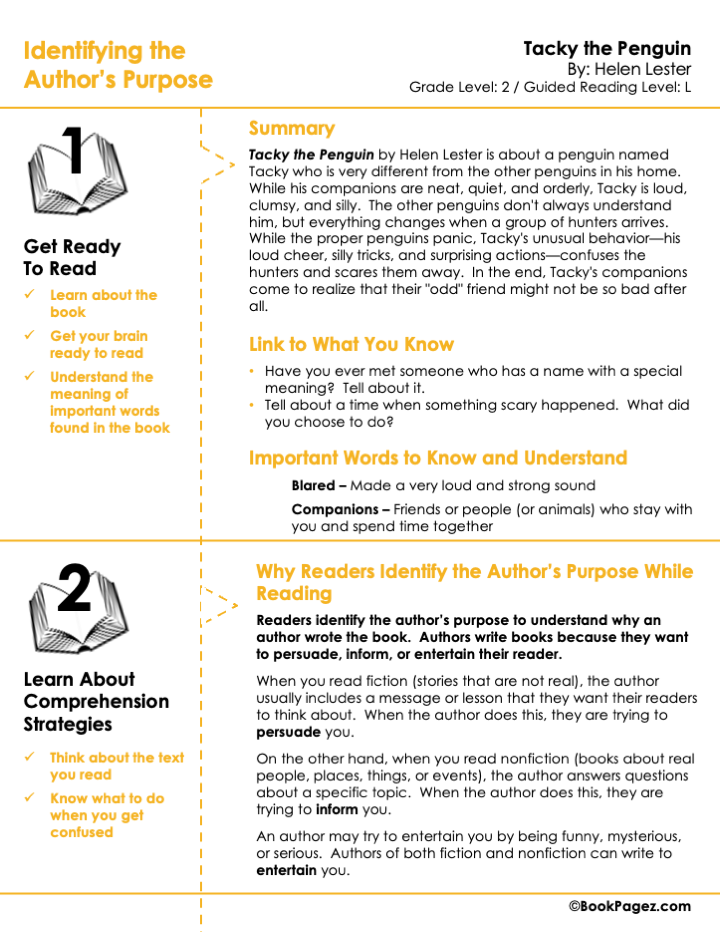
In Tacky the Penguin, Helen Lester uses humor and contrast to help readers understand an important message: sometimes the qualities that make someone different are the same ones that make them valuable. Through guided questions and close reading, students will explore why the author creates such a strong contrast between Tacky and his companions. By examining Tacky's actions, the companions' reactions, and the surprising way the conflict is resolved, students uncover how the author's purpose shines through the story's playful tone and unexpected twist.
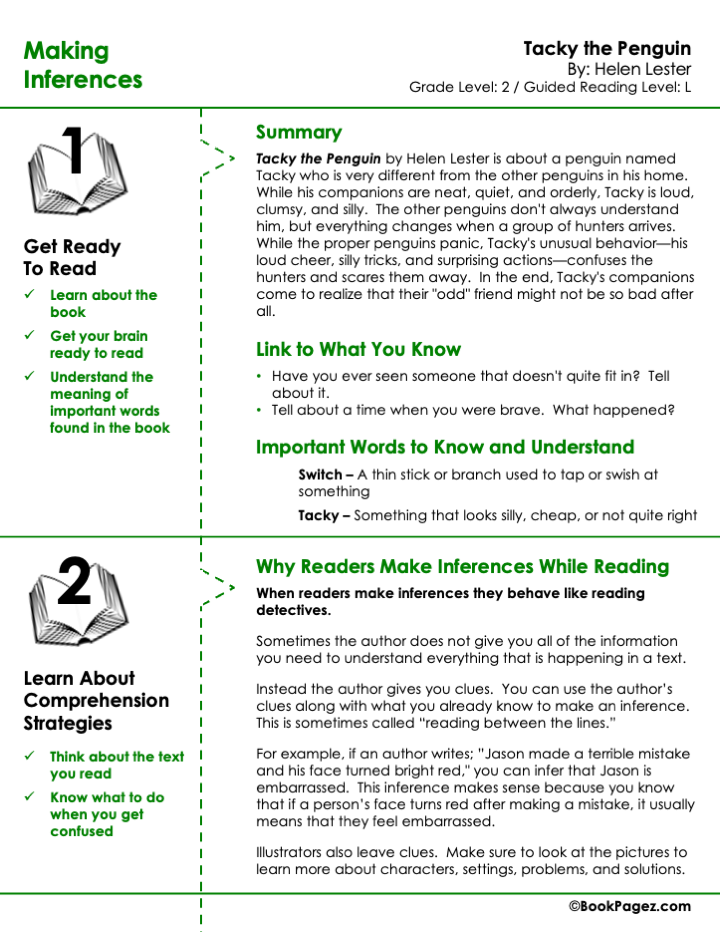
Tacky the Penguin is full of moments that allow students to make thoughtful inferences about characters and events. From Tacky's silly marching to the hunters' puzzled reactions, readers gather clues from both the text and illustrations to infer feelings, motivations, and consequences. This activity encourages students to think beyond what is directly stated, using evidence to draw conclusions about Tacky's bravery, the companions' expectations, and why the hunters react the way they do. By practicing this strategy, students deepen their understanding of the story and strengthen their overall comprehension skills.
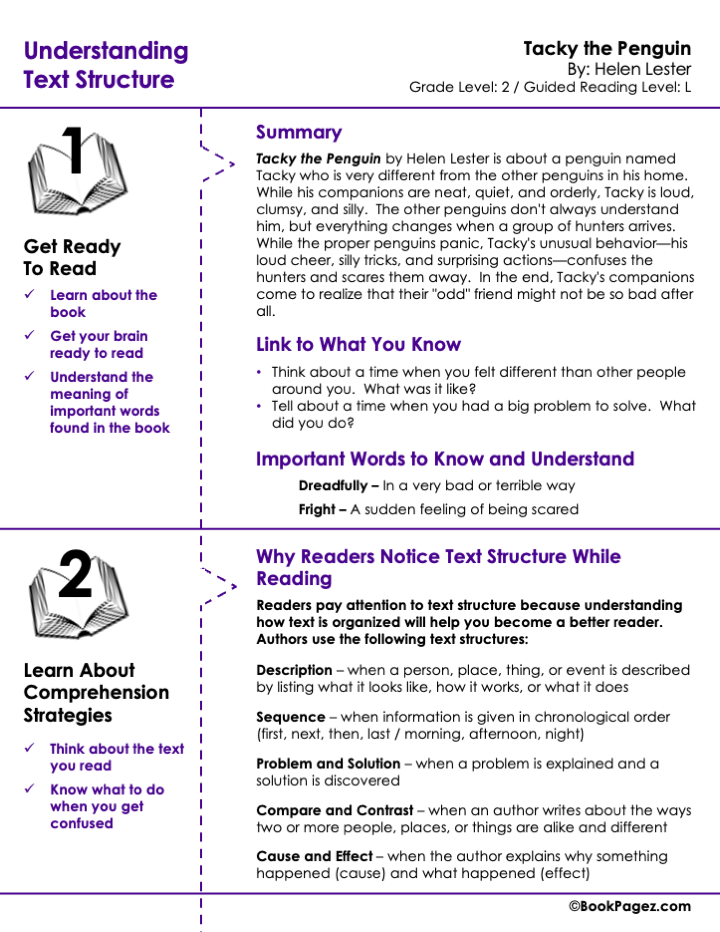
This resource highlights the way Helen Lester uses text structure to shape the story—from a beginning that introduces the "proper" penguins, to a middle filled with rising conflict, to an ending where Tacky's differences save the group. Students will learn to recognize compare-and-contrast, descriptive, and problem-and-solution structures embedded throughout the book. By examining how each section builds on the last, students develop a stronger understanding of how authors organize stories to create meaning and guide readers toward the central message.
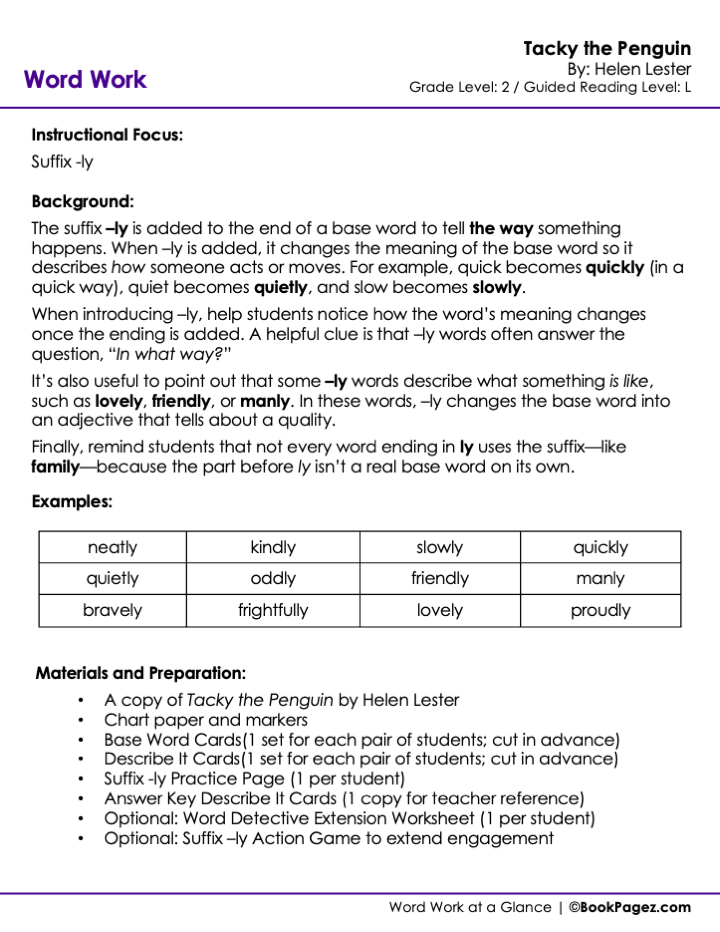
This word work activity uses Tacky the Penguin to help students understand how the suffix -ly changes the meaning of words.
Students explore how -ly is added to a base word to describe how something happens, often answering the question "In what way?" They also learn that some -ly words describe a quality, like friendly or lovely, while others, such as family, are not true suffix words at all.
This routine builds vocabulary, strengthens word structure knowledge, and supports more precise reading and writing through meaningful examples from the story.
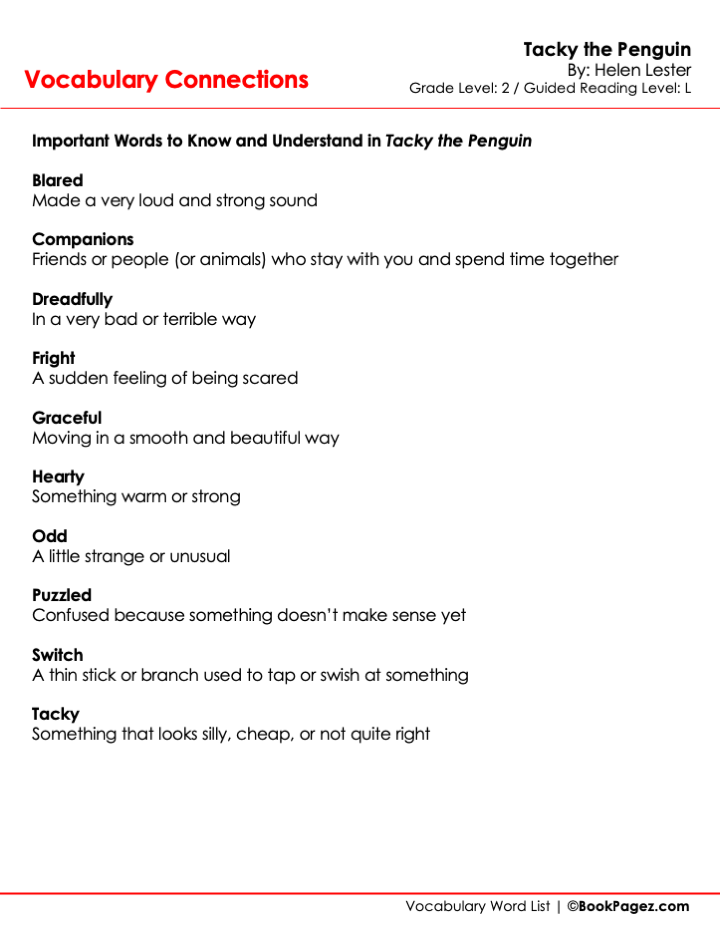
This set of vocabulary development resources for Tacky the Penguin highlights key words that are essential for students to understand while reading the story. Through engaging activities such as word games, word-to-definition and picture matching, and word categorization practice, students will build the vocabulary they need to comprehend this story—and many others—with confidence.

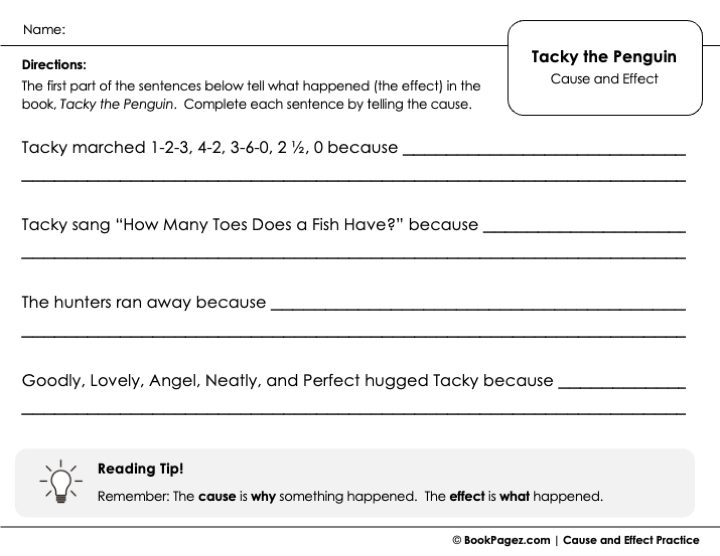
Understanding cause and effect is a key comprehension and language skill. The text structure of Tacky the Penguin includes several examples of cause and effect relationships, making it easy to use as a springboard for modeling or independent practice.
This simple resource includes four sentence stems. Each sentence stem presents an effect. Students will use what they know about the book to fill in the cause of the effect.
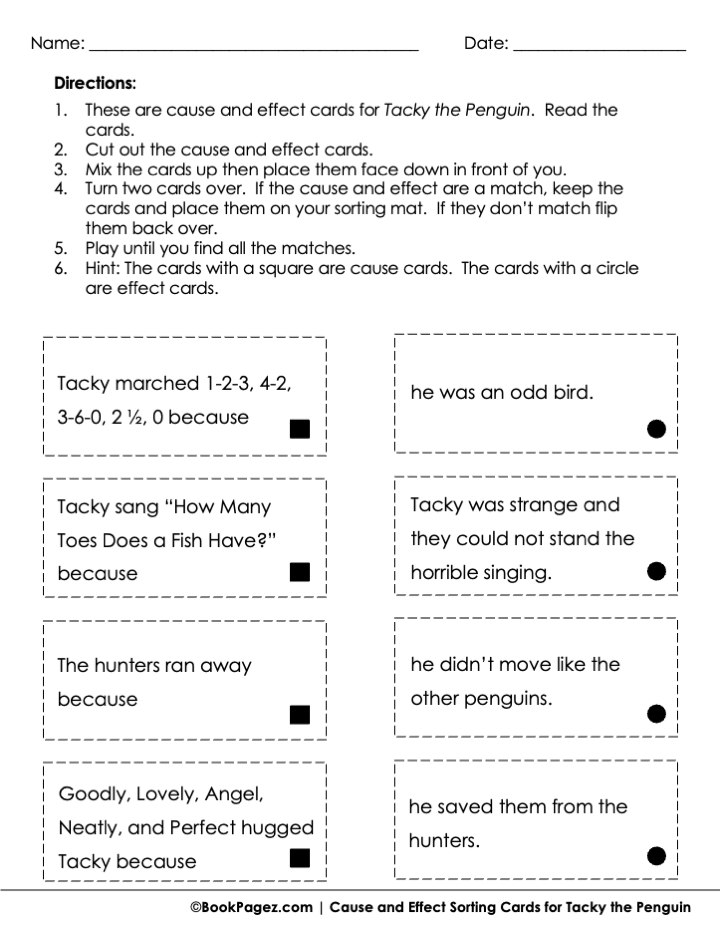
Read Tacky the Penguin then have some fun matching cause and effect sentences from the book. By using these cause and effect cards, students will demonstrate both their comprehension of the text and their understanding of cause and effect relationships in a hands-on and interactive way.
This resource includes matching/sorting cards and a sorting mat for four cause and effect sentences in Tacky the Penguin. Each cause card is marked with a square, and each effect card is marked with a circle, making it easy to support students who struggle with matching cause and effect relationships.
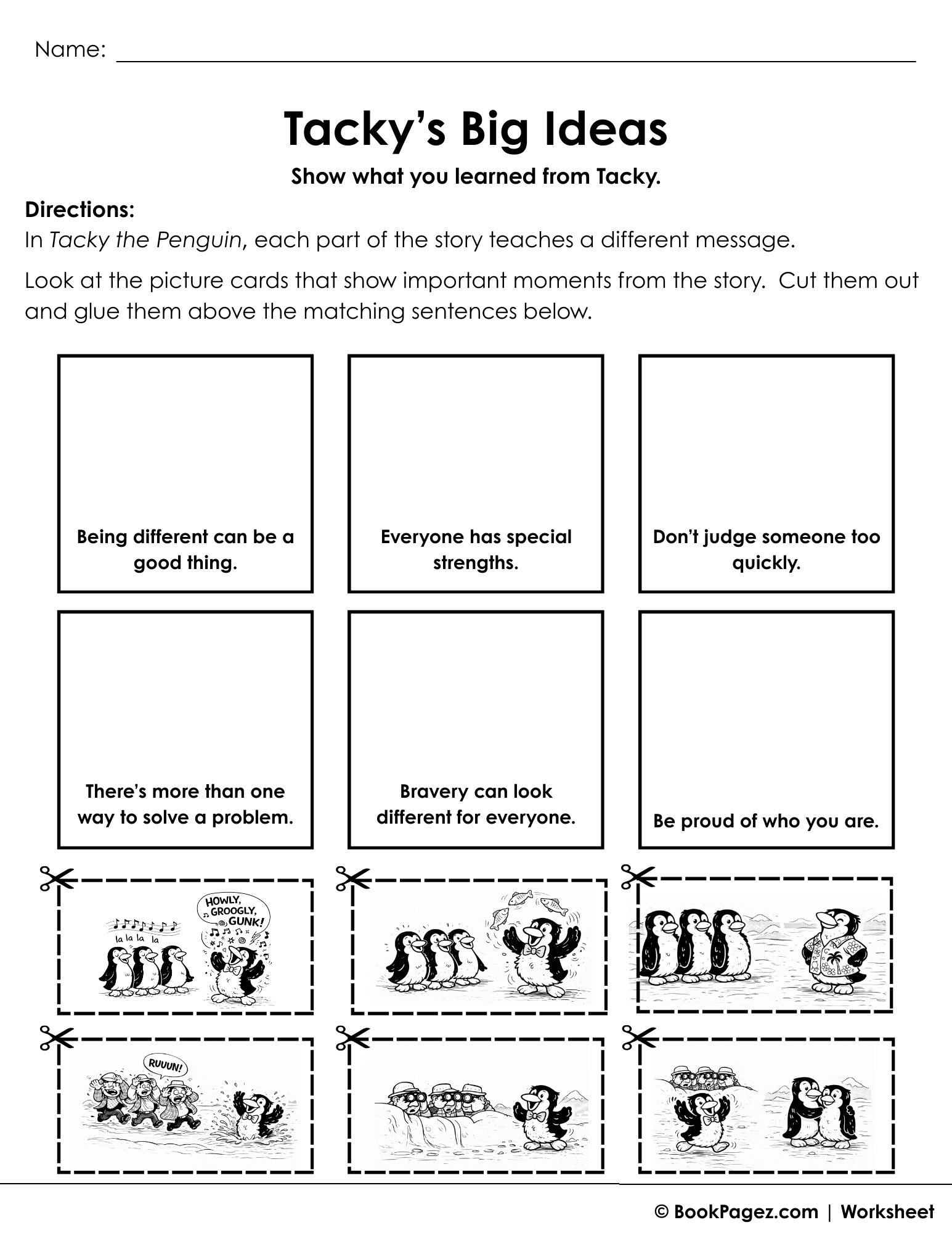
In Tacky the Penguin, each key moment helps reveal an important message about being yourself and working together. In this activity, students look closely at picture cards that show meaningful events from the story and match them to the sentences that describe what's happening.
As students cut, sort, and glue, they practice connecting illustrations to text, identifying key story moments, and thinking about how each part of the story contributes to its overall message. This hands-on task supports comprehension while encouraging careful rereading and discussion.

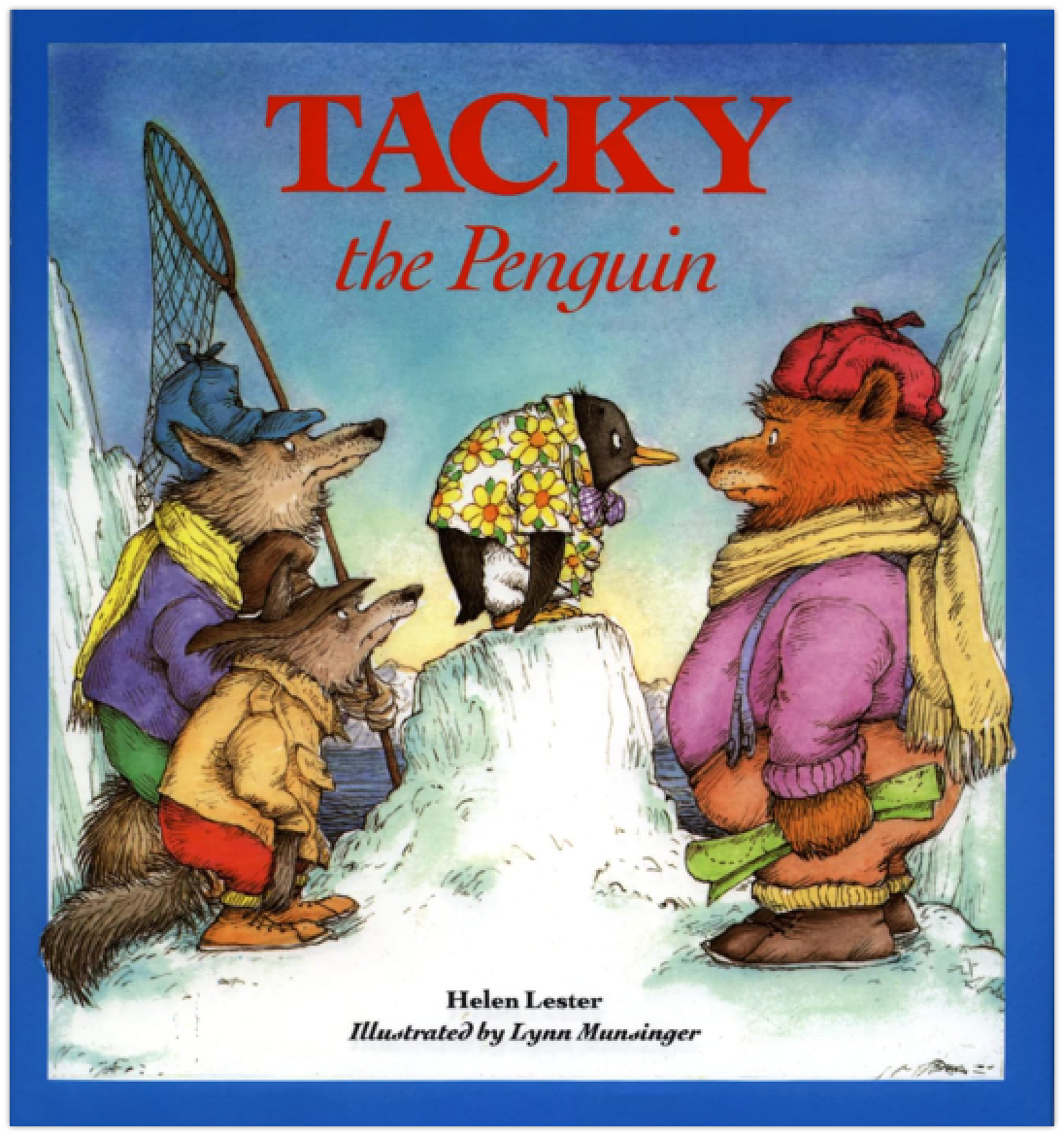
Tacky the Penguin is a delightful picture book that celebrates individuality and acceptance among young readers. Written by Helen Lester and illustrated by Lynn Munsinger, this charming story introduces children to Tacky, a penguin who stands out from his five companions: Goodly, Lovely, Angel, Neatly, and Perfect. While his fellow penguins are graceful, formal, and proper, Tacky marches to the beat of his own drum. He performs splashy cannonballs, greets his friends with a loud "What's happening?", dresses differently, and even sings silly songs like "How Many Toes Does a Fish Have?"—much to the bewilderment of his more conventional companions. His unique behaviors and quirky personality often make the other penguins find him somewhat bothersome, and he experiences exclusion from their activities. However, when fearsome poachers arrive at the iceberg hunting for penguins, Tacky's unconventional ways unexpectedly become the key to saving the day. His courage and distinctive actions prove invaluable when his friends need him most.
Through this engaging narrative, young readers discover that being different is not something to hide or change, but rather a strength to embrace.