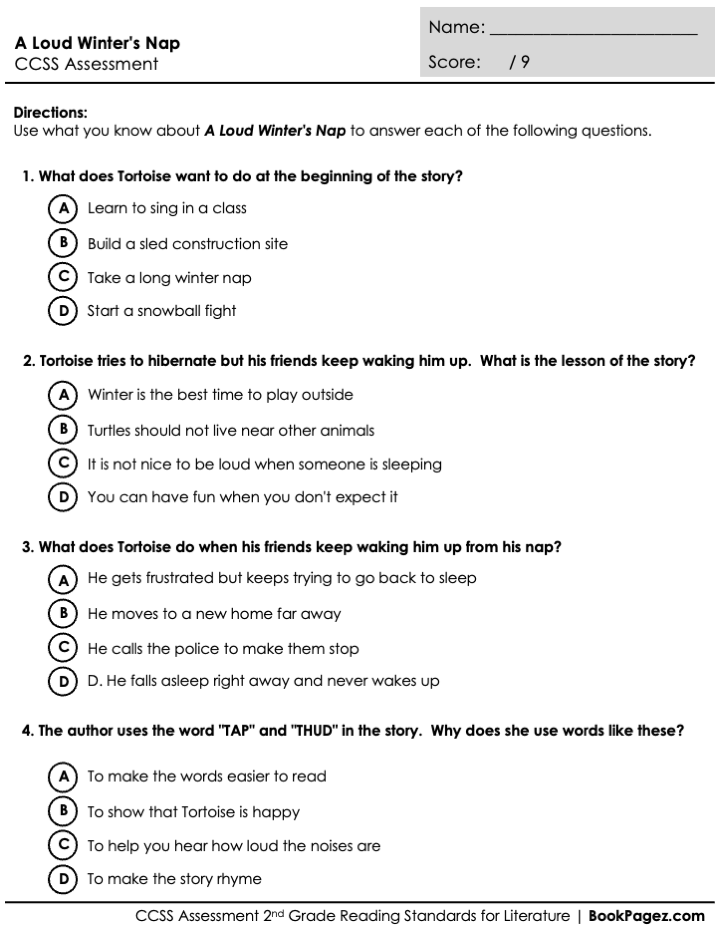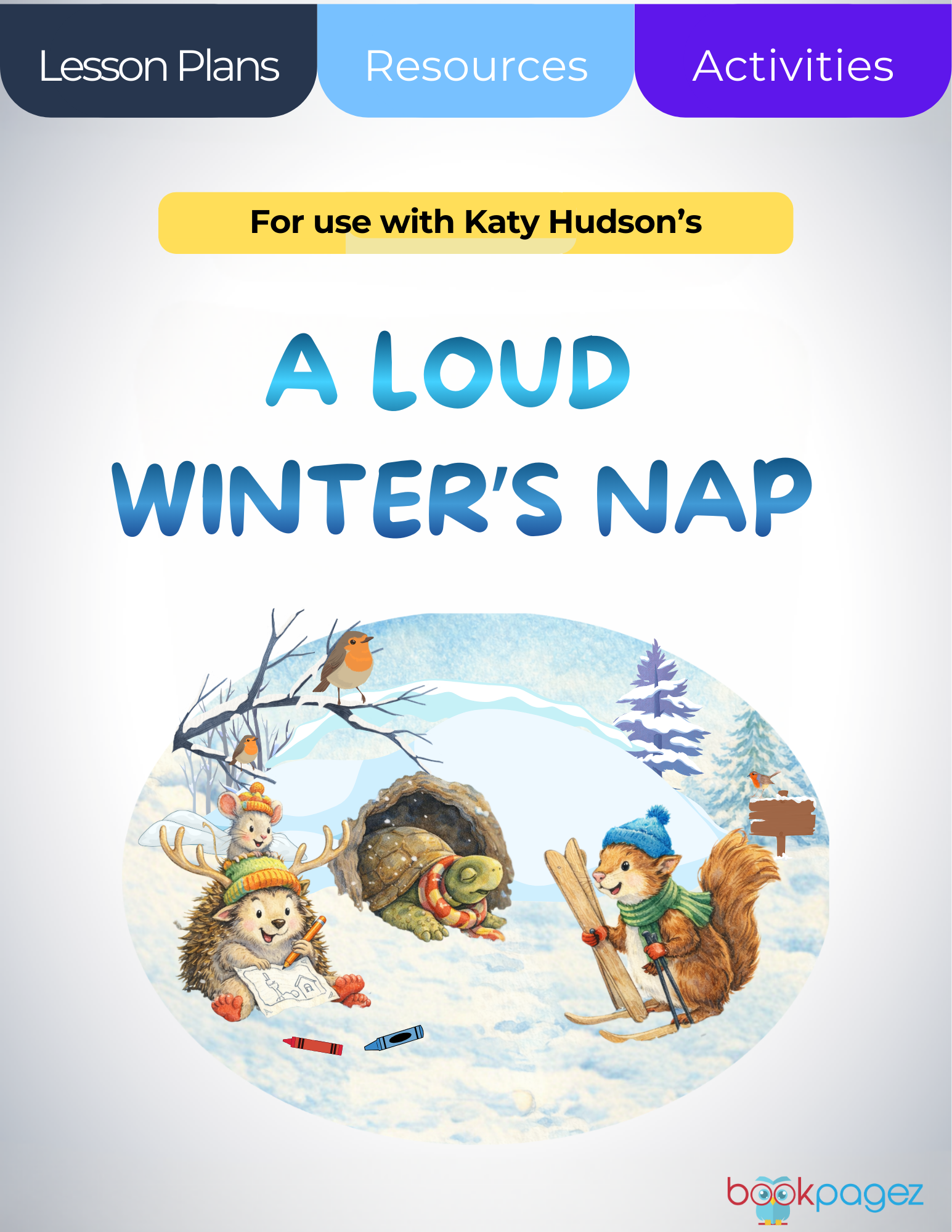
Use A Loud Winter’s Nap by Katy Hudson to strengthen your students' comprehension skills, build their vocabulary, and help them understand how words work.
Tortoise wants one thing: a quiet winter nap. Unfortunately, winter has other plans, and the forest is full of noisy surprises that keep pulling him into the action.
This resource set helps students ask questions, make predictions, and use text and illustration clues to make inferences as Tortoise's feelings change. Students will also practice retelling the story in order and visualizing the loud sound effects and winter scenes. Word work focuses on onomatopoeias. Vocabulary practice includes 10 words, plus an assessment to check understanding.
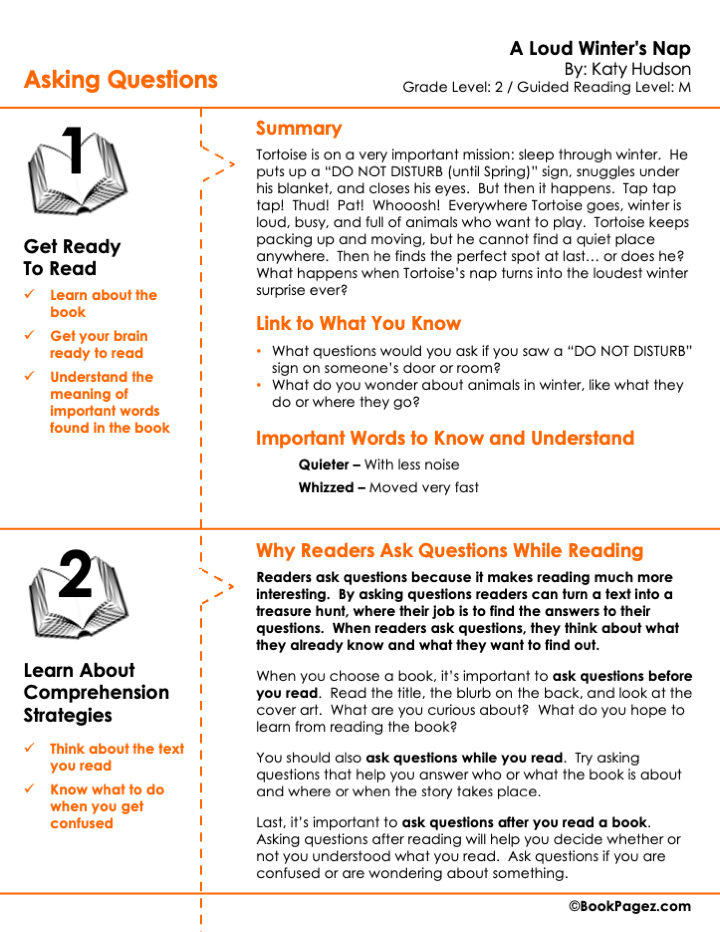
The story's repeated interruptions and big sound effects naturally make readers curious about what will happen next and why Tortoise keeps getting disturbed. Students practice asking questions before, during, and after reading, using the title, signs in the illustrations, and character actions to guide their wondering.
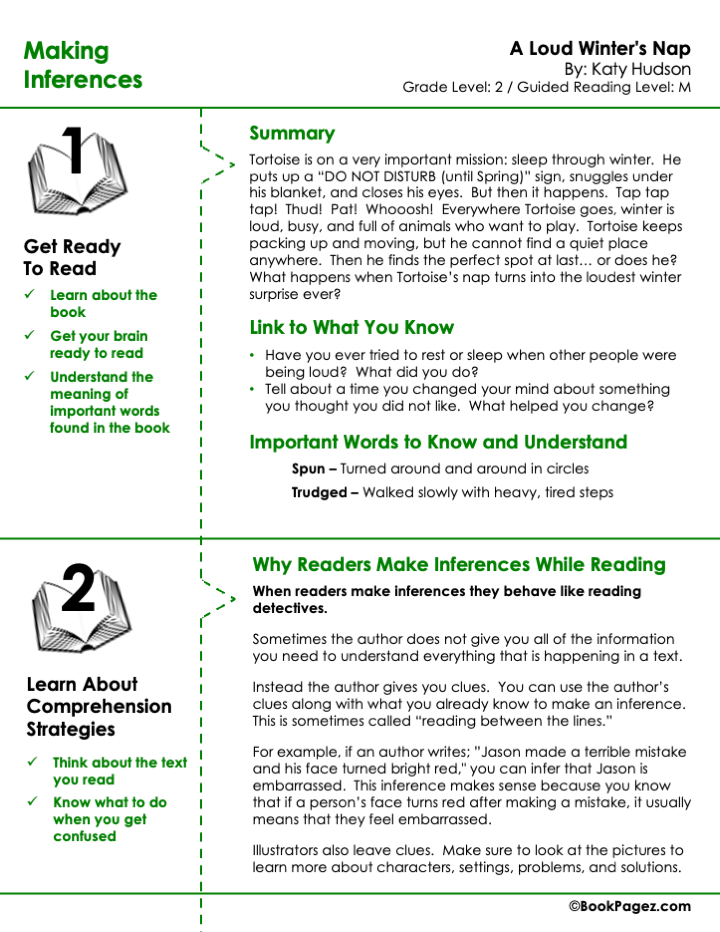
Tortoise's feelings are not always stated directly, but Katy Hudson's illustrations and repeated interruptions give readers strong clues about his mood and changing thinking. Students practice being reading detectives by using facial expressions, body language, and story events to infer emotions and motivations, then explain which details helped them.

The repeated pattern of Tortoise settling in, then being interrupted, makes this story perfect for prediction practice. Students use the "He was just about to close his eyes when..." moments, plus illustration clues like signs and objects, to predict what will happen next and explain their evidence.
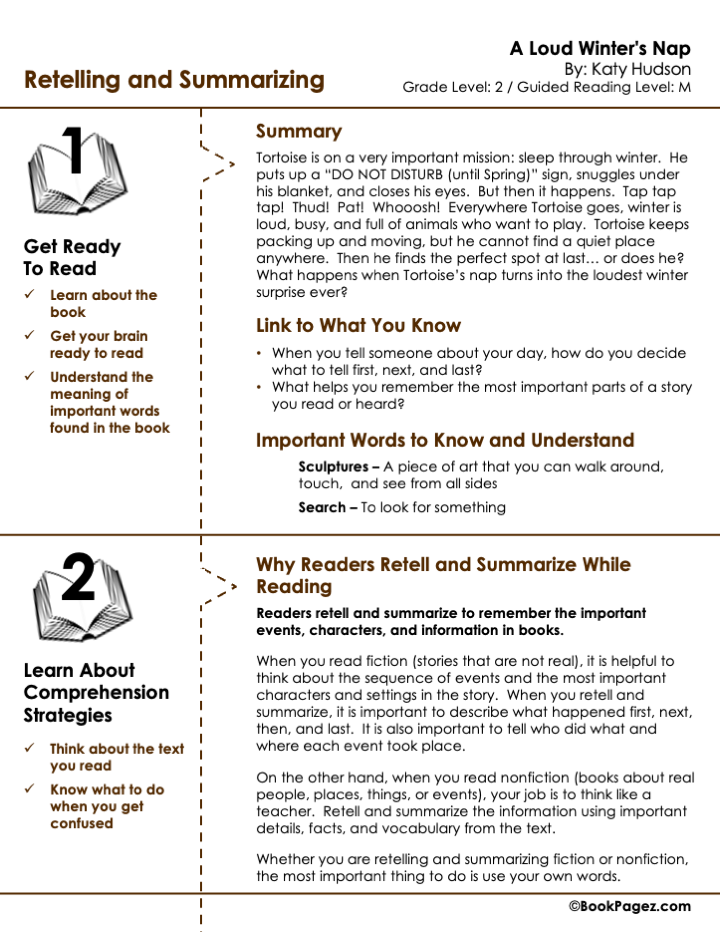
Tortoise's repeated moves create a clear sequence of events that is easy for students to track and retell. Students practice summarizing by naming the main character, the problem, key interruptions in order, and how Tortoise's winter experience changes by the end.
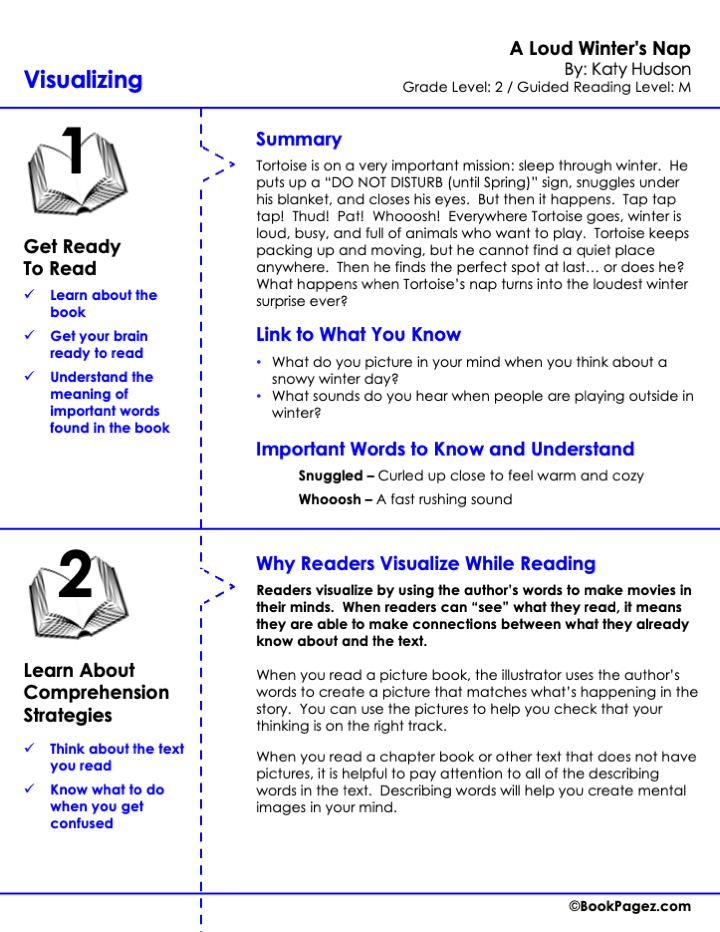
Big, bold sound effects and action scenes make it easy for students to create a "movie in their mind" while reading. Students practice visualizing by using onomatopoeia and illustration details like snow, movement, and facial expressions to describe what they see, hear, and feel in key scenes.
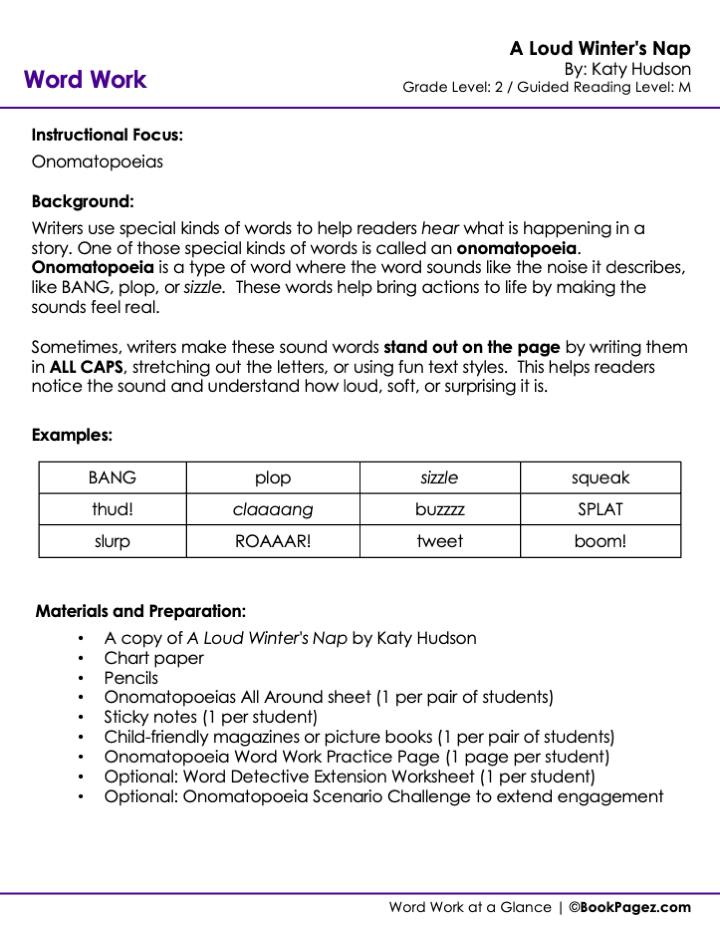
Onomatopoeia shows up in bold, memorable sound words like "Tap," "Thud," and "Whooosh," helping students connect print to sound and action. Students will hunt for sound words in the text, match each one to what is happening in the illustrations, and practice using onomatopoeia in their own sentences.
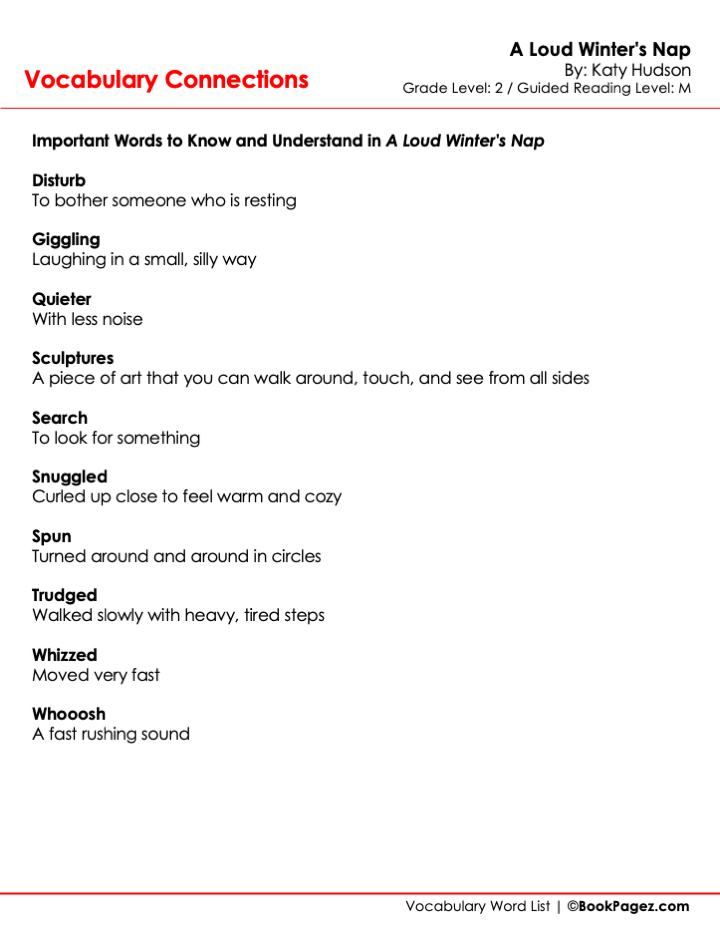
This set of vocabulary development resources for A Loud Winter's Nap highlights key words that are essential for students to understand while reading the story. Through engaging activities such as word games, word-to-definition and picture matching, and word categorization practice, students will build the vocabulary they need to comprehend this story—and many others—with confidence.

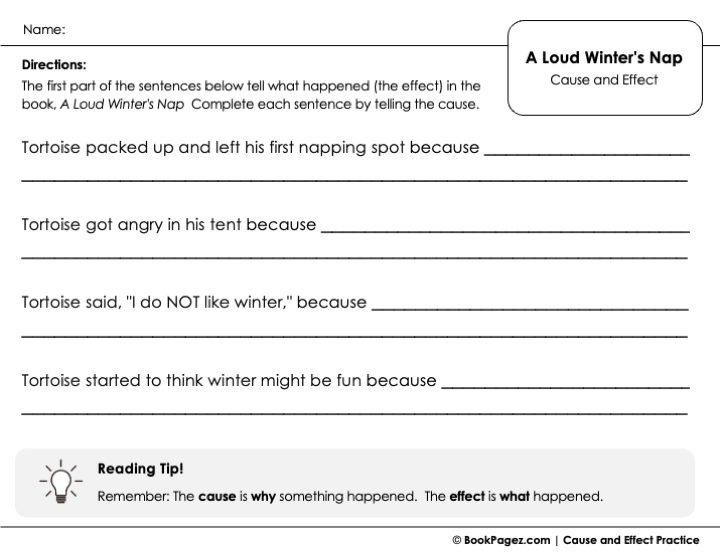
Understanding cause and effect is a key comprehension and language skill. The text structure of A Loud Winter's Nap includes several examples of cause and effect relationships, making it easy to use as a springboard for modeling or independent practice.
This simple resource includes four sentence stems. Each sentence stem presents an effect. Students will use what they know about the book to fill in the cause of the effect.
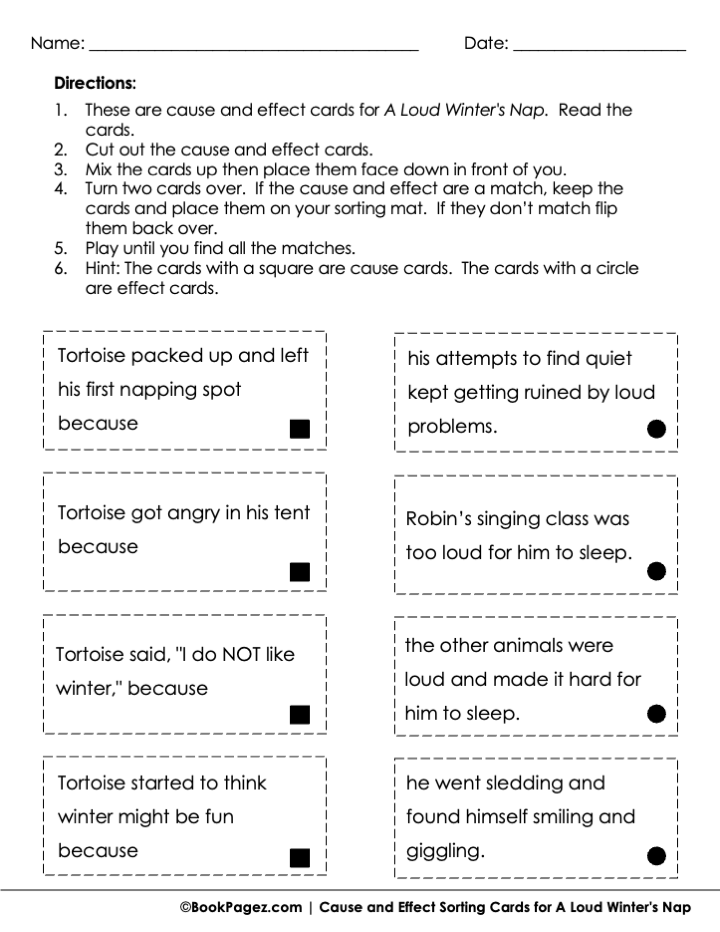
Read A Loud Winter's Nap then have some fun matching cause and effect sentences from the book. By using these cause and effect cards, students will demonstrate both their comprehension of the text and their understanding of cause and effect relationships in a hands-on and interactive way.
This resource includes matching/sorting cards and a sorting mat for four cause and effect sentences in A Loud Winter's Nap. Each cause card is marked with a square, and each effect card is marked with a circle, making it easy to support students who struggle with matching cause and effect relationships.
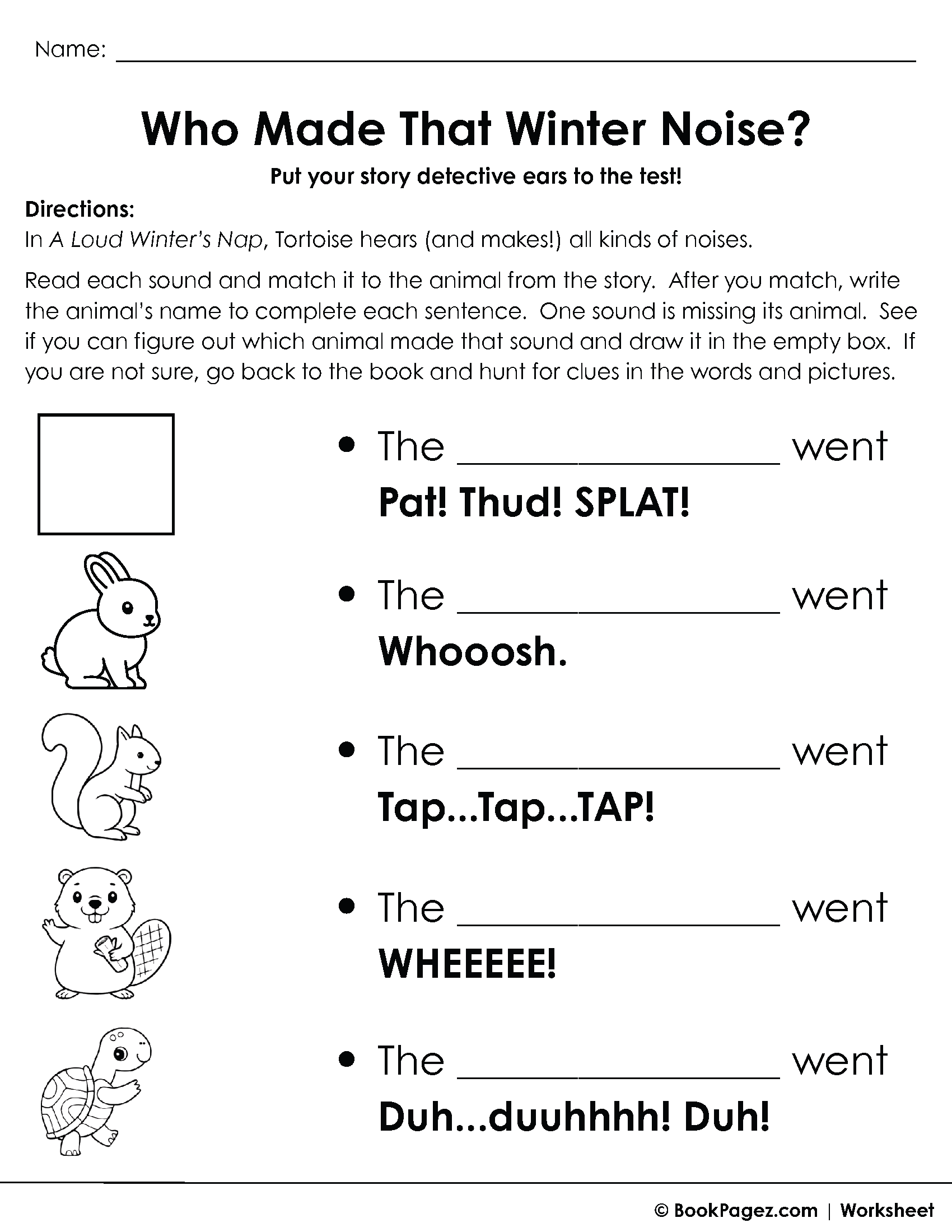
This engaging comprehension activity connects to A Loud Winter's Nap as students explore the different animal sounds from the story. Students read each sound, match it to the correct animal, and complete the sentences by writing the animal's name. One mystery sound challenges students to return to the text and illustrations to gather clues and determine which animal made it. This activity strengthens close reading, text evidence skills, and sound-to-character connections in a fun and interactive way.

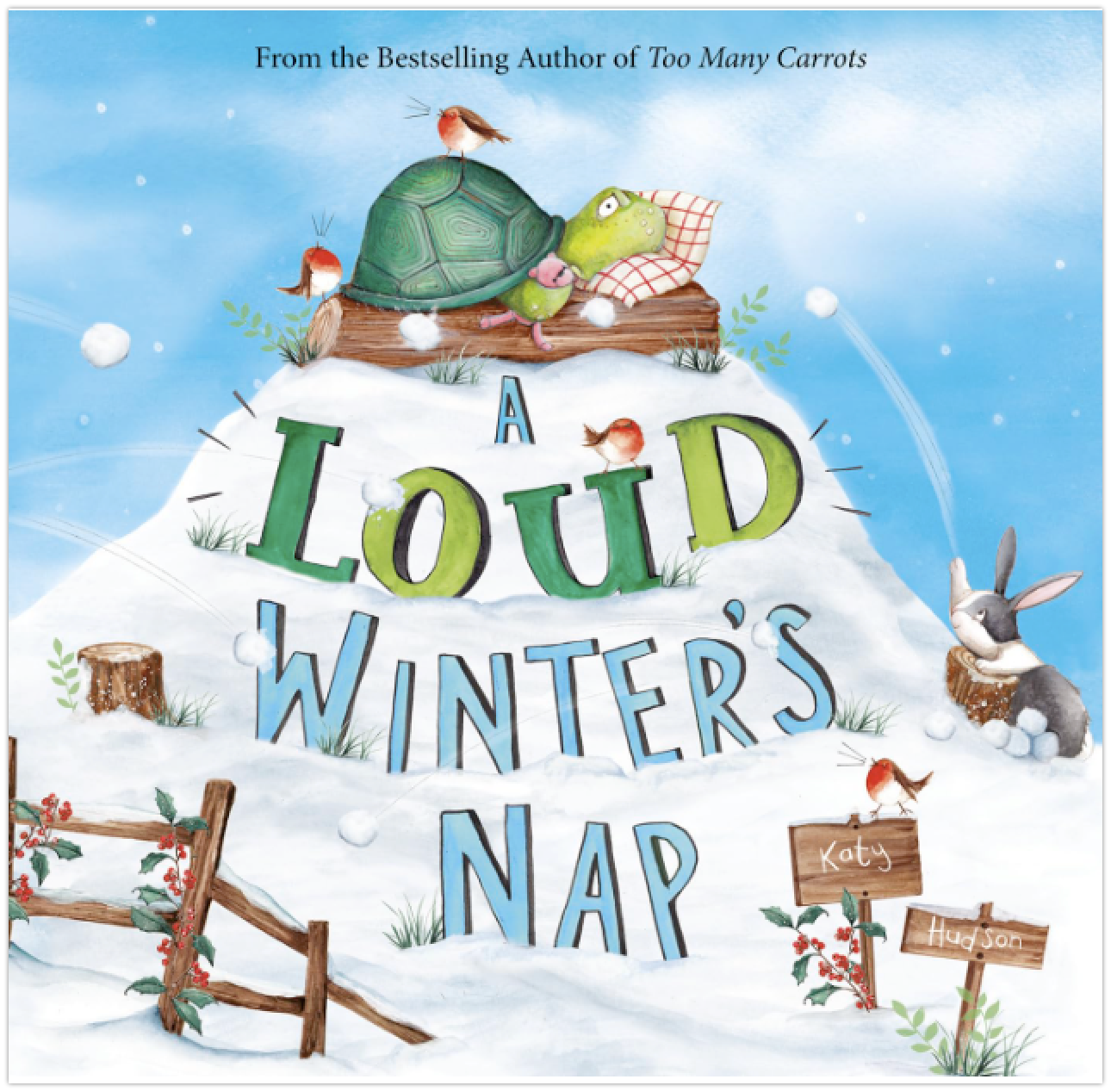
Tortoise is ready for a long winter nap, and he has a plan to make it perfectly quiet. But winter in the forest is anything but silent. A cheerful robin invites him to singing class, a busy rabbit taps away at ice sculptures, and a snowball fight thuds right into his cozy bed. Each time Tortoise packs up and searches for a new napping spot, the noise seems to follow. Even higher ground brings new surprises, and Tortoise finally declares that he does not like winter at all. Then one "perfect" place to nap turns into something completely unexpected. As Tortoise is swept into winter's wild fun, he begins to wonder if the season he dislikes might have more to offer than he ever imagined.