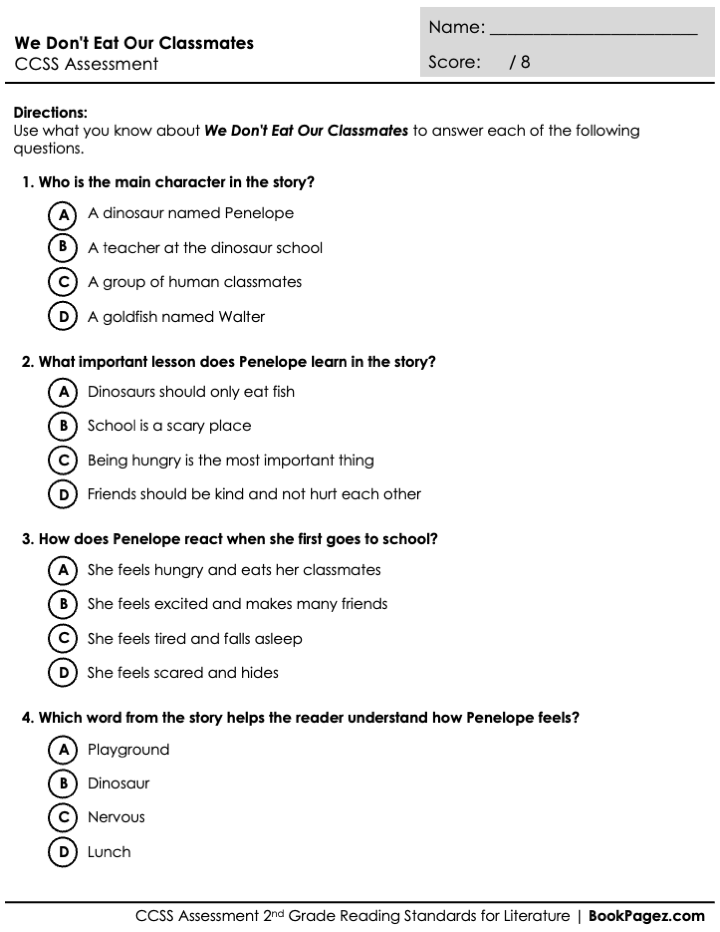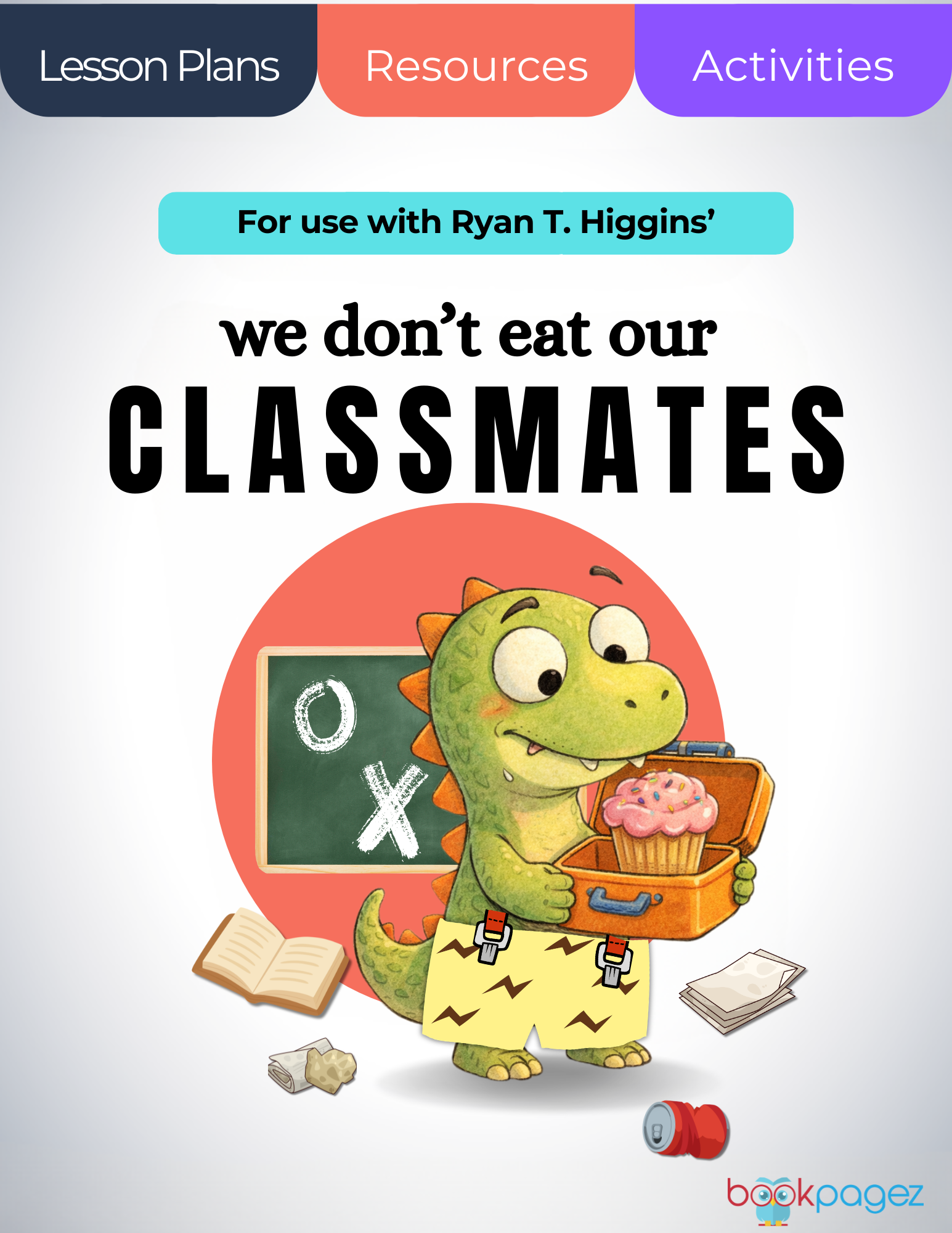
Use We Don’t Eat Our Classmates by Ryan T. Higgins to strengthen your students' comprehension skills, build their vocabulary, and help them understand how words work.
This humorous and relatable story explores the experience of starting school, learning classroom expectations, and discovering what it means to be a good friend. As the main character tries to fit in on the first day of school, students are invited to think about empathy, self-control, and how actions affect others. Playful text and expressive illustrations make these important themes engaging and easy to discuss.
This resource set supports students as they practice three essential comprehension strategies: Making Inferences, Synthesizing, and Identifying the Author's Purpose. It also includes a word work lesson focused on two-syllable words with a long vowel sound in one syllable, helping students strengthen decoding skills while working with familiar vocabulary from the text. Together, these activities build comprehension, phonics knowledge, and strong reading skills.
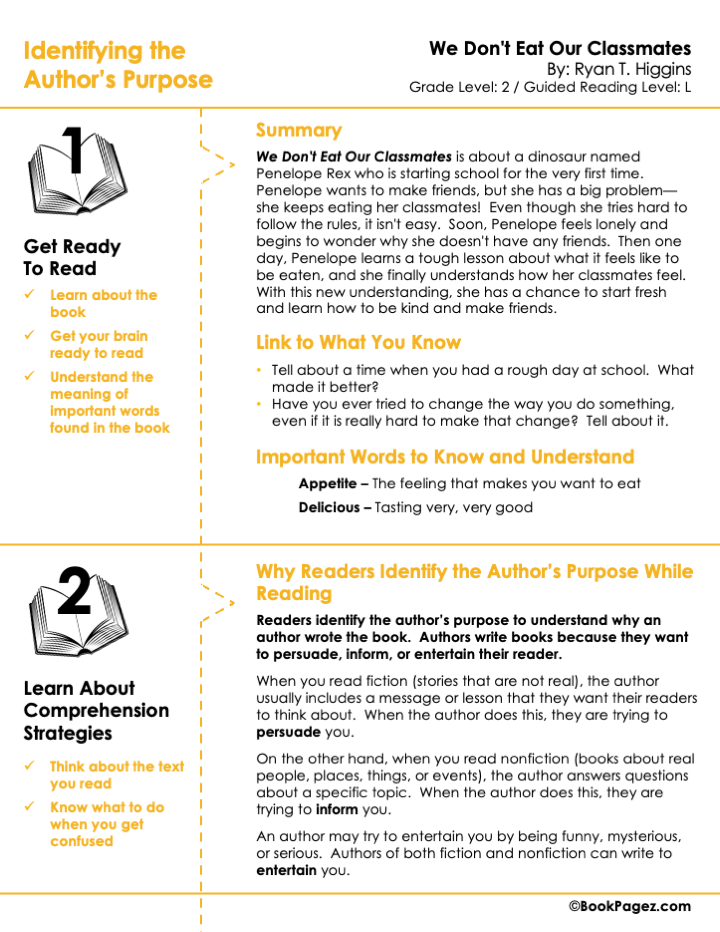
Ryan T. Higgins uses humor, exaggeration, and expressive illustrations to communicate an important message about empathy and behavior. Through focused activities, students will explore why the author chose to tell this story and how specific moments—such as repeated rule-breaking and the turning point with Walter—help teach a lesson about kindness and thinking about others. Students will reflect on how the author's choices support the message of the story and help readers connect to Penelope's journey.
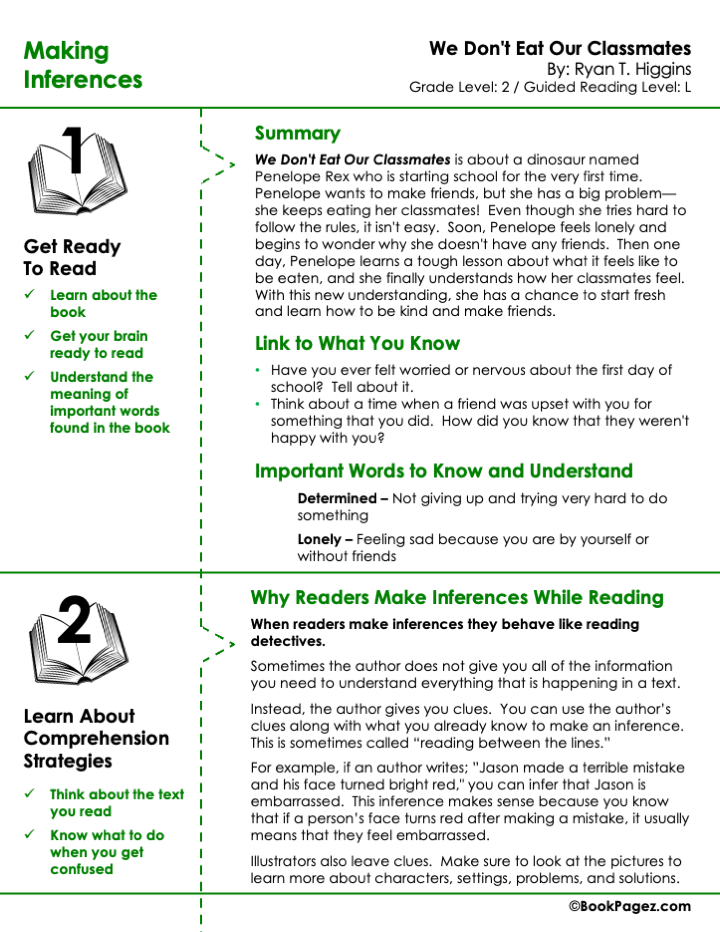
We Don't Eat Our Classmates is filled with moments where readers must look closely at both the words and illustrations to understand what characters are really thinking and feeling. Students will practice making inferences about Penelope's emotions as she navigates her first day of school, her struggles with self-control, and her growing understanding of friendship. Activities guide students to use text clues and illustration details to explain their thinking and deepen their understanding of Penelope's character.
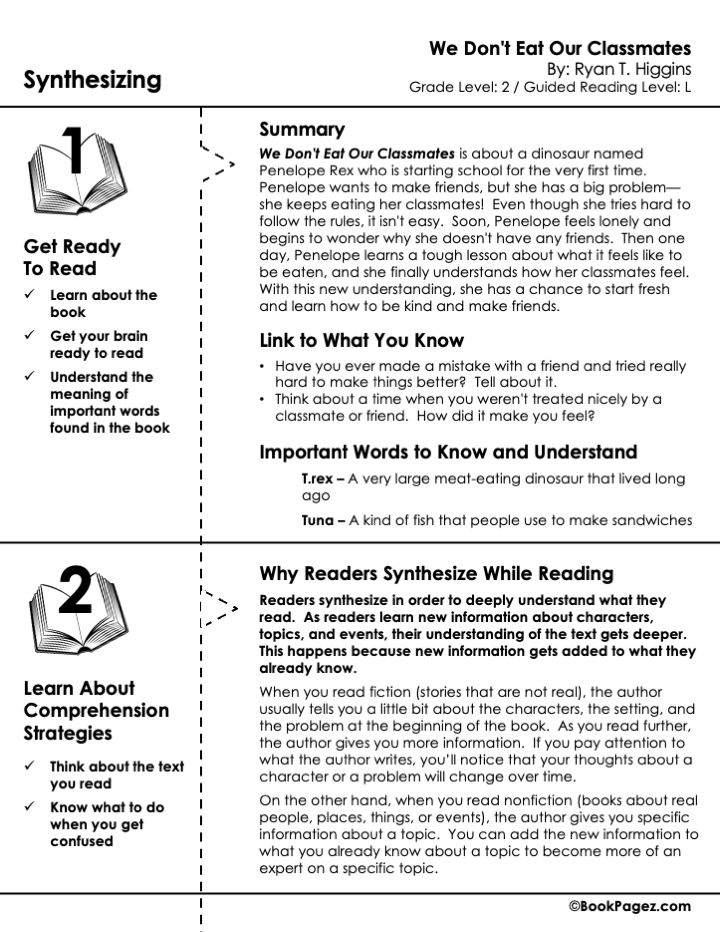
This story provides strong opportunities for students to synthesize information across the beginning, middle, and end of the text. Students will track how Penelope's experiences build on one another—from her first day of school, to her repeated mistakes, to the moment she finally understands how her classmates feel. Activities encourage students to combine key events and ideas to determine the lesson of the story and explain how Penelope changes over time.
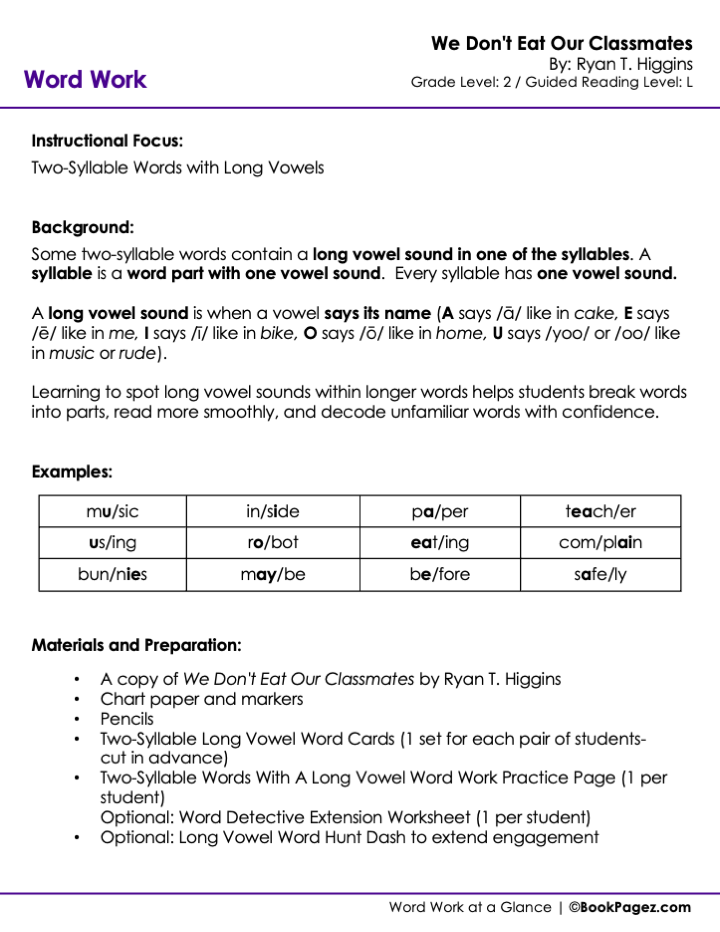
This word work lesson helps students identify and read two-syllable words that contain a long vowel sound in one syllable.
Students will practice breaking words into syllables and recognizing vowels that say their name. Using familiar words from the text such as music, inside, paper, robot, and before, they will strengthen their ability to decode longer words with confidence.
Through engaging practice and review, this resource supports phonics development, reading fluency, and stronger independent reading skills.
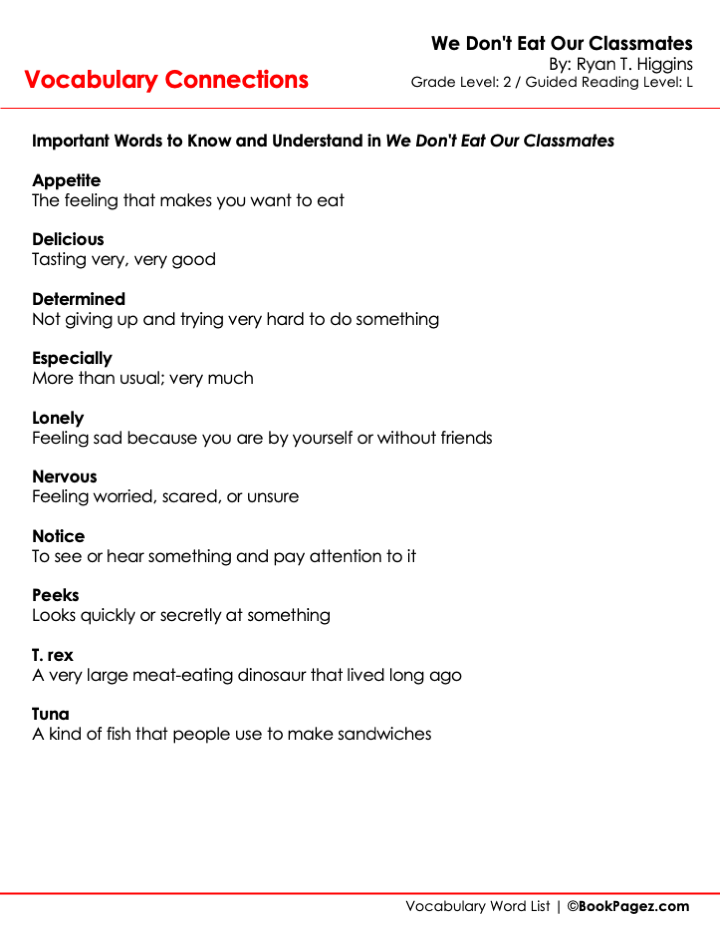
This set of vocabulary development resources for We Don't Eat Our Classmates highlights key words that are essential for students to understand while reading the story. Through engaging activities such as word games, word-to-definition and picture matching, and word categorization practice, students will build the vocabulary they need to comprehend this story—and many others—with confidence.
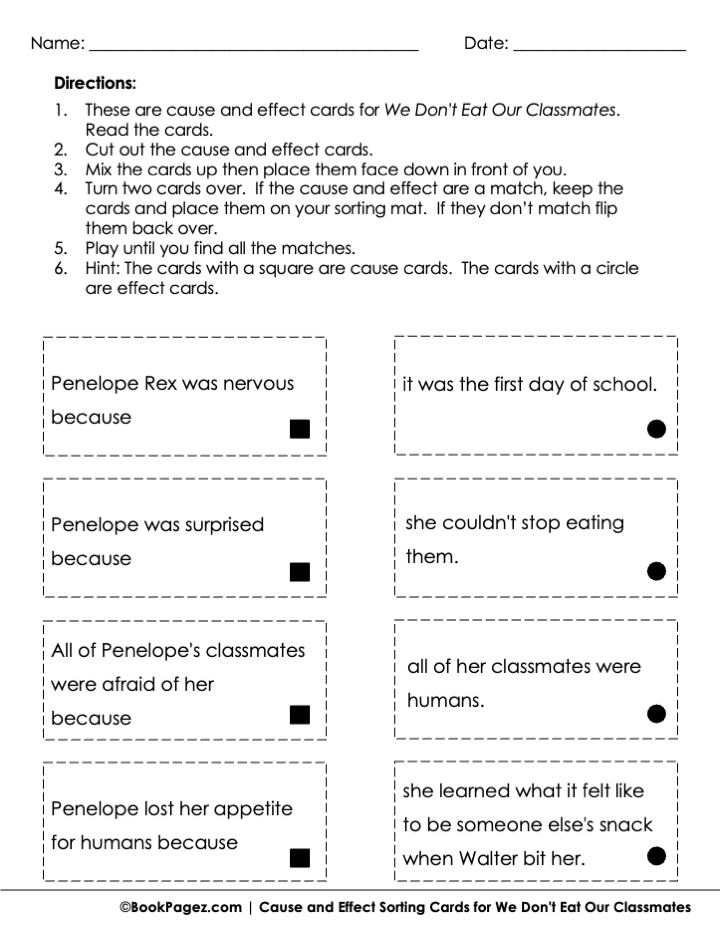
Read We Don't Eat Our Classmates then have some fun matching cause and effect sentences from the book. By using these cause and effect cards, students will demonstrate both their comprehension of the text and their understanding of cause and effect relationships in hands-on and interactive way.
This resource includes matching/sorting cards and a sorting mat for four cause and effect sentences in We Don't Eat Our Classmates. Each cause card is marked with a square and each effect card is marked with a circle, making it easy to support students who struggle with matching cause and effect relationships.
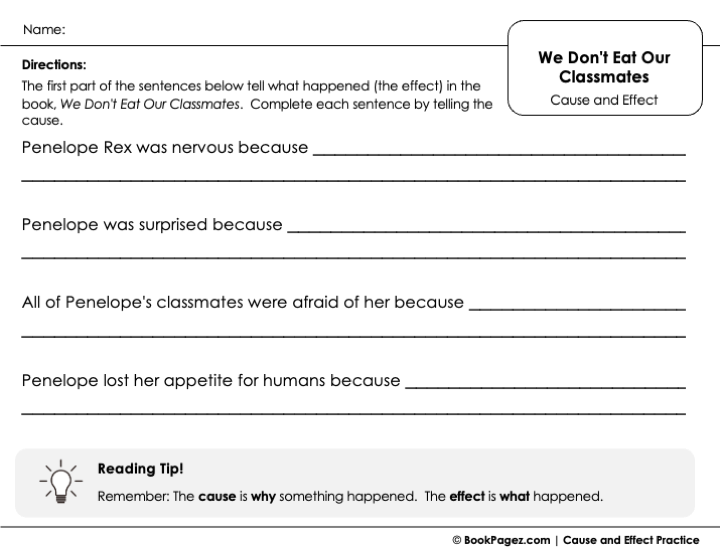
Understanding cause and effect is a key comprehension and language skill. The text structure of We Don't Eat Our Classmates includes several examples of cause and effect relationships, making it easy to use as a springboard for modeling or independent practice.
This simple resource includes four sentence stems. Each sentence stem presents an effect. Students will use what they know about the book to fill in the cause of the effect.
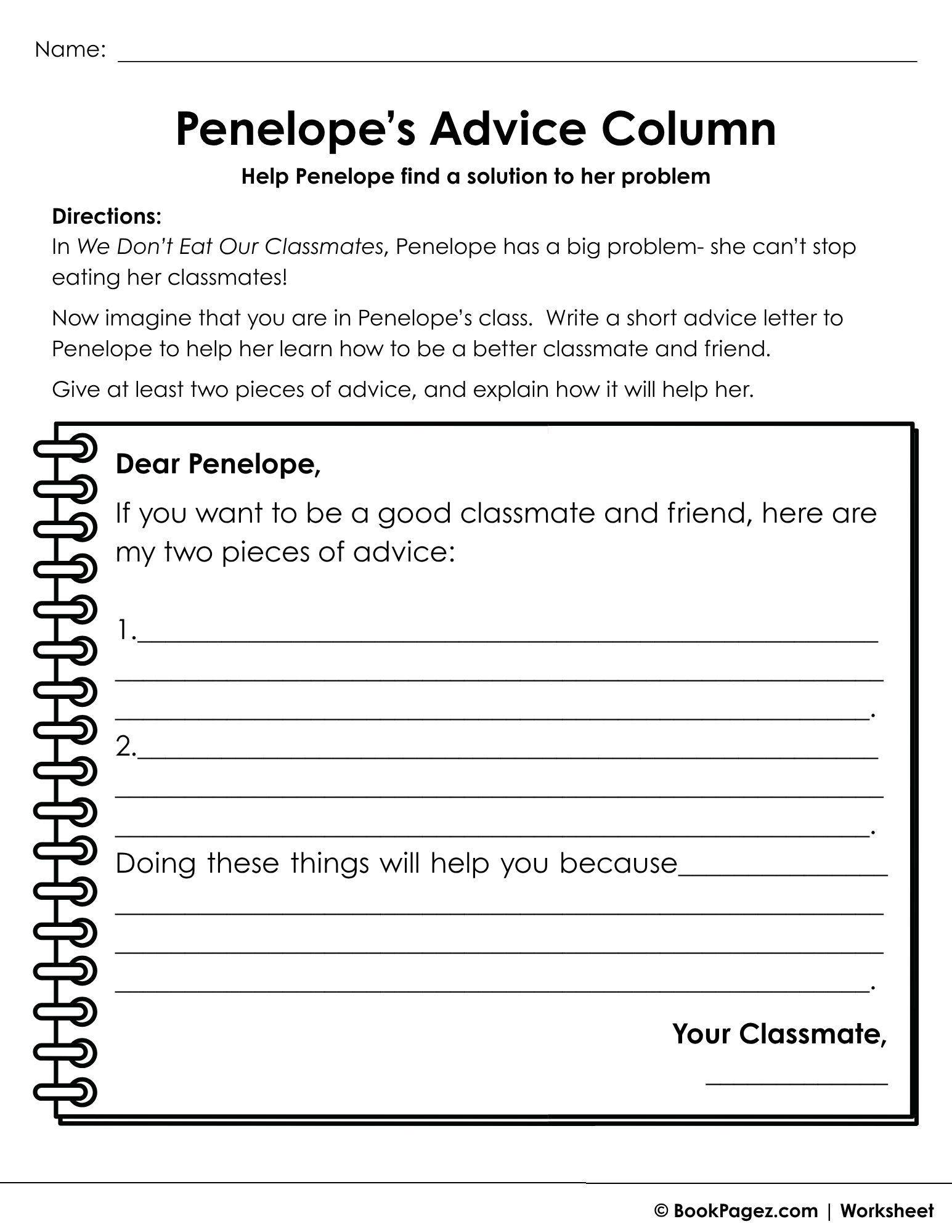
In We Don't Eat Our Classmates, Penelope struggles to understand how her actions affect others. This engaging writing activity invites students to step into the story and think more deeply about friendship, behavior, and making positive choices.
Students will imagine they are members of Penelope's class and write a thoughtful advice letter to help her become a better classmate and friend. As they write, students will practice organizing their ideas, giving clear advice, and explaining their thinking with supporting details.

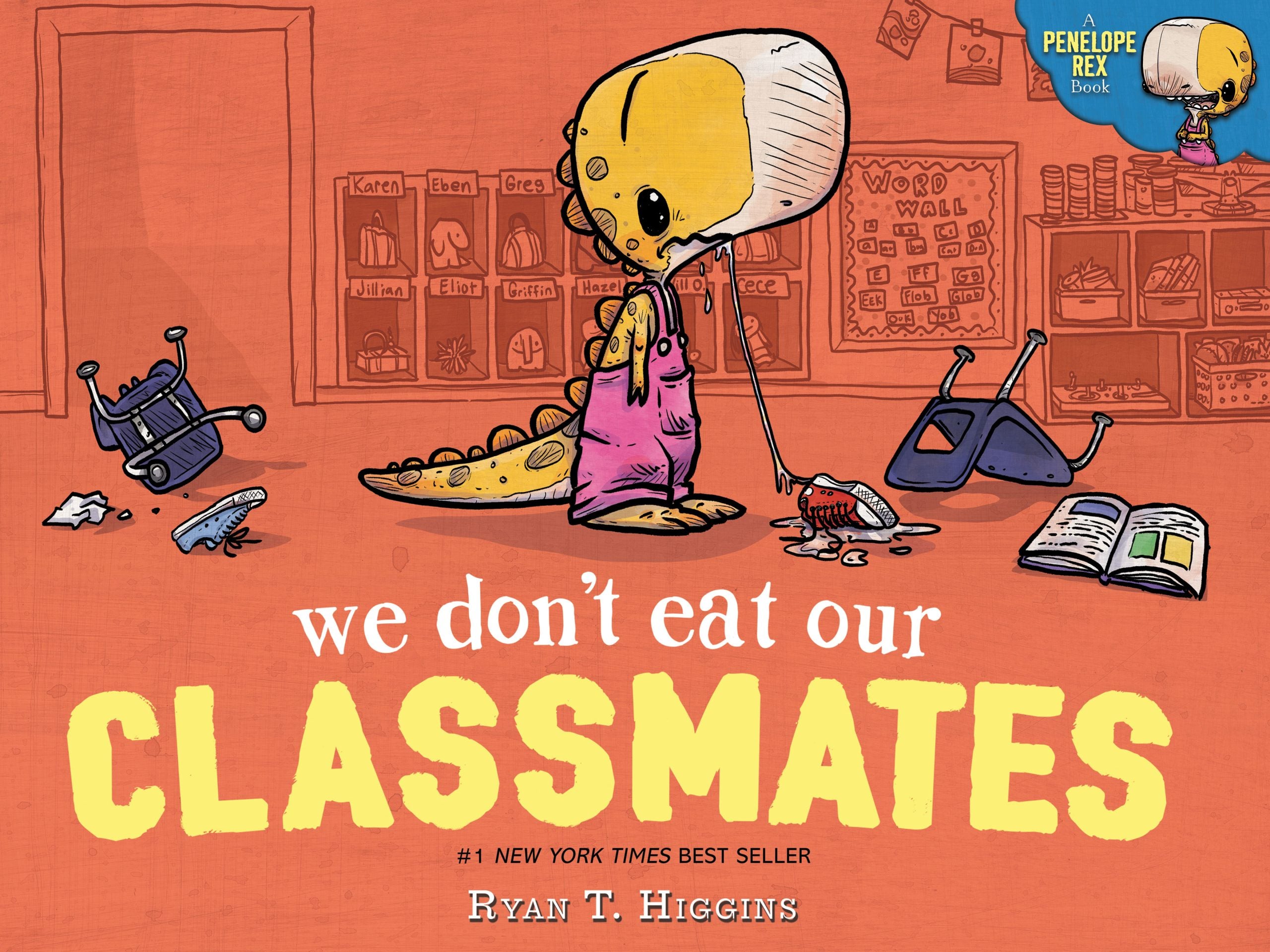
Penelope Rex is a young dinosaur eager to make friends, but she faces a major hurdle: her classmates are delicious humans! On her first day, her instincts take over, and she accidentally eats her peers. Although her teacher intervenes, Penelope finds herself isolated and lonely as the other children—rightfully—fear becoming her next snack.
Everything changes when Penelope tries to befriend Walter, the class goldfish. When Walter bites her finger, she finally experiences the fear and pain she caused others. This "aha!" moment provides a humorous yet powerful lesson in empathy. By understanding how her actions feel to others, Penelope learns to control her instincts and successfully navigates the social challenges of school. This charming story uses exaggeration to explore universal themes of social-emotional learning, showing that even after a rocky start, change and redemption are possible through empathy and self-regulation.