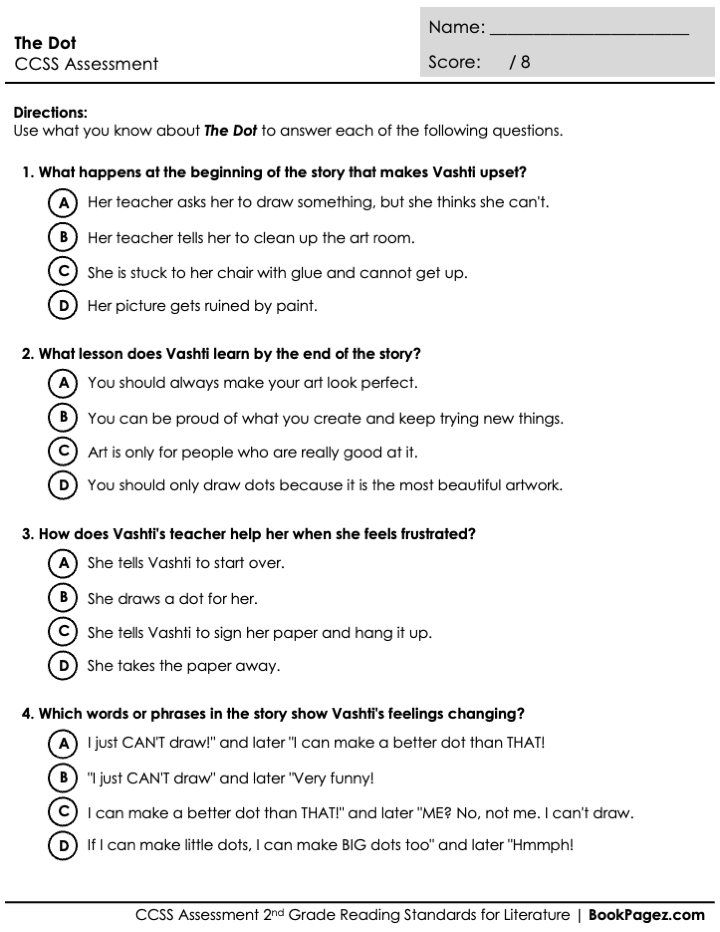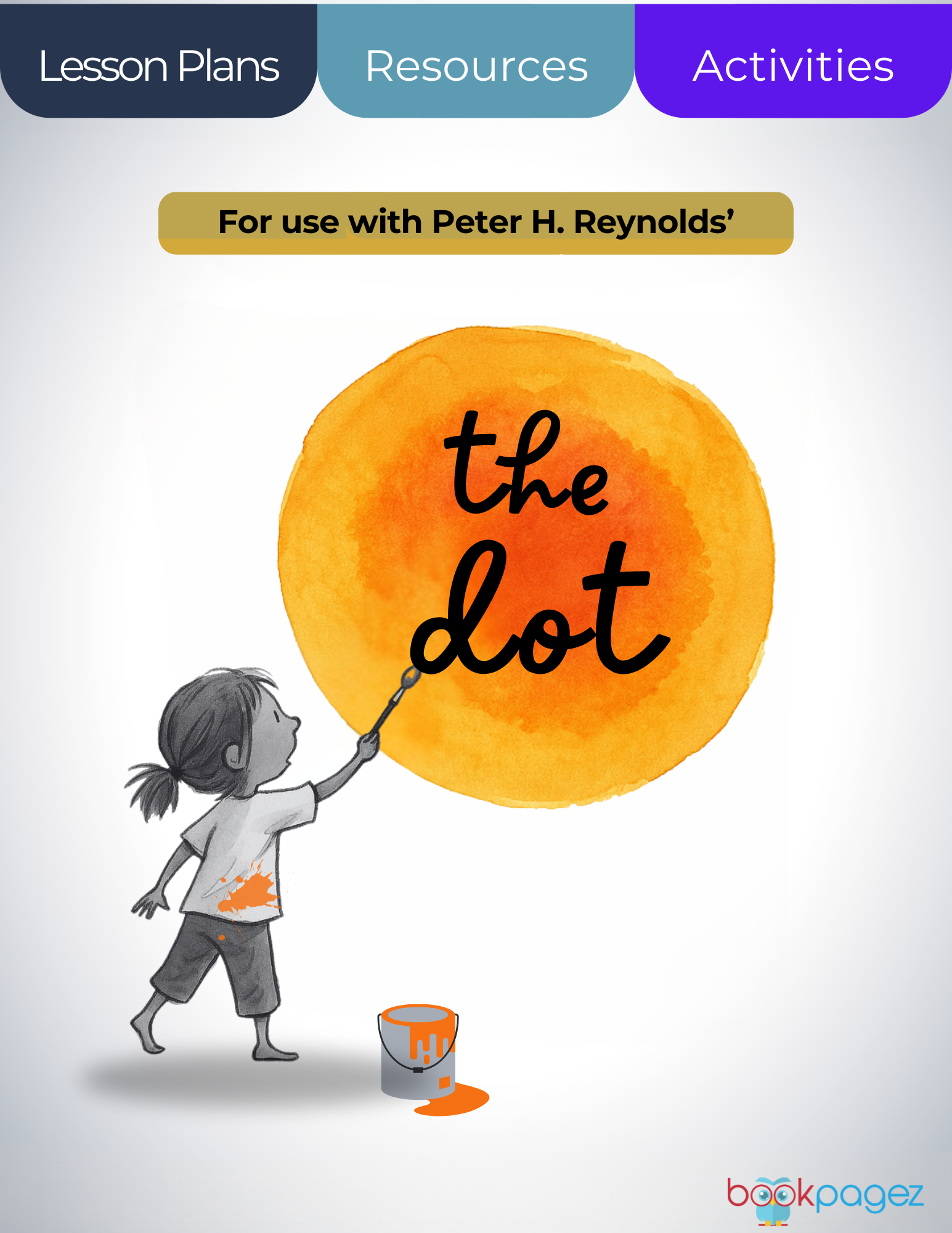
Use The Dot by Peter H. Reynolds to strengthen your students' comprehension skills, build their vocabulary, and help them understand how words work.
When Vashti insists she can't draw, her teacher's simple encouragement inspires her to discover her creativity and confidence. Through expressive watercolor illustrations and meaningful text, students will connect with Vashti's journey from frustration to self-discovery.
This resource set invites students to make inferences, identify the author's purpose, and synthesize information across the story to understand Vashti's character growth and the book's powerful message of believing in yourself. After focusing on comprehension, try the Word Work resources to teach students about irregular past tense verbs like was, sat, said, and gave or extend engagement with an activity that encourages students to think creatively and connect with the text in a fun and unique way.

Peter H. Reynolds wrote The Dot to inspire readers to believe in their own creativity. Students will explore the author's purpose by thinking about why Vashti's teacher encourages her to "make a mark," and what message Reynolds wants to share about trying new things. Through discussion and reflection, students learn that the author's goal is to remind us all that courage, curiosity, and a little encouragement can help us discover what we're capable of.
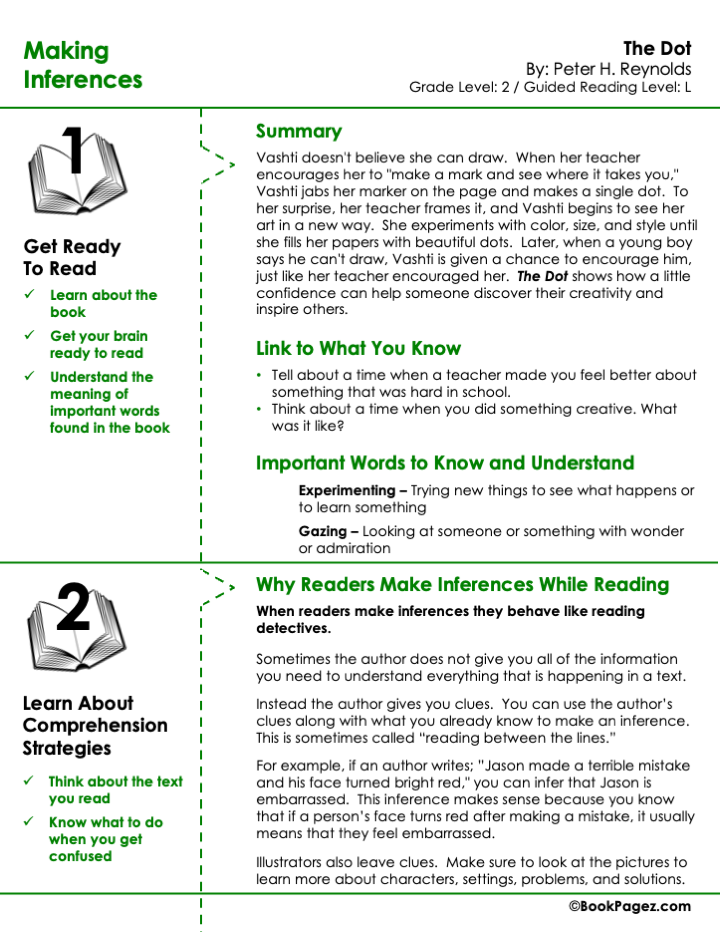
Throughout The Dot, Peter H. Reynolds uses color, expression, and simple text to help readers infer Vashti's emotions and growth. Early in the story, dark colors and short sentences reflect her frustration, while later pages burst with bright dots and joyful expression. Students will use clues from the words and illustrations to infer how Vashti's feelings change from doubt to pride as she begins to see herself as an artist.
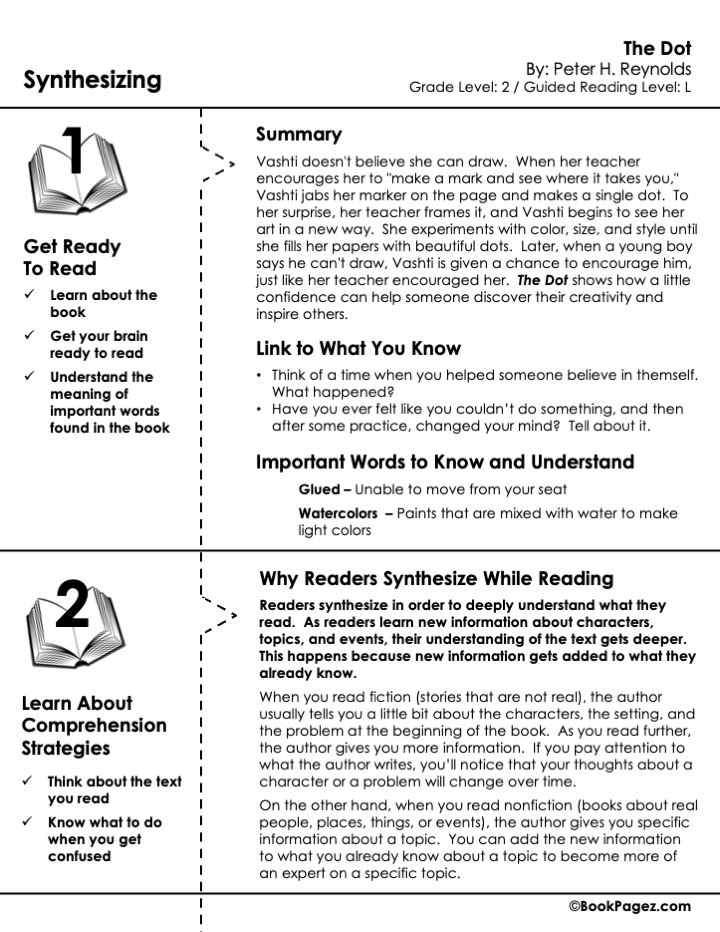
As students move through The Dot, they will gather information from both the text and illustrations to see how Vashti changes over time. By the end, she not only believes in her own creativity but also helps another student find his. Students will synthesize what they've learned about Vashti's transformation to understand the story's larger message—confidence grows when you believe in yourself and share that belief with others.

This word work lesson plan and set of teaching resources use The Dot by Peter H. Reynolds as a springboard for instruction focused on irregular past tense verbs.
By anchoring word study to the text, students see how irregular verbs are used within the story before engaging in guided and independent practice with identifying and using them in sentences. This approach supports stronger grammar skills and helps students connect language study to the events in Vashti's journey.
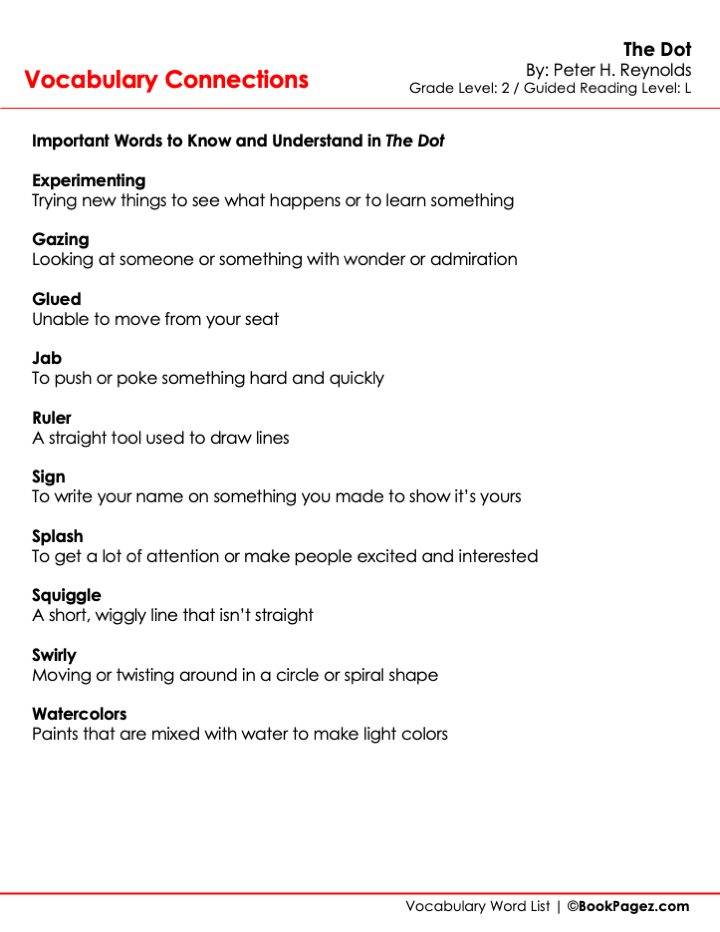
This set of vocabulary development resources for The Dot highlights key words that are essential for students to understand while reading the story. Through engaging activities such as word games, word-to-definition and picture matching, and word categorization practice, students will build the vocabulary they need to comprehend this story—and many others—with confidence.
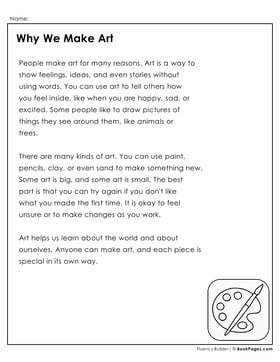
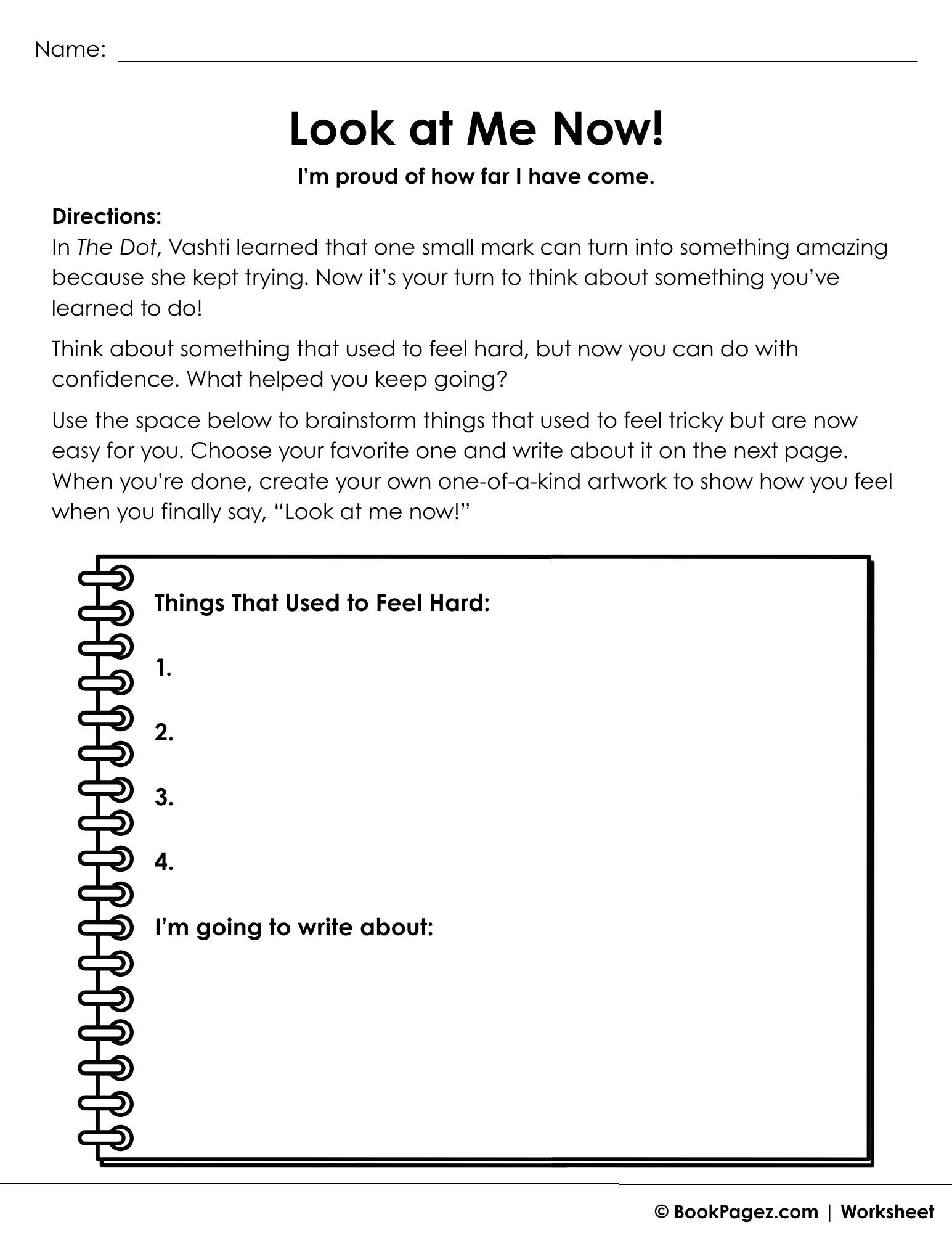
Look at Me Now! is a reflective writing and art activity inspired by The Dotby Peter H. Reynolds. In this confidence-building lesson, students think about something that once felt hard but now comes easily—just like Vashti learned to believe in herself.
Using simple prompts, students brainstorm, write, and illustrate their own stories of perseverance. The activity guides them to reflect on what helped them keep going, then express their pride through a one-of-a-kind piece of artwork.
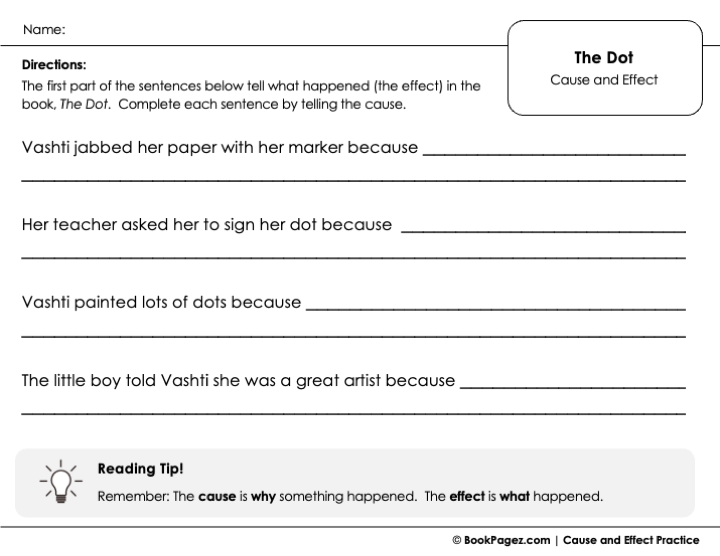
Understanding cause and effect is a key comprehension and language skill. The text structure of The Dot includes several examples of cause and effect relationships, making it easy to use as a springboard for modeling or independent practice.
This simple resource includes four sentence stems. Each sentence stem presents an effect. Students will use what they know about the book to fill in the cause of the effect.
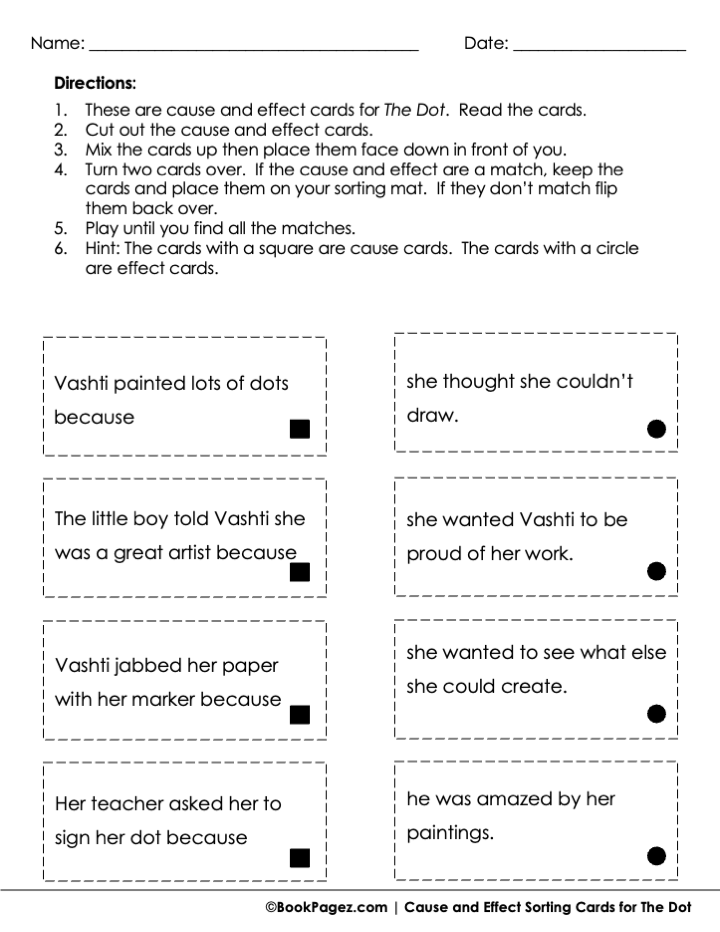
Read The Dot then have some fun matching cause and effect sentences from the book. By using these cause and effect cards, students will demonstrate both their comprehension of the text and their understanding of cause and effect relationships in a hands-on and interactive way.
This resource includes matching/sorting cards and a sorting mat for four cause and effect sentences in The Dot. Each cause card is marked with a square, and each effect card is marked with a circle, making it easy to support students who struggle with matching cause and effect relationships.

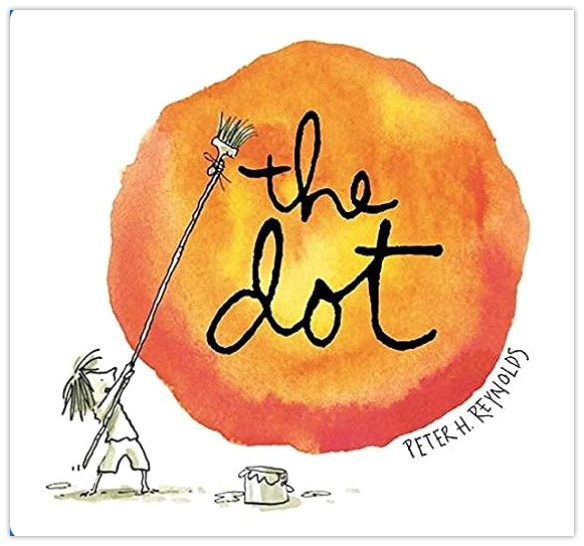
The Dot by Peter H. Reynolds is a beautifully illustrated picture book that celebrates creativity, courage, and the power of encouragement. The story follows Vashti, a young girl who feels frustrated and convinced that she cannot draw. When her art teacher gently encourages her to “make a mark and see where it takes you,” Vashti reluctantly makes a single dot on her blank paper. To her surprise, her teacher proudly displays Vashti’s dot, sparking the beginning of Vashti’s journey into the world of art. As Vashti experiments with different kinds of dots—big, small, colorful, and bold—she discovers her own unique artistic voice and begins to build confidence in her abilities. The book’s central message revolves around the importance of trying, even in the face of self-doubt, and the transformative power of a supportive mentor.
The Dot’s uplifting story and expressive illustrations make it especially appealing for classroom discussions about growth mindset, perseverance, and nurturing creativity in every child. Teachers will find this book an invaluable resource for inspiring students to take risks, embrace mistakes, and encourage one another to “make their mark.”