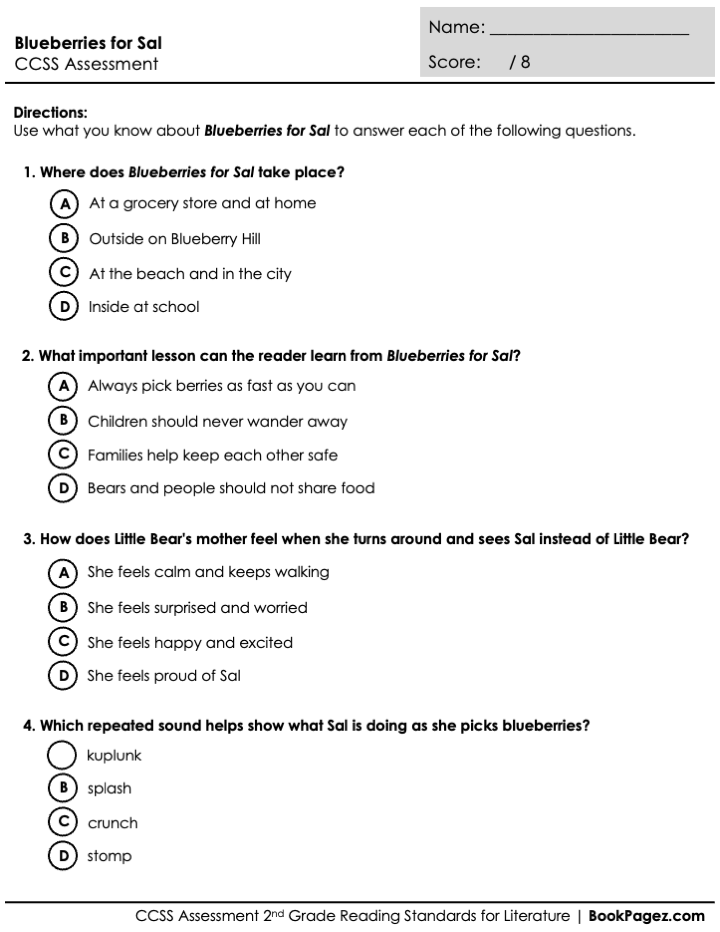
Use Blueberries for Sal by Robert McCloskey to strengthen your students' comprehension skills, build their vocabulary, and help them understand how words work.
This timeless picture book pairs simple text with detailed black-and-white illustrations to tell the story of a little girl, a bear cub, and two mothers whose paths cross during a day of blueberry picking.
This resource set supports students as they use making connections, retelling and summarizing, and understanding text structure to comprehend and enjoy the story. With repeated events, parallel problems, and a clear beginning-middle-end structure, the text offers rich opportunities for discussion and close reading.
Students will also build understanding of key 2nd-grade vocabulary drawn directly from the text and practice an engaging word work routine focused on one-syllable short A and long A words, including patterns like a_e, ai, and ay. Together, these lessons help students strengthen decoding skills while staying connected to meaning.
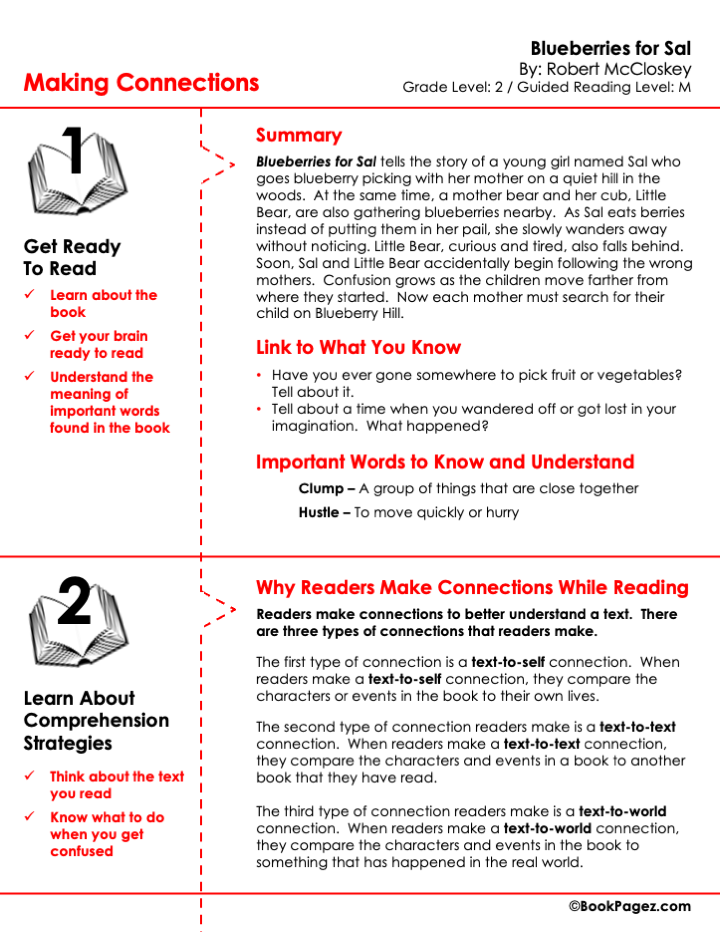
Blueberries for Sal gives students many chances to connect the story to their own lives, other texts, and the world around them. As Sal spends time with her mother, wanders off, and eventually finds her way home, students reflect on similar experiences of their own. These connections help readers better understand characters' feelings, the setting, and why the story ends the way it does.
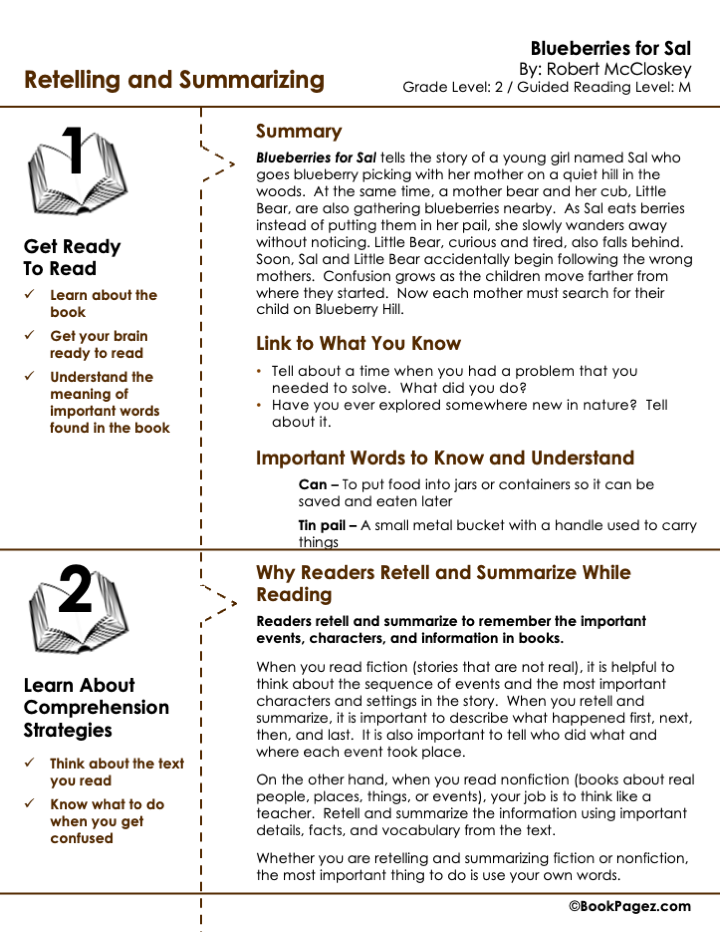
With its clear sequence of events and parallel storylines, Blueberries for Sal is an ideal text for retelling and summarizing. Students recount key events, describe the setting, and explain the problems Sal and Little Bear face—and how those problems are resolved. These activities help students identify important details and organize their thinking about the story.
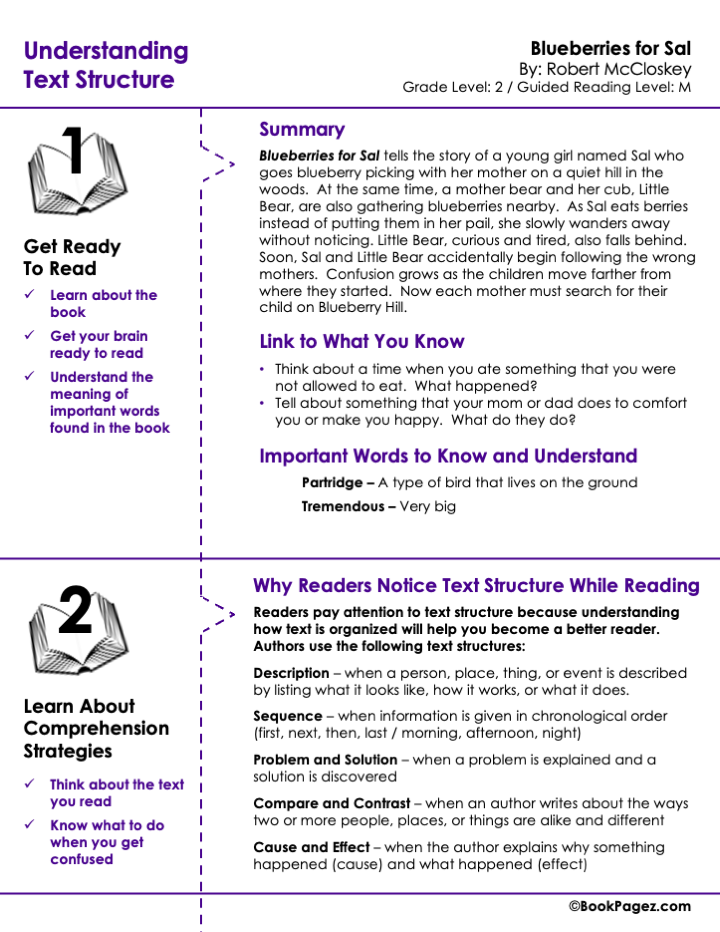
This story uses clear text structures, including cause and effect, sequence, problem and solution, and compare and contrast. Students analyze how events unfold, track Sal's search step by step, and compare how each mother finds her child. Noticing these structures helps students better understand how the story is organized and how meaning is built.
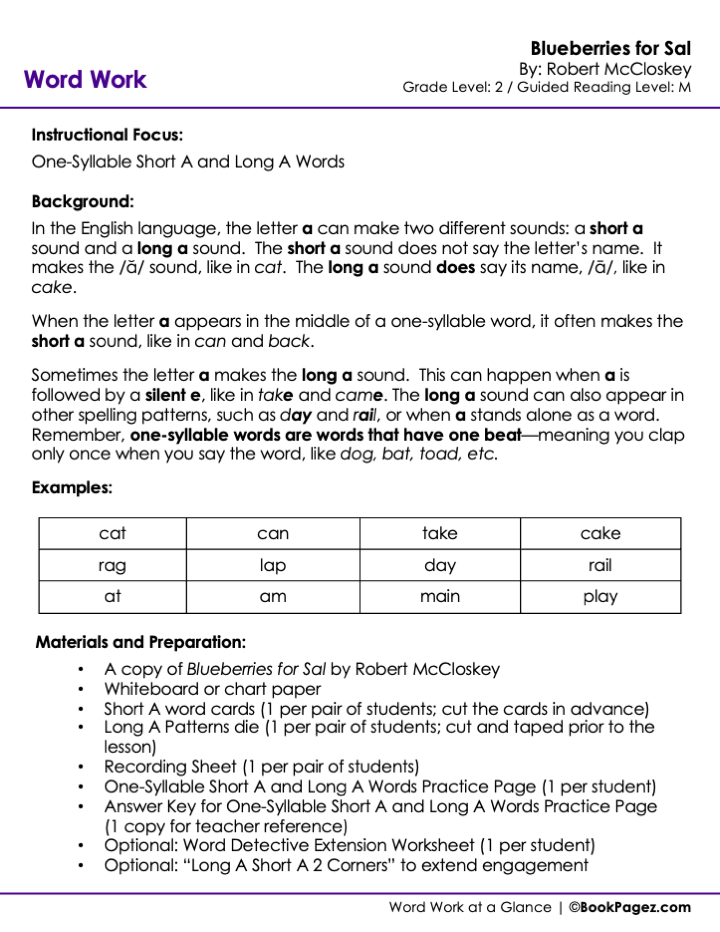
This focused word work lesson helps students distinguish between short a (/ă/ as in cat) and long a (/ā/ as in cake) in one-syllable words. Students explore common spelling patterns, including short vowel words like can and back, silent e words like came and take, and vowel teams such as day and rail.
Through sorting, reading, and text-based connections to Blueberries for Sal, students strengthen decoding skills while applying phonics knowledge in meaningful context.
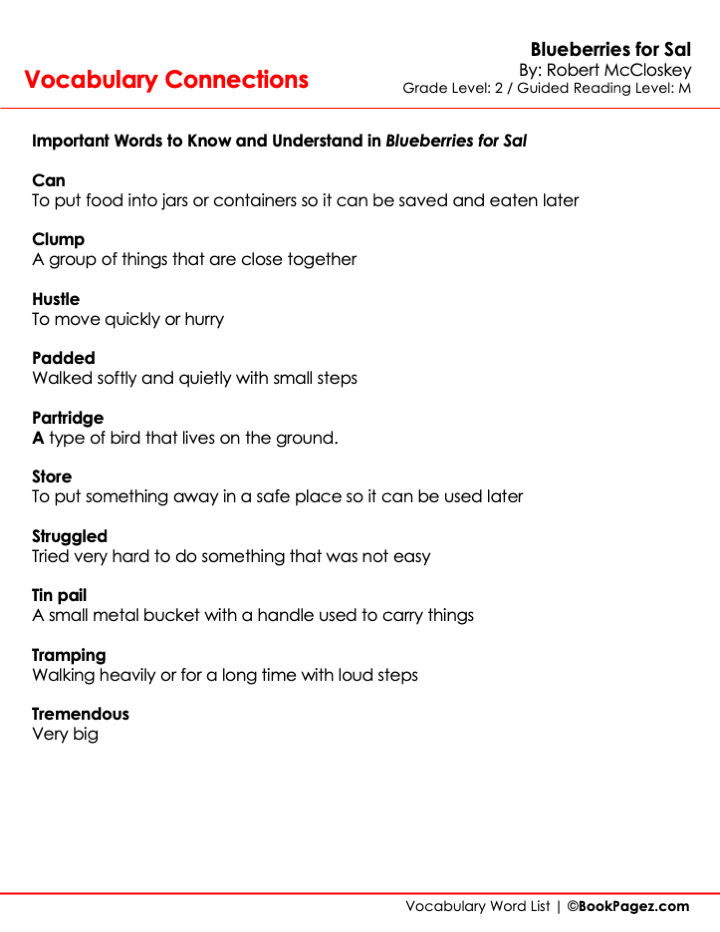
This set of vocabulary development resources for Blueberries for Sal highlights key words that are essential for students to understand while reading the story. Through engaging activities such as word games, word-to-definition and picture matching, and word categorization practice, students will build the vocabulary they need to comprehend this story—and many others—with confidence.

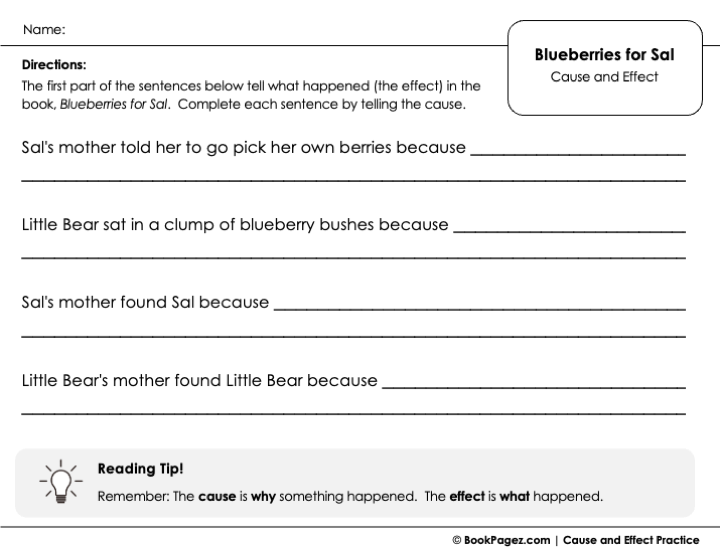
Understanding cause and effect is a key comprehension and language skill. The text structure of Blueberries for Sal includes several examples of cause and effect relationships, making it easy to use as a springboard for modeling or independent practice.
This simple resource includes four sentence stems. Each sentence stem presents an effect. Students will use what they know about the book to fill in the cause of the effect.

Read Blueberries for Sal then have some fun matching cause and effect sentences from the book. By using these cause and effect cards, students will demonstrate both their comprehension of the text and their understanding of cause and effect relationships in a hands-on and interactive way.
This resource includes matching/sorting cards and a sorting mat for four cause and effect sentences in Blueberries for Sal. Each cause card is marked with a square, and each effect card is marked with a circle, making it easy to support students who struggle with matching cause and effect relationships.
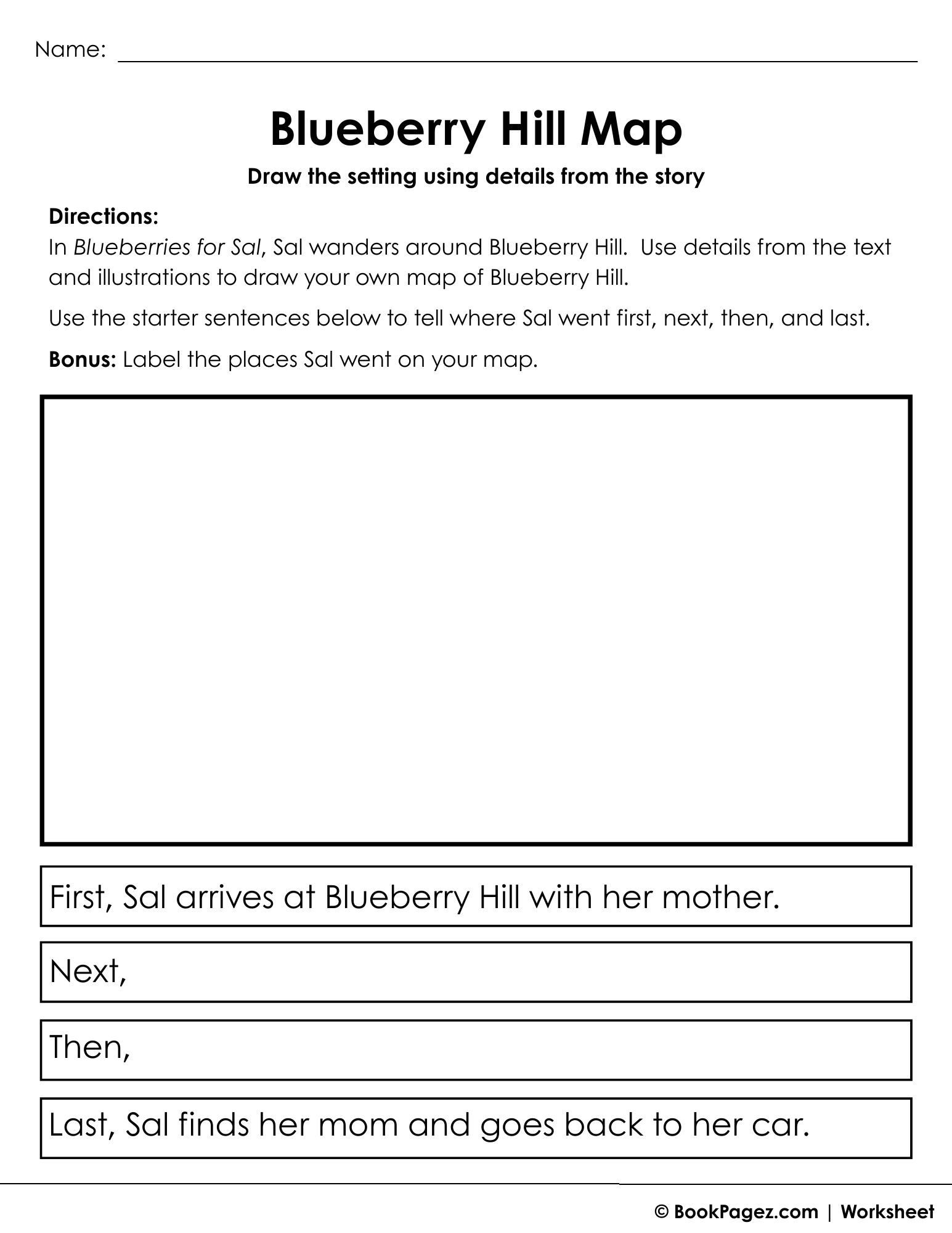
This sequencing and mapping activity connects to Blueberries for Sal as students use details from the text and illustrations to recreate Blueberry Hill. Students draw a map showing where Sal traveled and use sequence words such as first, next, then, and last to describe her journey. The optional labeling component reinforces setting and text evidence. This activity strengthens comprehension, sequencing skills, and understanding of story setting in a creative and engaging way.

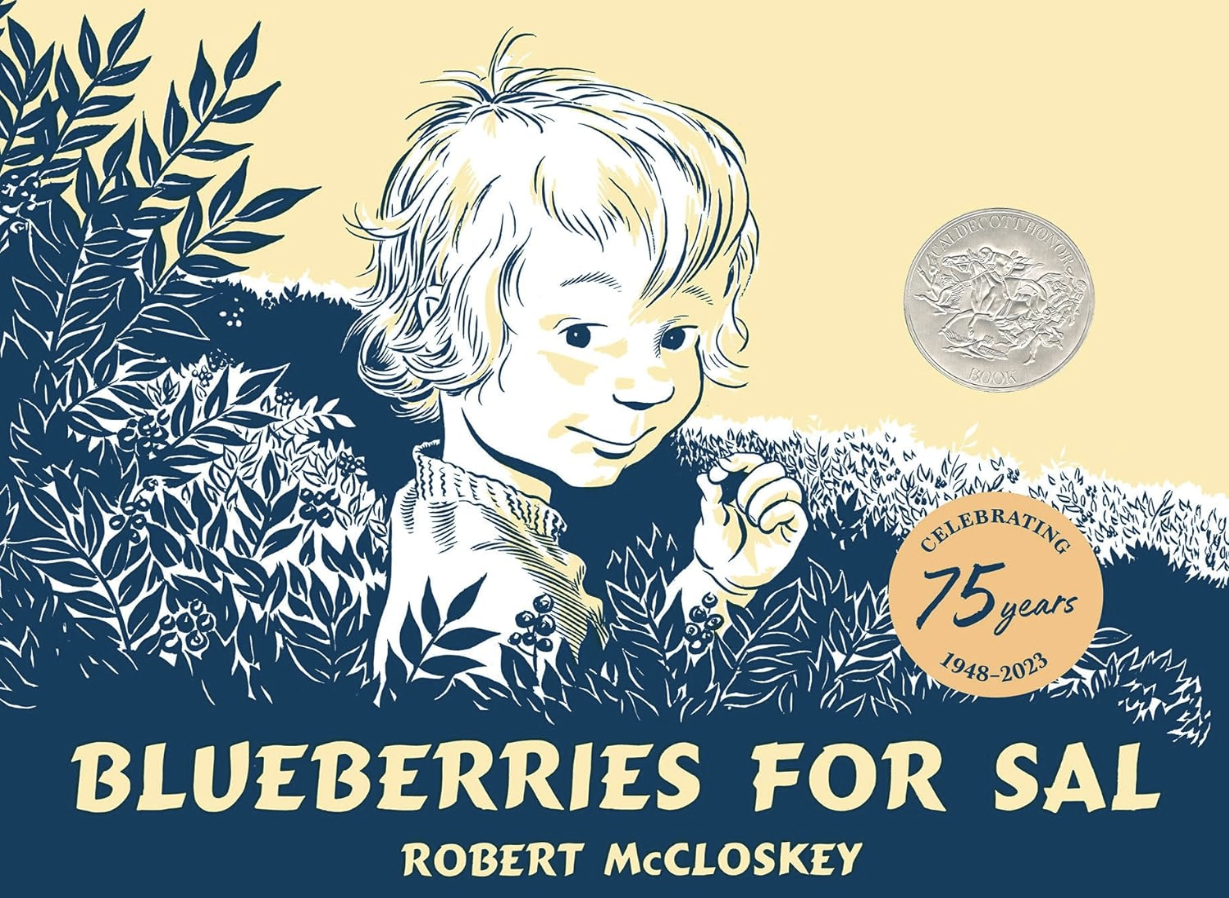
Blueberries for Sal is a timeless picture book that invites young readers into a gentle story of shared natural spaces and childhood adventure. Written and illustrated by Robert McCloskey in 1948, this Caldecott Honor winner follows a young girl named Sal and her mother as they climb Blueberry Hill to pick berries for canning through the winter. On the same hill, unbeknownst to Sal's family, a mother bear and her cub are gathering blueberries to prepare for their own hibernation.
The heart of the story unfolds when the two pairs become separated, leading Sal to follow the mama bear while the bear cub begins trailing Sal's mother. McCloskey handles this potentially tense situation with remarkable calm and grace, creating an atmosphere of peaceful coexistence rather than danger. The story celebrates the natural world as a space that belongs to everyone—human and animal alike—teaching children an important lesson about sharing and respect for nature.